
Teaching colour theory can quickly become overwhelming when students struggle to move beyond flat colour wheels and rigid rules. Many find it difficult to connect abstract concepts with practical application, making lessons feel disconnected from real artistic practice. The challenge is finding ways to make colour relationships engaging and deeply understandable.
The good news is that you have exciting teaching methods at your fingertips. With hands-on activities, modern tools like three dimensional colour globes, and innovative approaches to colour harmony and contrast, you can transform your classroom experience. These strategies will help your students develop intuitive, memorable skills and boost their confidence with colour.
Get ready to discover practical ideas and expert tips that will make colour theory meaningful, interactive, and inspiring for every art student.
Table of Contents
- 1. Visualising Colour Relationships In 3D
- 2. Teaching Colour Harmony And Contrast
- 3. Hands-On Exploration Of Colour Mixing
- 4. Enhancing Student Engagement In Colour Theory
- 5. Supporting Cross-Disciplinary Colour Projects
- 6. Improving Understanding Of Colour Codes And Systems
- 7. Promoting Creative Thinking With Interactive Displays
Quick Summary
| Takeaway | Explanation |
|---|---|
| 1. Utilise 3D Colour Globes for Learning | Incorporate three dimensional globes in teaching to enhance students’ understanding of colour relationships interactively. |
| 2. Promote Colour Harmony Through Experimentation | Encourage practical exercises with complementary and analogous colours to help students intuitively grasp harmony concepts. |
| 3. Engage Students with Interactive Displays | Use interactive learning strategies and displays to create memorable, hands-on experiences that lead to deeper understanding of colour theory. |
| 4. Integrate Colour Theory Across Disciplines | Develop interdisciplinary projects that connect colour exploration with subjects like science and psychology to enrich learning experiences. |
| 5. Maintain a Colour Mixing Journal | Have students document their colour mixing experiments to promote observation skills and deepen their understanding of colour interactions. |
1. Visualising Colour Relationships in 3D
Understanding colour relationships can transform how art students perceive and interact with visual design. Traditional 2D colour charts limit our comprehension, but three dimensional colour models unlock a revolutionary approach to colour theory.
By exploring colour spatially, educators can help students grasp complex interactions between hues that flat representations simply cannot capture. A three dimensional globe allows learners to observe how colours shift, blend, and transform across different spatial perspectives. This means students can literally rotate and examine colour relationships from multiple angles, creating a more intuitive and comprehensive understanding.
Importantly, these 3D visualisation techniques provide a profound cognitive leap from traditional learning methods. Students can now see subtle colour transitions and relationships that were previously invisible or difficult to comprehend. The spatial arrangement reveals nuanced connections between primary, secondary, and tertiary colours that textbook illustrations often obscure.
Art educators can use colour globes as interactive teaching tools, encouraging students to physically manipulate and explore colour relationships. By rotating the globe, students can observe how complementary colours interact, how warm and cool tones relate, and how different colour families create visual harmony or tension.
Expert tip: Position your colour globe at eye level and encourage students to explore colour relationships through incremental rotations, treating each movement as a deliberate learning experience.
2. Teaching Colour Harmony and Contrast
Colour harmony represents a sophisticated dance of visual relationships that goes far beyond simple colour matching. Understanding how colours interact becomes crucial for art educators seeking to develop students’ sophisticated visual perception and creative expression.
Traditional colour theory suggests several key approaches to understanding harmony and contrast. Essential colour mixing techniques reveal how complementary, analogous, and triadic colour schemes create different visual experiences. Complementary colours sit opposite each other on the colour wheel, creating vibrant and dynamic contrasts that draw the viewer’s eye. Analogous colours sit adjacent to each other, producing harmonious and soothing visual experiences.
Art educators can transform colour learning by encouraging students to experiment with temperature contrasts. Warm colours like reds, oranges, and yellows create energy and excitement, while cool colours such as blues, greens, and purples generate feelings of calm and depth. By understanding these relationships, students learn to manipulate emotional responses through strategic colour placement.
Practical exercises can help students develop intuitive colour harmony skills. For instance, asking students to create a composition using only complementary colours or designing a piece that explores saturation levels can provide hands on understanding of complex colour interactions. These approaches move beyond theoretical learning, allowing students to experience colour relationships directly.
Top teaching hint: Encourage students to create colour studies using a three dimensional colour globe, allowing them to physically rotate and observe colour relationships from multiple perspectives.
3. Hands-On Exploration of Colour Mixing
Colour mixing represents more than a technical skill in art education. It is a transformative process that allows students to understand the profound language of visual expression through direct experimentation and sensory engagement.
Art educators can leverage innovative colour blending techniques to make colour mixing a truly immersive learning experience. By encouraging students to physically manipulate pigments, they develop an intuitive understanding of how colours interact, transform, and communicate. A three dimensional colour globe becomes an invaluable tool in this process, allowing learners to observe colour relationships from multiple perspectives.
Practical approaches might include creating sensory paint mixing activities where students document their experiments. This could involve mixing primary colours to create secondary and tertiary shades, recording the precise ratios and observing how slight variations produce dramatically different results. Students learn that colour mixing is both a scientific and artistic endeavour requiring precision, creativity, and careful observation.
Beyond traditional paint methods, educators can integrate digital documentation to enhance learning. Students might photograph their colour mixing experiments, creating visual journals that track their discoveries and reflect on the nuanced relationships between different pigments. This approach bridges traditional art practices with contemporary documentation techniques.
Pro teaching technique: Encourage students to maintain a colour mixing journal, documenting each blend with precise pigment ratios and personal observations about unexpected colour transformations.
4. Enhancing Student Engagement in Colour Theory
Engaging students in colour theory requires more than traditional lecture methods. Art educators need innovative approaches that transform passive learning into active, memorable experiences.
Creative arts integration provides a powerful strategy for stimulating student curiosity and emotional connection to learning. By using three dimensional colour globes, educators can create interactive experiences that move beyond flat theoretical concepts. These tactile learning tools allow students to physically rotate and explore colour relationships, making abstract theories tangible and accessible.
Interactive learning strategies might include collaborative colour exploration projects. Students could work in groups to map colour transitions, create chromatic narratives, or design visual stories that demonstrate their understanding of colour interactions. The three dimensional globe becomes a central tool enabling students to see how colours blend, contrast, and communicate in ways traditional colour wheels cannot capture.
Psychological engagement is crucial in art education. When students feel personally connected to learning materials, their motivation and retention increase dramatically. By transforming colour theory from an academic exercise into a hands on, explorative journey, educators can spark genuine excitement about visual communication.
Pro teaching strategy: Design collaborative colour mapping challenges where students use the colour globe to create visual narratives that demonstrate complex colour relationships and emotional resonances.
5. Supporting Cross-Disciplinary Colour Projects
Colour is far more than an artistic element. It represents a powerful interdisciplinary concept that bridges multiple academic domains, offering educators an extraordinary opportunity to create rich learning experiences.
Cross-disciplinary art education transforms traditional subject boundaries by integrating colour exploration across various academic disciplines. A three dimensional colour globe becomes an exceptional tool for demonstrating how colour connects science, psychology, cultural studies, and artistic expression.
Practical interdisciplinary projects might include collaborative investigations where students explore colour through multiple lenses. For instance, a science class could examine colour wavelengths, an art class could create visual representations, a psychology class could analyse emotional responses, and a history class could investigate cultural colour symbolism. The colour globe serves as a central reference point, enabling students to understand colour as a complex, multifaceted phenomenon.
By encouraging students to view colour as an interconnected concept, educators can develop critical thinking skills and promote innovative learning approaches. The three dimensional model allows learners to see colour relationships from perspectives that traditional teaching methods cannot provide, making abstract concepts tangible and engaging.
Pro teaching approach: Design interdisciplinary colour exploration projects that require students to document and present colour observations from multiple academic perspectives, using the colour globe as a central analytical tool.
6. Improving Understanding of Colour Codes and Systems
Colour codes represent a complex language that transcends simple visual perception, offering sophisticated communication systems used across design, digital media, and artistic disciplines. Understanding these intricate systems becomes crucial for art educators seeking to develop comprehensive colour literacy.
Colour theory fundamentals reveal multiple coding approaches including Pantone, RGB, CMYK, and hexadecimal systems. Each system serves unique purposes in different creative and technical contexts. The three dimensional colour globe becomes an invaluable tool for translating these abstract coding systems into tangible, comprehensible visual representations.
Practical approaches involve breaking down these coding systems into digestible segments. Educators can demonstrate how different colour models function by showing students how the same colour might be represented differently in print, digital, and physical media. By rotating the colour globe, students can observe how colour codes relate to actual pigment appearances, bridging theoretical knowledge with visual understanding.
Digital and traditional media require nuanced colour code comprehension. Students learn that a hexadecimal code used in web design might look dramatically different when translated into physical paint pigments. The colour globe helps visualise these transitions, providing a comprehensive view of colour communication across various platforms.
Pro teaching strategy: Create comparative exercises where students translate the same colour across multiple coding systems, using the colour globe as a reference point to understand fundamental colour representation variations.
7. Promoting Creative Thinking with Interactive Displays
Interactive visual displays transform passive learning into dynamic, engaging experiences that stimulate creative thinking and deeper understanding. Art educators have powerful opportunities to revolutionise classroom engagement through strategic use of three dimensional colour representations.
Colour systems in artistic education demonstrate how interactive displays can dramatically enhance students’ cognitive processing. A three dimensional colour globe becomes more than a teaching tool it becomes an interactive platform for exploration, discussion, and creative discovery.
Creative thinking emerges when students can physically manipulate and explore colour relationships. By rotating the globe, learners can observe unexpected colour interactions, experiment with perspective, and develop intuitive understanding of complex visual concepts. Interactive displays encourage students to move beyond theoretical learning and engage directly with colour as a living, dynamic system.
Practical classroom strategies might include collaborative colour exploration challenges. Students could work in groups to create visual narratives, design colour based communication experiments, or develop artistic projects that demonstrate their understanding of colour relationships through physical interaction with the globe.
Pro teaching strategy: Design interactive display challenges that require students to create visual stories or communication pieces using colour globe interactions, encouraging multisensory and collaborative learning experiences.
Below is a comprehensive table summarising the key methodologies, strategies, and advantages discussed in the provided article regarding innovative approaches to teaching colour theory and understanding.
| Topic | Description | Key Benefits |
|---|---|---|
| Visualising Colour Relationships in 3D | Utilising three-dimensional colour models to observe hue interactions spatially. | Enhances comprehension of complex colour transitions and relationships. |
| Teaching Colour Harmony and Contrast | Exploring complementary, analogous, and triadic colour schemes. | Develops skills in eliciting emotional responses through colour. |
| Hands-On Exploration of Colour Mixing | Engaging with practical pigment blending exercises. | Encourages intuitive learning and precise observation of colour transformations. |
| Enhancing Student Engagement | Incorporating three-dimensional globes into interactive projects. | Facilitates active participation and enriches memorability of concepts. |
| Supporting Cross-Disciplinary Projects | Integrating colour studies across multiple academic fields. | Promotes critical thinking and interdisciplinary connections. |
| Colour Codes and Systems | Teaching RGB, CMYK, Pantone, and hexadecimal systems using physical models. | Provides better understanding of colour applications in digital and print media. |
| Promoting Creative Thinking | Using interactive colour tools to stimulate creativity. | Stimulates innovation and deeper visual understanding. |
Unlock the Full Potential of Colour Theory with the Kolormondo Globe
Art educators often face the challenge of making colour relationships not only understandable but also engaging and memorable. The article explores how traditional flat colour wheels fall short in revealing complex colour interactions. Your goal as an educator is to inspire students through hands-on visualisation and interactive learning techniques that build deep intuitive understanding. The Kolormondo 3D colour globe resolves these challenges by offering a tactile, spatial tool that transforms abstract colour theory concepts into vivid, explorative experiences. With this globe, students can physically rotate through complementary, analogous, and triadic colour schemes, enriching lessons on harmony, contrast, and colour mixing.
Elevate your teaching with proven resources and interactive tools designed for dynamic classrooms. Discover the full range of Color Globe and color sphere - Kolormondo that suit every educational need and explore comprehensive Educational material and lesson plans - Kolormondo to seamlessly integrate these globes into your curriculum.
Experience how transforming colour theory into an interactive journey sparks genuine student engagement and creative thinking.
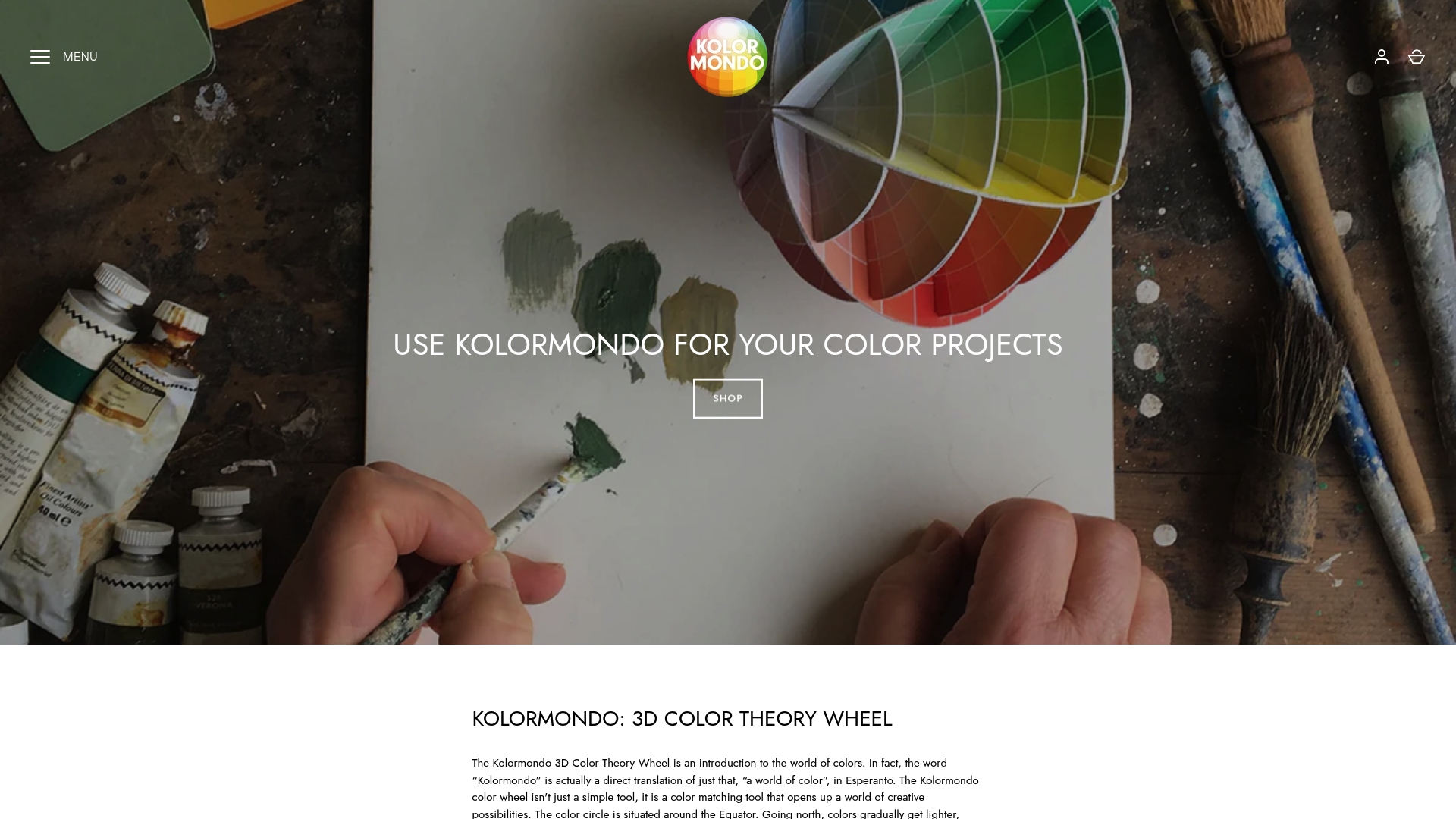
Bring colour theory to life today with Kolormondo. Visit Kolormondo.com to explore our innovative 3D colour globes and resources. Secure your globe now and empower your students to see colour in an entirely new dimension.
Frequently Asked Questions
How can colour globes enhance my teaching of colour theory?
Using colour globes, educators can offer a hands-on, interactive approach to colour theory that aids comprehension. Encourage students to manipulate the globe, observing colours from various angles to understand their relationships and interactions more intuitively.
What are some practical exercises I can implement with a colour globe?
You can implement exercises like colour mixing experiments or collaborative mapping of colour transitions with a colour globe. For instance, have students create compositions using complementary colours and observe how they interact, enhancing their grasp of colour harmony.
How do colour globes support interdisciplinary projects in my art classes?
Colour globes support interdisciplinary projects by visually connecting colour theories with subjects like science and psychology. Design projects that require students to explore how colour interacts across disciplines, such as analysing emotional responses to colours in psychology while representing these visually through art.
What techniques can I use to promote student engagement with colour globes?
To promote engagement, incorporate collaborative colour exploration projects where students can work together using the globe. Facilitate discussions and creative assignments that encourage students to share their observations and artistic interpretations of colour relationships as they interact with the globe.
How do I teach colour codes using a colour globe?
To teach colour codes, demonstrate how different colour models like RGB, CMYK, and hexadecimal relate visually using the globe. Create comparative exercises where students observe a single colour in various coding systems and record their findings to reinforce understanding through direct visualisation.
Recommended
Find similar articles
uses of color globes
