
Most art classrooms still rely on flat colour wheels, yet studies show over 60 percent of students grasp colour concepts faster through hands-on, three-dimensional models. North American educators searching for fresh, tactile ways to boost colour theory engagement are starting to notice the british approach to colour globes that goes beyond traditional charts. Here, you will discover how three-dimensional colour globes break old misconceptions and spark deeper student understanding by making chromatic relationships truly interactive.
Table of Contents
- Defining 3D Colour Globes And Key Misconceptions
- Core Structure And Features Of A Colour Globe
- Types And Variations Of Kolormondo Globes
- Enhancing Colour Theory Learning And Retention
- Creative And Educational Applications In The Arts
- Comparing 3D Globes And Traditional Flat Wheels
Key Takeaways
| Point | Details |
|---|---|
| 3D Colour Globes | These globes provide a more accurate representation of colour relationships compared to traditional flat colour wheels, enhancing understanding of chromatic interactions. |
| Interactive Learning | Incorporating 3D colour models in education fosters multi-sensory engagement, improving retention of complex colour theory concepts. |
| Versatile Applications | 3D colour globes have beneficial uses across various disciplines, including visual arts, graphic design, and education, making colour theory more accessible. |
| Enhanced Exploration | Users can rotate and manipulate the globe, allowing for the discovery of subtle colour relationships and enhancing overall comprehension of colour dynamics. |
Defining 3D colour globes and key misconceptions
Traditional colour theory has long been constrained by simplified, two-dimensional representations that fail to capture the complex spatial relationships between different hues. Colour literacy approaches are challenging these outdated models by introducing three-dimensional colour representations that offer a more nuanced understanding of chromatic interactions.
A 3D colour globe fundamentally differs from traditional flat colour wheels by providing a spherical model that accurately represents colour relationships through spatial positioning. Unlike linear charts that suggest colours exist in neat, predictable rows, these globes demonstrate how colours genuinely interact in three-dimensional space, showing subtle gradations, temperature shifts, and interconnected chromatic relationships that cannot be captured on a flat surface.
Key misconceptions about colour theory persist precisely because of limitations in traditional teaching tools. Many educators still rely on oversimplified colour circles that suggest primary colours can universally mix all other shades, when in reality, colour mixing is far more complex. 3D globes reveal these nuanced interactions by allowing viewers to rotate and explore colour connections from multiple perspectives, breaking down rigid, linear thinking about chromatic relationships.
Pro tip: Incorporate interactive 3D colour models into your teaching to help students understand colour relationships more dynamically and experientially.
Core structure and features of a colour globe
Colour globes are sophisticated three-dimensional learning tools designed to represent chromatic relationships with remarkable precision and visual clarity. Colour spectrum visualisation creates a comprehensive model that allows learners to understand colour interactions in ways traditional two-dimensional charts cannot achieve.
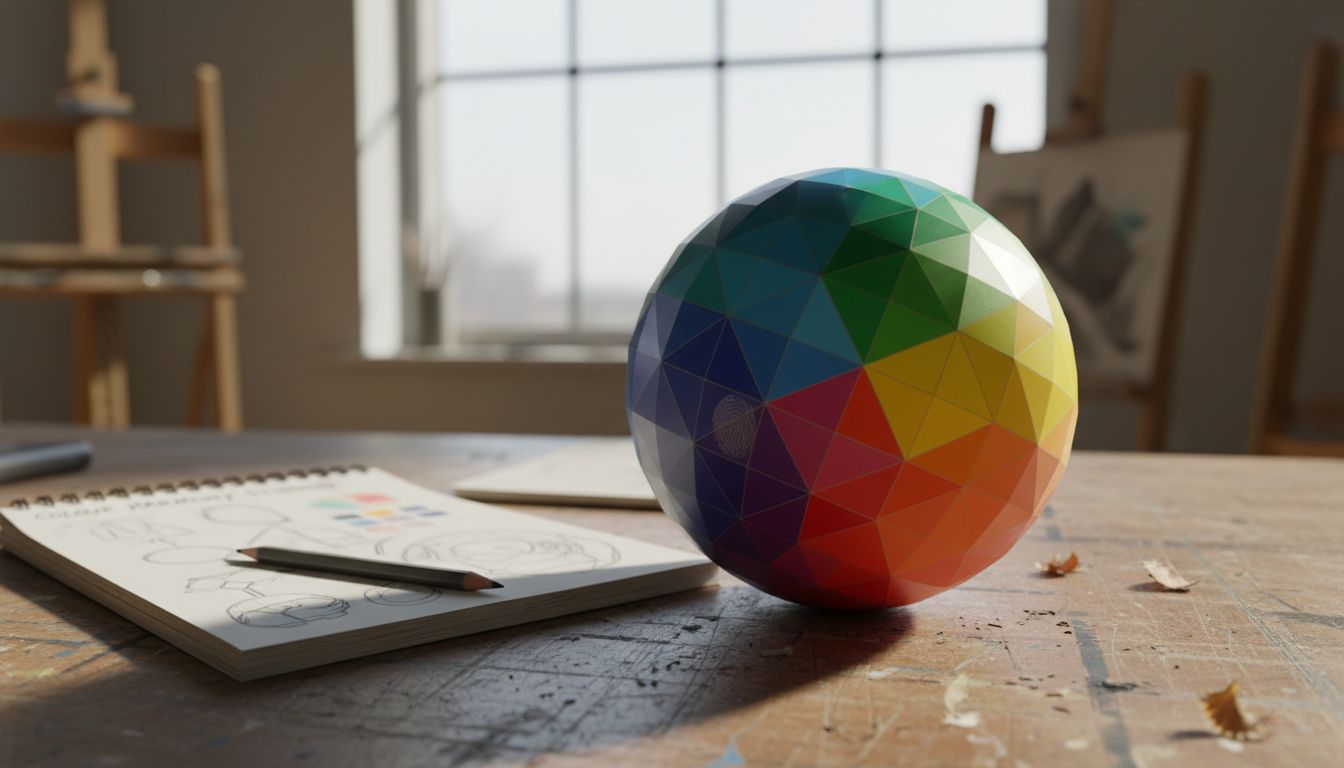
The core structural elements of a colour globe typically include a precise spherical framework with strategically positioned colour segments. Each segment represents a unique hue, carefully mapped to demonstrate gradations, temperature variations, and interconnected relationships. Unlike flat colour wheels, these globes permit viewers to rotate and explore colour transitions, revealing nuanced chromatic connections that emerge when colours are viewed from multiple spatial perspectives.
Key features of advanced colour globes often encompass detailed colour coding systems, precise spatial positioning of hues, and interactive design elements that facilitate tactile and visual learning. These globes are engineered to break down complex colour theory concepts by presenting chromatic information as an intuitive, three-dimensional experience. Educators and design professionals can leverage these tools to develop a more sophisticated understanding of how colours genuinely interact, move, and transform across different contexts.
Pro tip: Experiment with rotating the colour globe from different angles to discover unexpected colour relationships and subtle chromatic transitions.
Types and variations of Kolormondo globes
Kolormondo offers a range of 3D colour globes designed to meet diverse educational and professional needs, with each variant carefully crafted to provide unique insights into colour theory and spatial relationships. Global colour design options demonstrate the versatility of these innovative learning tools across different contexts and user requirements.
The primary variations include the Kolormondo Mini and the Kolormondo Professional globe, each tailored to specific user preferences and applications. The Mini globe serves as an accessible, compact introduction to colour theory, perfect for students, design enthusiasts, and those with limited workspace. In contrast, the Professional globe offers a more comprehensive and detailed colour mapping, providing advanced users with a more intricate exploration of chromatic relationships and nuanced colour interactions.
These globes distinguish themselves through several key design features, including precise colour positioning, interactive rotation capabilities, and meticulously engineered spherical structures. The variations range from compact educational models to professional-grade instruments, allowing users to choose a globe that matches their specific learning objectives, design requirements, or aesthetic preferences. Whether used in classroom settings, design studios, or personal creative spaces, these globes offer a tactile and visually engaging approach to understanding colour dynamics.
Pro tip: Select a colour globe variation that matches your specific learning or professional needs, considering factors like workspace, intended use, and depth of colour theory exploration.
Enhancing colour theory learning and retention
Effective colour theory education demands innovative approaches that transform abstract concepts into tangible, memorable experiences. Colour theory educational strategies reveal the critical need for interactive, multi-sensory learning tools that engage students beyond traditional two-dimensional instructional methods.
Three-dimensional colour globes offer a revolutionary approach to enhancing learning retention by providing students with a tactile, spatial understanding of colour relationships. Unlike flat colour wheels, these globes allow learners to physically manipulate and explore chromatic interactions, creating deeper neural connections and more intuitive comprehension. The spherical design enables students to observe colour transitions, temperature shifts, and complex interactions from multiple perspectives, transforming theoretical knowledge into a dynamic, interactive learning experience.
The cognitive benefits of using three-dimensional learning tools extend far beyond simple visual representation. By engaging multiple sensory pathways—visual, tactile, and spatial—these colour globes stimulate more comprehensive learning processes. Students can rotate, examine, and interact with the globe, which helps break down complex colour theory concepts into more digestible, memorable fragments. This approach is particularly powerful for visual learners, design students, and educators seeking to move beyond traditional, passive learning methods.
Pro tip: Incorporate hands-on exploration and rotation of colour globes to help students develop a more intuitive and lasting understanding of chromatic relationships.
Creative and educational applications in the arts
Artists and educators are continuously seeking innovative tools that transform theoretical colour knowledge into dynamic, experiential learning opportunities. Colour wheels in creative teaching provide transformative approaches for understanding chromatic relationships across various artistic disciplines.
In visual arts, 3D colour globes serve as versatile educational instruments that transcend traditional teaching methods. Painters can explore subtle colour transitions, understanding how hues interact when viewed from multiple spatial perspectives. Graphic designers leverage these globes to comprehend complex colour harmonies, while textile artists use them to develop nuanced colour palettes that capture intricate tonal variations. The three-dimensional nature allows for a more intuitive grasp of colour psychology, enabling artists to make more informed creative decisions.
Beyond individual artistic practices, these colour globes have profound implications for art education. They provide an interactive, tactile method of teaching colour theory that engages multiple sensory pathways. Students can physically manipulate and rotate the globe, observing how colours blend, contrast, and communicate emotional states. This approach is particularly powerful in disciplines like fine arts, design, fashion, and multimedia studies, where understanding colour is fundamental to creative expression.
Below is a summary of possible creative and educational uses for 3D colour globes:
| Application Area | Benefit of 3D Colour Globe | Example Users |
|---|---|---|
| Visual Arts | Visualises subtle hue transitions | Painters, illustrators |
| Graphic Design | Enhances colour harmony planning | Designers |
| Textile Studies | Aids creation of nuanced palettes | Textile artists |
| Art Education | Offers interactive theory teaching | Teachers, students |
Pro tip: Integrate 3D colour globes as a hands-on demonstration tool to help students visualise and understand complex colour relationships more intuitively.
Comparing 3D globes and traditional flat wheels
Traditional two-dimensional colour wheels have long been the standard tool for understanding colour relationships, but they inherently limit our perception of chromatic complexity. Colour spectrum representation reveals the fundamental constraints of flat colour models, which fail to capture the nuanced interactions and spatial dynamics of colour.
The primary distinction between 3D colour globes and traditional flat wheels lies in their dimensional approach to colour representation. Flat wheels typically arrange colours in a linear, circular pattern, suggesting simplistic relationships between hues. In contrast, 3D globes provide a comprehensive spherical model that demonstrates colour interactions through depth, lightness, saturation, and spatial positioning. This three-dimensional framework allows users to rotate and explore colours from multiple perspectives, revealing subtle transitions and interconnections that are completely invisible on two-dimensional charts.
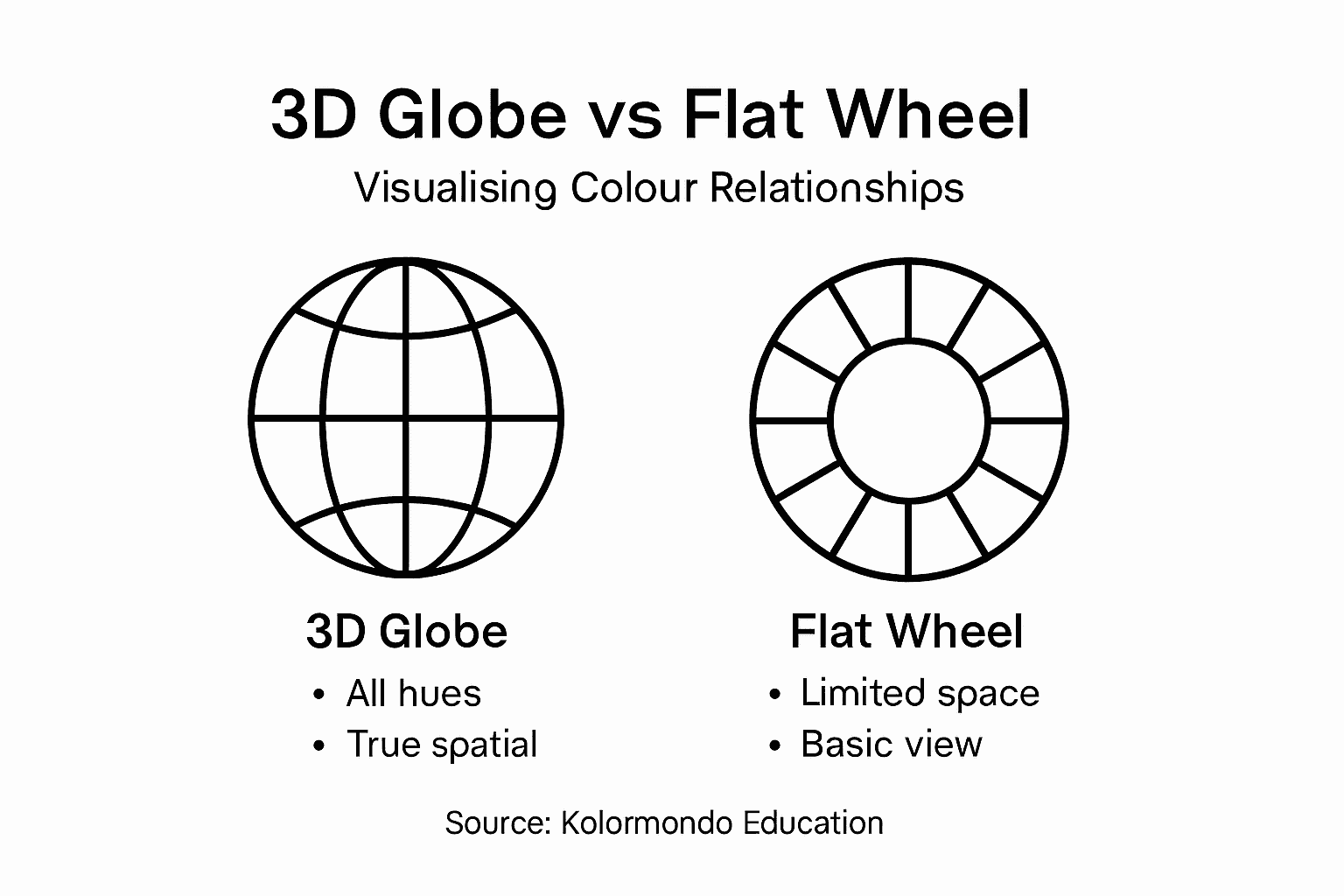
Moreover, 3D colour globes offer a more scientifically accurate and perceptually authentic representation of colour. While traditional wheels often focus on vibrant, pure hues, these spherical models incorporate the full spectrum of colour variations, including muted tones, pastel variations, and complex chromatic gradations. This approach more closely mirrors human colour perception, acknowledging that colours are not static or purely linear, but dynamic and interconnected in sophisticated ways.
Here’s a comparison of 3D colour globes and traditional flat colour wheels:
| Aspect | 3D Colour Globe | Traditional Flat Wheel |
|---|---|---|
| Colour Representation | Spherical, complex relationships | Circular, linear relationships |
| Interaction | Can be rotated, physically explored | Static visual reference |
| Range of Colours | Includes gradations and muted tones | Focus on pure, vibrant hues |
| Learning Impact | Aids spatial and tactile learners | Favours basic visual understanding |
Pro tip: Experiment with both 3D colour globes and traditional wheels to understand their unique strengths and limitations in representing colour relationships.
Experience Colour Theory in a Whole New Dimension with Kolormondo
Traditional flat colour wheels often leave educators and learners struggling to grasp the true complexity of colour relationships. If you seek a transformative teaching tool that breaks free from outdated two-dimensional models, the 3D colour globe is your answer. This interactive, spherical model invites users to explore colour interactions spatially, revealing subtle gradations and temperature shifts that simply cannot be captured on flat charts. By embracing this tactile and dynamic approach, you can unlock deeper insights and make colour theory both engaging and intuitive.
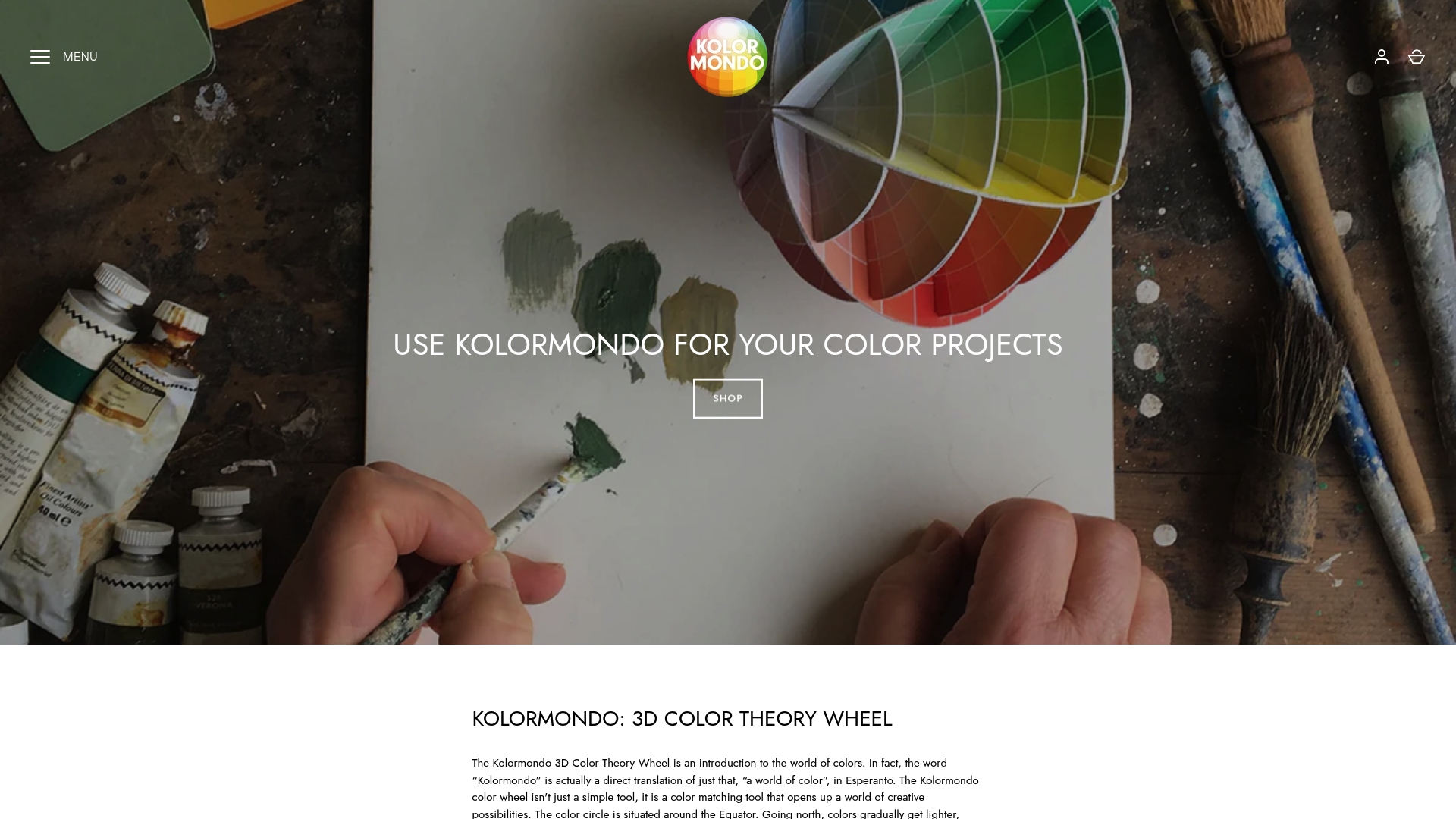
Discover the full potential of 3D colour learning with Kolormondo’s innovative range, including the compact Mini and detailed Professional globes. Explore how these globes revolutionise colour education and creative design by visiting our Color Globe and color sphere - Kolormondo collection. To enhance your teaching practice further, check out our Educational material and lesson plans - Kolormondo. Start transforming your colour teaching today by visiting Kolormondo.com and bringing hands-on, spatial colour understanding into your classroom or creative space.
Frequently Asked Questions
What is a 3D colour globe?
A 3D colour globe is a spherical model that accurately represents colour relationships in three-dimensional space, allowing for a more nuanced understanding of hue interactions compared to traditional flat colour wheels.
How can a 3D colour globe enhance colour theory education?
A 3D colour globe provides an interactive, tactile learning experience, enabling students to explore colour transitions and relationships dynamically, thereby improving understanding and retention of colour theory concepts.
What are the main benefits of using a 3D colour globe versus a traditional flat colour wheel?
3D colour globes offer a comprehensive view of colour interactions, allowing users to observe subtle transitions and dynamic relationships that are not visible on flat wheels, which can only represent colours in a linear format.
What applications are suitable for using a 3D colour globe in the arts?
3D colour globes can be used across various artistic disciplines, including painting, graphic design, and textile studies, providing artists and designers with an effective tool to understand and experiment with complex colour harmonies and palettes.
Recommended
Find similar articles
why use a 3d color globe
