
Most advice about colour psychology still misses the unique influence of cultural context, with many educators relying on outdated or overly simplified models. Understanding how colours shape emotional and artistic meaning is crucial for fostering creative growth in students, yet common teaching methods rarely capture this complexity. Drawing on the best from both british and American approaches, this guide reveals practical ways to transform colour theory lessons with tactile, interactive tools that make learning meaningful and memorable.
Table of Contents
- Colour Psychology And Artistic Meaning
- How Colour Influences Emotions In Art
- Kolormondo Globe As A Classroom Tool
- Practical Teaching Strategies With 3D Colour
- Common Errors In Colour Psychology Education
Key Takeaways
| Point | Details |
|---|---|
| Colour Psychology Influences Emotions | Colours evoke specific emotional responses that vary by culture and personal experience. Artists strategically select hues to convey complex narratives. |
| 3D Colour Tools Enhance Understanding | The Kolormondo globe offers a dynamic approach to teaching colour theory, fostering intuitive understanding through hands-on interaction. |
| Avoid Misconceptions in Colour Teaching | Colour meanings are not universal; educators should adopt flexible, evidence-based methods to teach the complexities of colour perception. |
| Promote Personal Colour Exploration | Encourage students to document their emotional responses to colours, enhancing their understanding and personal connection to colour psychology. |
Colour psychology and artistic meaning
Colour psychology explores how different hues trigger emotional and psychological responses in viewers, representing a complex intersection between perception, cultural symbolism, and artistic expression. Psychological meanings of colour extend far beyond simple aesthetic choices, profoundly influencing human emotional experiences and artistic communication.
Artists strategically employ colour to communicate complex emotional narratives, understanding that each hue carries nuanced psychological implications. Warm colours like red and orange often evoke feelings of passion, energy, and intensity, while cooler tones such as blue and green can suggest tranquillity, reflection, and contemplation. These psychological associations are not universal but deeply influenced by cultural contexts and individual experiences.
Research demonstrates that colour interpretation involves sophisticated cognitive processes that integrate personal history, cultural background, and contextual cues. Contemporary artists leverage this understanding, creating works that deliberately manipulate colour psychology to elicit specific emotional responses. By understanding these intricate relationships, educators can help students develop more nuanced approaches to colour selection and artistic expression.
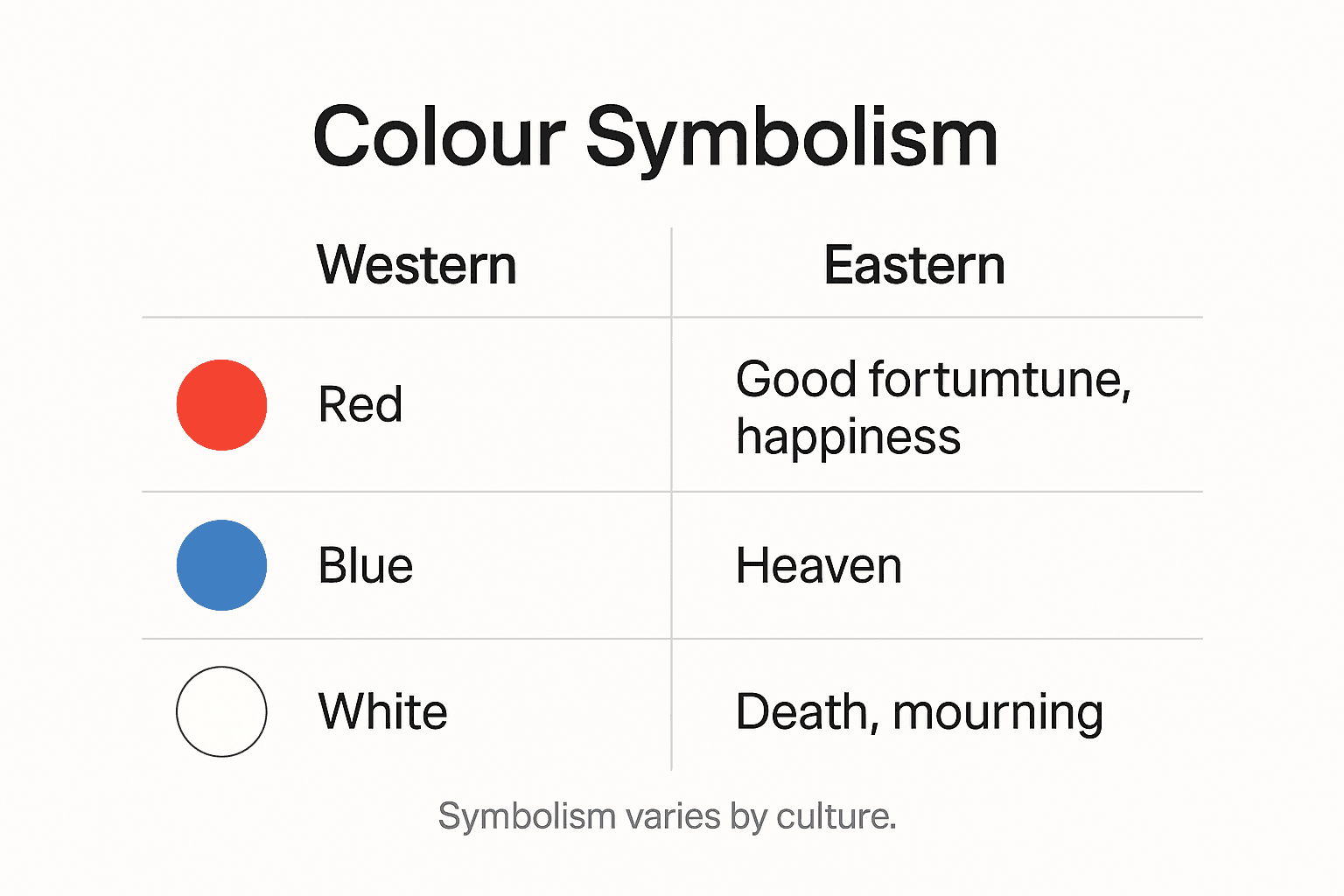
Here is a comparative overview of common colour associations in Western and Eastern contexts:
| Colour | Western Cultural Meanings | Eastern Cultural Meanings |
|---|---|---|
| Red | Passion, danger, love | Prosperity, good fortune |
| Blue | Calm, sadness, trust | Immortality, healing |
| Yellow | Happiness, caution | Royalty, sacredness |
| Green | Nature, luck, envy | Growth, youth |
Pro Tip: Encourage art students to maintain a colour journal documenting their personal emotional responses to different hues, creating a personalised reference for understanding colour psychology.
How colour influences emotions in art
Colour represents a powerful emotional language in artistic expression, with each hue capable of communicating complex psychological states and cultural meanings. Systematic research across 128 years reveals intricate connections between colour perception and emotional responses, demonstrating the profound psychological impact of chromatic experiences in visual arts.
Artists strategically manipulate colour to evoke specific emotional landscapes, understanding that different hues trigger unique psychological reactions. Warm colours like crimson and amber often generate sensations of passion and energy, while cooler blues and greens typically suggest tranquillity and contemplation. These emotional associations are not universal but dynamically shaped by individual cultural backgrounds and personal experiences.

Visual arts employ sophisticated colour strategies to provoke emotional and cognitive reactions, revealing how chromatic choices can communicate narratives beyond verbal language. Contemporary artists intentionally exploit these psychological mechanisms, creating works that engage viewers through carefully selected colour palettes designed to elicit specific emotional responses. By understanding these nuanced colour-emotion relationships, educators can guide students towards more intentional and expressive artistic practices.
Pro Tip: Develop a personal colour emotion mapping exercise where students document their immediate emotional responses to different colour combinations, creating a personalised reference for understanding chromatic psychological impacts.
Kolormondo globe as a classroom tool
In the dynamic landscape of art education, three-dimensional colour tools represent a revolutionary approach to understanding chromatic relationships. Educators have discovered that interactive colour globes dramatically enhance student engagement and conceptual learning, offering a tangible alternative to traditional flat colour wheels.
The Kolormondo globe transforms abstract colour theory into a practical, interactive learning experience. By presenting colours in a spherical format, students can comprehend complex relationships between hues, saturation, and brightness more intuitively. This three-dimensional representation allows learners to rotate, explore, and physically interact with colour relationships, making theoretical concepts more accessible and memorable.
Classroom implementation of colour globes enables multiple pedagogical strategies. Educators can use the tool for demonstrating colour mixing, exploring complementary relationships, and teaching advanced colour theory concepts. Students benefit from a hands-on approach that moves beyond theoretical instruction, allowing them to develop a more nuanced understanding of chromatic interactions through direct, tactile exploration.
The table below summarises key differences between traditional colour wheels and 3D colour globes:
| Aspect | Traditional Colour Wheel | 3D Colour Globe |
|---|---|---|
| Format | Two-dimensional, flat disc | Three-dimensional, spherical |
| Colour Relationships | Limited contextual depiction | Visualises hue and depth |
| Learning Engagement | Mainly theoretical and visual | Hands-on, interactive |
| Conceptual Clarity | Can oversimplify connections | Demonstrates nuanced links |
Pro Tip: Develop interactive classroom exercises that challenge students to match emotional states or narrative themes with specific colour combinations using the three-dimensional globe.
Practical teaching strategies with 3D colour
Innovative interdisciplinary approaches to colour education demonstrate significant potential for transforming classroom learning, particularly when integrating visual and experiential methods that move beyond traditional two-dimensional instruction. Three-dimensional colour exploration offers educators a dynamic framework for teaching complex chromatic relationships through immersive, tactile experiences.
Effective 3D colour teaching strategies involve multiple sensory engagement techniques. Educators can design interactive lessons where students physically manipulate colour globes, exploring how hues shift and interact from different perspectives. This approach transforms colour theory from an abstract concept into a tangible, explorable phenomenon, allowing learners to develop intuitive understanding through direct spatial exploration and hands-on interaction.
Multidisciplinary colour teaching requires creative pedagogical approaches that connect art, science, and perception. By incorporating three-dimensional colour tools, instructors can develop complex learning experiences that challenge students to understand colour not just as a visual element, but as a dynamic, multifaceted concept with scientific, artistic, and psychological dimensions. Such strategies encourage critical thinking, spatial reasoning, and a more holistic comprehension of chromatic relationships.
Pro Tip: Create cross-disciplinary colour exploration projects that challenge students to document colour interactions using both artistic and scientific observation methods.
Common errors in colour psychology education
Persistent misconceptions in colour psychology continue to undermine effective art education, challenging educators to develop more nuanced, evidence-based approaches. Traditional teaching methodologies often propagate oversimplified theories that fail to capture the complex, multidimensional nature of colour perception and psychological interaction.
One significant error involves treating colour symbolism as universal and unchanging. Contemporary research reveals that colour meanings are deeply contextual, varying dramatically across cultural, personal, and historical contexts. Educators frequently perpetuate myths about fixed colour interpretations—such as red always signifying anger or blue representing calmness—without acknowledging the sophisticated psychological mechanisms that mediate individual colour responses.
Academic research challenges traditional colour harmony theories, urging a more critical and individualised approach to colour pedagogy. Many art education programmes continue to rely on restrictive colour wheel models and prescriptive harmony rules that limit students’ creative exploration. These traditional frameworks fail to recognise the dynamic, subjective nature of colour perception, ultimately constraining students’ understanding of chromatic complexity and personal artistic expression.
Pro Tip: Encourage students to maintain a personal colour experience journal, documenting their unique emotional and psychological responses to different colour combinations.
Enhance Creative Teaching with the Kolormondo Globe
Understanding the complex psychological and cultural effects of colour in art presents a real challenge for educators and students alike. This article highlights the need to move beyond traditional flat colour wheels and oversimplified colour theories. With its innovative three-dimensional design, the Kolormondo globe offers a tactile, immersive experience that brings colour psychology to life. By allowing students to physically engage with colour relationships, hues, and saturation from every angle, it supports deeper emotional and cognitive connections crucial for transformative teaching.
Discover how the Kolormondo globe complements your lessons on colour emotion and cultural symbolism by exploring our Educational material and lesson plans - Kolormondo for ready-made resources.
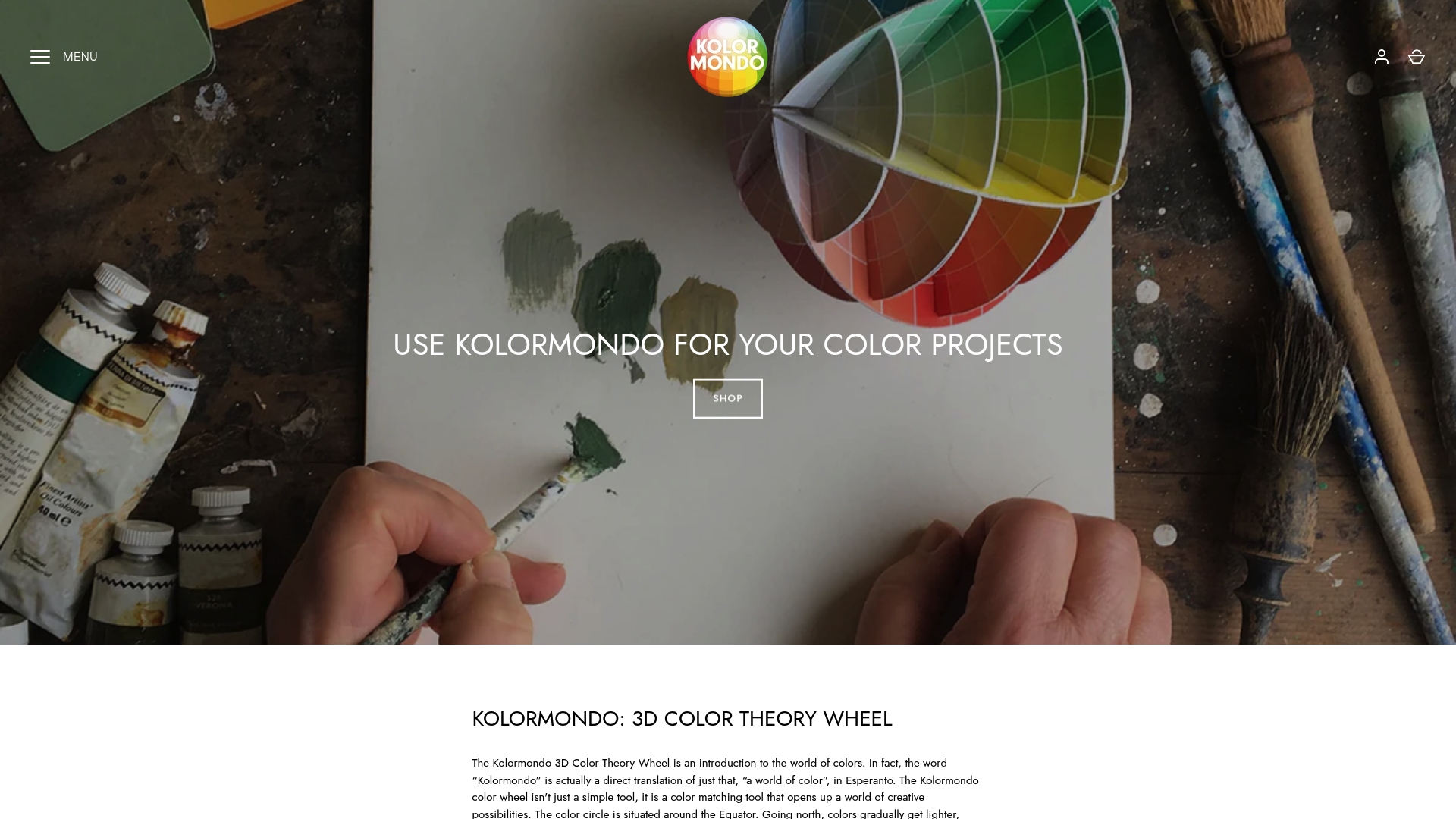
Elevate your classroom’s creative potential today. Explore interactive Lectures and Workshops about color - Kolormondo designed to integrate this groundbreaking tool into your teaching practice. Don’t miss the opportunity to transform how colour theory is experienced—visit kolormondo.com now to find the perfect Kolormondo globe for your educational needs and embrace a truly hands-on approach to colour psychology.
Frequently Asked Questions
What is colour psychology in art?
Colour psychology in art refers to the study of how different colours influence emotions and perceptions in viewers. Artists use specific hues to convey complex emotional narratives and connect with the audience on a psychological level.
How can educators implement colour psychology in their teaching?
Educators can implement colour psychology by encouraging students to explore their emotional responses to different colours, using tools like colour journals or interactive 3D colour globes to enhance understanding and engagement with chromatic relationships.
What are common colour associations in Western and Eastern cultures?
Common colour associations vary significantly; for example, red represents passion and danger in Western cultures but signifies prosperity and good fortune in Eastern cultures. Understanding these cultural meanings is crucial for artists and educators.
What are the benefits of using 3D colour tools in the classroom?
3D colour tools, like the Kolormondo globe, enhance student engagement by providing a practical way to explore colour relationships and mixing. They facilitate tactile learning and help students grasp complex colour theory concepts more intuitively.
Recommended
Find similar articles
color psychology in art
