
Most british art classrooms still rely on flat colour charts, even though research shows students remember up to 40 percent more through hands-on, three-dimensional models. For European educators hoping to spark deeper engagement with colour theory, understanding common misconceptions and the science behind colour systems is vital. This guide highlights practical ways to move beyond traditional methods using interactive tools, making colour learning more accessible and memorable for every student.
Table of Contents
- Defining Colour Systems And Common Misconceptions
- Major Colour Models And How They Differ
- Kolormondo Globe’s Three-Dimensional Approach
- Practical Applications In Art And Design Teaching
- Comparing 3D Globes With Traditional Flat Charts
- Risks, Limitations, And Classroom Challenges
Key Takeaways
| Point | Details |
|---|---|
| Understanding Colour Systems | Colour perception is not uniform; it varies with context, requiring multidimensional representations for effective learning. |
| Diverse Colour Models | Familiarity with CIE, RGB, and CMYK models is essential, as each serves different purposes and contexts in colour representation. |
| Three-Dimensional Learning Tools | Utilising three-dimensional models like the Kolormondo globe enhances understanding of colour relationships beyond traditional two-dimensional charts. |
| Challenges in Colour Education | Successful implementation of advanced colour education requires addressing training gaps, resource accessibility, and interdisciplinary misconceptions. |
Defining Colour Systems and Common Misconceptions
Colour systems represent sophisticated frameworks designed to understand, classify, and communicate visual colour relationships. Traditionally, these systems have been rooted in artistic practice, but contemporary research suggests a more nuanced approach is required. Contemporary colour theory challenges traditional models by integrating scientific understanding with perceptual experiences.
The prevalent misconception among educators and students alike is that colour systems are uniform and absolute. In reality, colour perception varies dramatically across different contexts – physiological, psychological, and cultural. Primary colour interpretations differ significantly between physics, physiology, and artistic disciplines, creating substantial educational challenges.
Effective colour system understanding requires recognising three fundamental dimensions: hue (basic colour), saturation (colour intensity), and brightness (light reflection). These dimensions interact dynamically, challenging simplistic linear interpretations. Educators must move beyond rigid colour wheel concepts and embrace more complex, multidimensional representations that reflect real-world colour interactions.
Pro tip: Encourage students to experiment with colour systems through practical, hands-on activities that demonstrate colour’s contextual and perceptual complexity.
Major Colour Models and How They Differ
Colour models represent complex systems for understanding and communicating visual colour characteristics across different disciplines. Fundamental colour elements vary dramatically between scientific and artistic domains, creating nuanced challenges for precise representation.
Three primary colour models dominate contemporary practice: CIE (Commission Internationale de l’Éclairage), RGB (Red-Green-Blue), and CMYK (Cyan-Magenta-Yellow-Key/Black). Each model serves distinct purposes: RGB is fundamental in digital displays, CMYK in print media, while CIE provides a standardised scientific approach. These models differ critically in how they measure hue, saturation, and luminance, reflecting their specific technological and perceptual contexts.
Colour perception systems combine perceptual and psychophysical definitions to enable accurate communication. The CIE model, for instance, integrates human visual perception with measurable spectral characteristics, allowing unprecedented precision in colour translation across different media and disciplines. This approach transcends traditional artistic colour wheels by offering a scientifically rigorous framework for understanding colour interactions.
Pro tip: Develop a comprehensive understanding of multiple colour models by comparing their unique attributes and practical applications across different creative and scientific contexts.
Here is a concise comparison of key colour models and their unique attributes:
| Colour Model | Primary Use | Strengths | Limitations |
|---|---|---|---|
| CIE | Scientific standard | High precision and consistency | Complex for beginners |
| RGB | Digital displays | Direct device representation | Limited for print |
| CMYK | Print media | Accurate printing results | Poor digital compatibility |
Kolormondo Globe’s Three-Dimensional Approach
Three-dimensional colour representation transforms traditional colour learning by introducing a spatial understanding that transcends conventional flat colour wheels. The Kolormondo globe revolutionises colour education by providing a tangible, immersive approach to understanding colour relationships, moving beyond abstract two-dimensional representations.
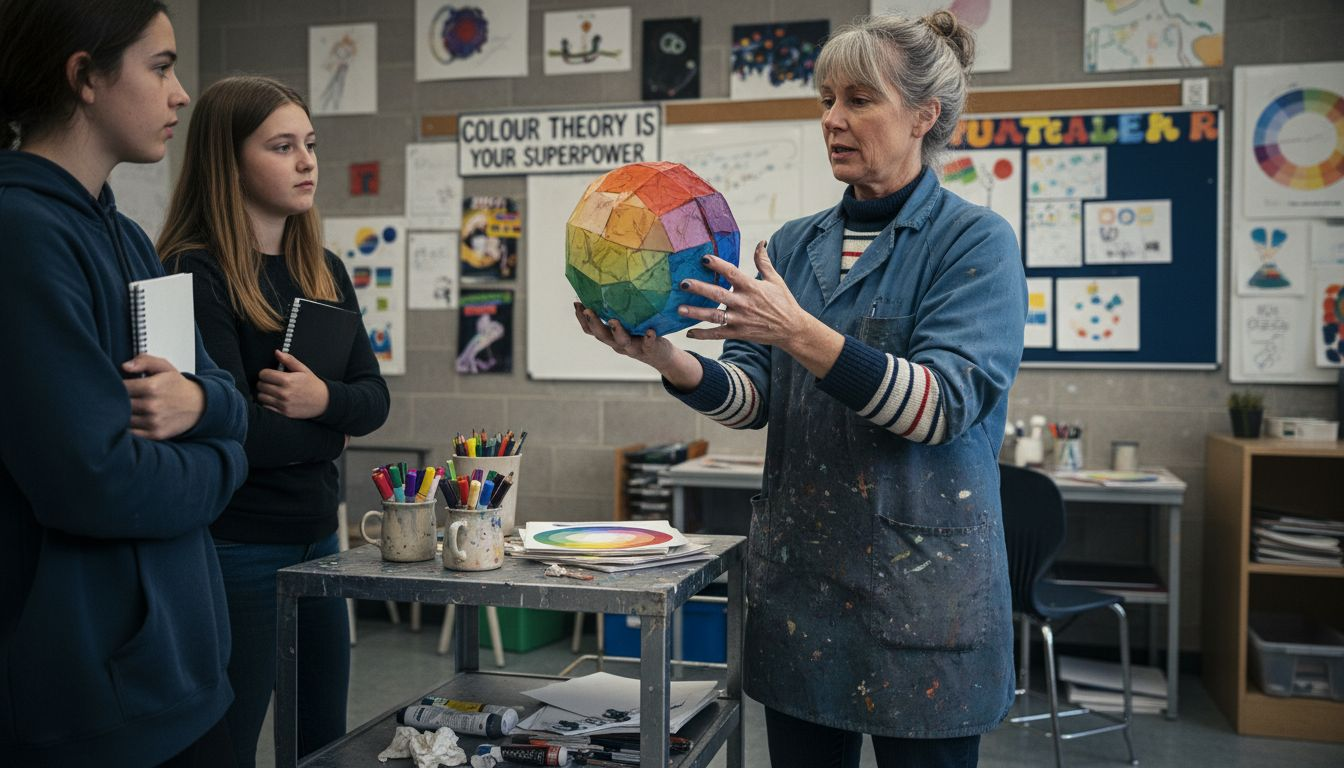
The globe’s innovative design enables learners to comprehend colour interactions through a physical, three-dimensional model. Each colour’s position reflects its fundamental attributes – hue, saturation, and brightness – allowing students to visualise complex colour relationships instantaneously. Unlike traditional colour charts that present colours as isolated elements, the three-dimensional format demonstrates how colours interconnect and transform across different spatial perspectives.
Colour literacy initiatives increasingly recognise the limitations of two-dimensional colour teaching. The Kolormondo globe addresses these pedagogical challenges by offering a comprehensive, interactive learning tool that supports multiple learning styles. Its design allows educators to demonstrate colour theory principles through a tactile, engaging method that encourages active exploration and deeper comprehension.
Pro tip: Integrate three-dimensional colour models into teaching by encouraging students to physically manipulate and explore colour relationships, transforming abstract concepts into tangible learning experiences.
Practical Applications in Art and Design Teaching
Human-centered learning approaches have transformed contemporary art and design education by integrating colour psychology, perception, and cultural contexts into traditional technical training. This holistic methodology moves beyond mechanical colour rules, encouraging students to understand colour as a dynamic, communicative medium that extends far beyond simple visual representation.
Practical colour teaching involves multiple strategic applications across different artistic disciplines. Graphic designers might explore colour harmony through systematic exercises, while painters can investigate emotional colour resonance. These approaches typically involve hands-on techniques such as:
- Colour mixing experiments
- Psychological colour mapping
- Cross-cultural colour interpretation projects
- Perceptual colour interaction studies
Innovative colour systems integrate traditional and scientific insights to provide students with comprehensive understanding. The most effective educational strategies combine technical knowledge with creative exploration, allowing students to develop nuanced comprehension of colour’s complex communicative potential. This approach transforms colour from a mere technical skill to a profound artistic language.
Pro tip: Design interdisciplinary colour projects that challenge students to explore colour beyond visual aesthetics, connecting colour perception with emotional, cultural, and psychological dimensions.
Comparing 3D Globes with Traditional Flat Charts
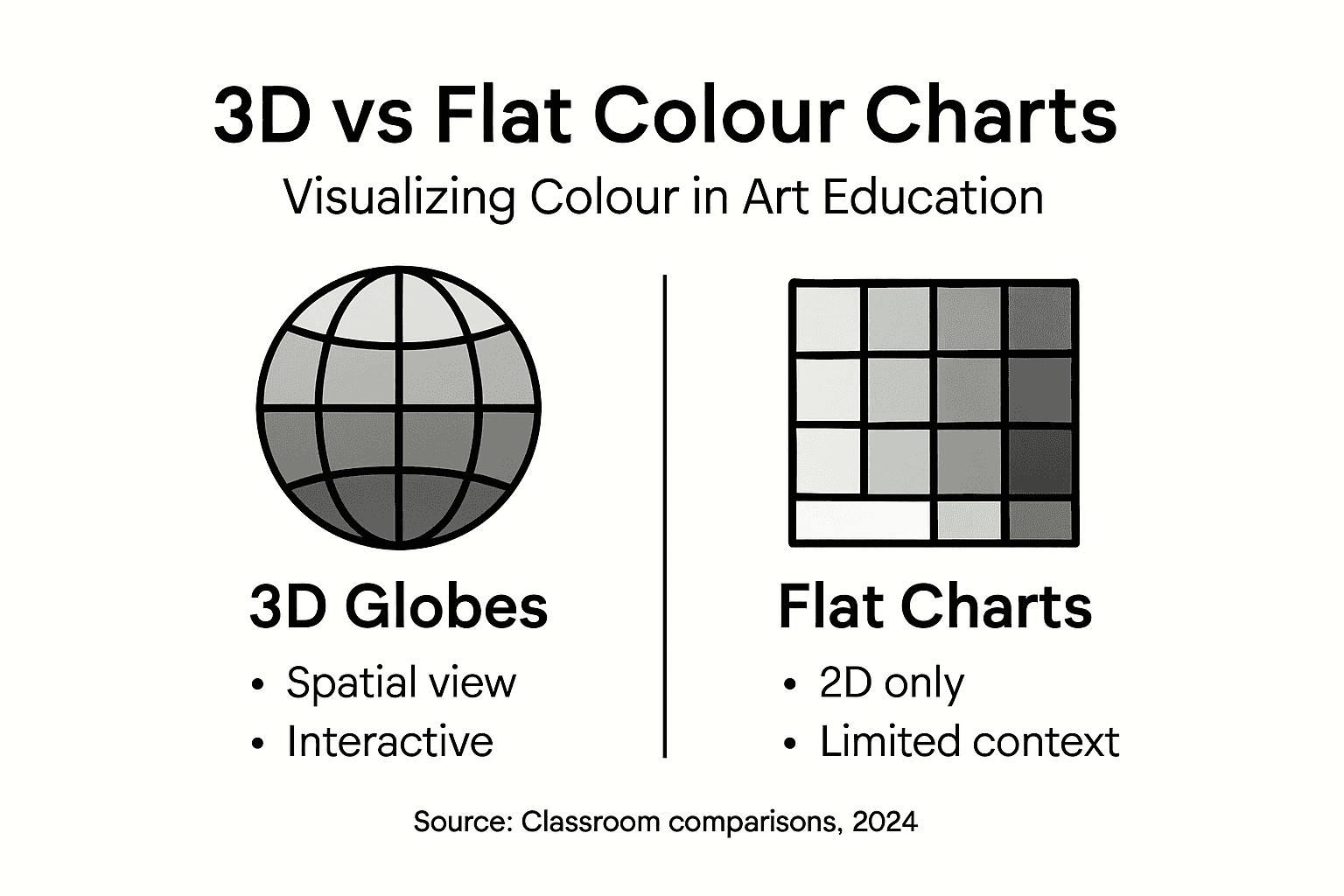
Colour representation transforms dramatically when shifting from two-dimensional charts to three-dimensional spherical models. Traditional flat charts inherently limit visual understanding by presenting colours as discrete, disconnected elements, whereas three-dimensional globes reveal the intricate, interconnected nature of colour relationships.
The key differences between flat charts and 3D globes emerge across several critical dimensions. Flat charts typically represent colour as linear, static arrangements, often using rigid geometric structures like wheels or triangles. In contrast, 3D globes demonstrate colour as a dynamic, spatial phenomenon where:
- Colours seamlessly transition between hues
- Spatial proximity indicates relationship complexity
- Depth provides nuanced perception of colour interactions
- Multiple viewing angles reveal hidden colour connections
Three-dimensional models address fundamental colour misconceptions by offering a more holistic representation. Where traditional charts force artificial categorisation, 3D globes allow educators and students to comprehend colour as a fluid, multidimensional experience. This approach transforms colour from a technical concept to an intuitive, exploratory learning journey that mirrors real-world visual complexity.
Pro tip: Encourage students to physically rotate and interact with three-dimensional colour models, allowing them to discover colour relationships through tactile and visual exploration.
Explore how 3D globes and flat charts differ in classroom utility:
| Aspect | 3D Globe Approach | Traditional Flat Chart |
|---|---|---|
| Visual Relationships | Shows spatial colour dynamics | Displays static, separate colours |
| Engagement Style | Promotes tactile exploration | Primarily visual reference only |
| Conceptual Depth | Supports multidimensional view | Restricts to two dimensions |
| Learning Accessibility | Aids diverse learning styles | Less adaptive for all learners |
Risks, Limitations, and Classroom Challenges
Advanced colour education systems present complex implementation challenges that extend far beyond simple technological adoption. Educators must navigate intricate pedagogical landscapes, balancing innovative learning tools with established curriculum requirements while mitigating potential cognitive overload and learner confusion.
Key challenges in implementing sophisticated colour learning approaches include:
- Insufficient teacher training in new methodological approaches
- Limited accessibility of advanced colour teaching resources
- Potential cognitive complexity for diverse student backgrounds
- Integration difficulties with existing curriculum structures
- Financial constraints for acquiring specialised teaching materials
Interdisciplinary colour misconceptions persist across educational contexts due to fragmented terminology and inconsistent conceptual frameworks. Students frequently struggle to reconcile colour understanding across scientific, artistic, and perceptual domains, creating significant educational barriers that require nuanced, comprehensive teaching strategies.
Pro tip: Develop incremental learning strategies that introduce complex colour concepts gradually, allowing students to build understanding through scaffolded, interdisciplinary experiences.
Revolutionise Your Colour Education with the Kolormondo Globe
The article highlights the challenge of moving beyond traditional two-dimensional colour wheels to fully grasp complex colour relationships involving hue, saturation and brightness. Educators and students often struggle with disconnected, static colour charts that limit true understanding. Kolormondo.com offers a unique solution through the innovative Color Globe and color sphere - Kolormondo which brings colour theory to life using a tactile, three-dimensional model. This approach directly addresses the article’s emphasis on multidimensional learning and the need for practical, interactive tools.
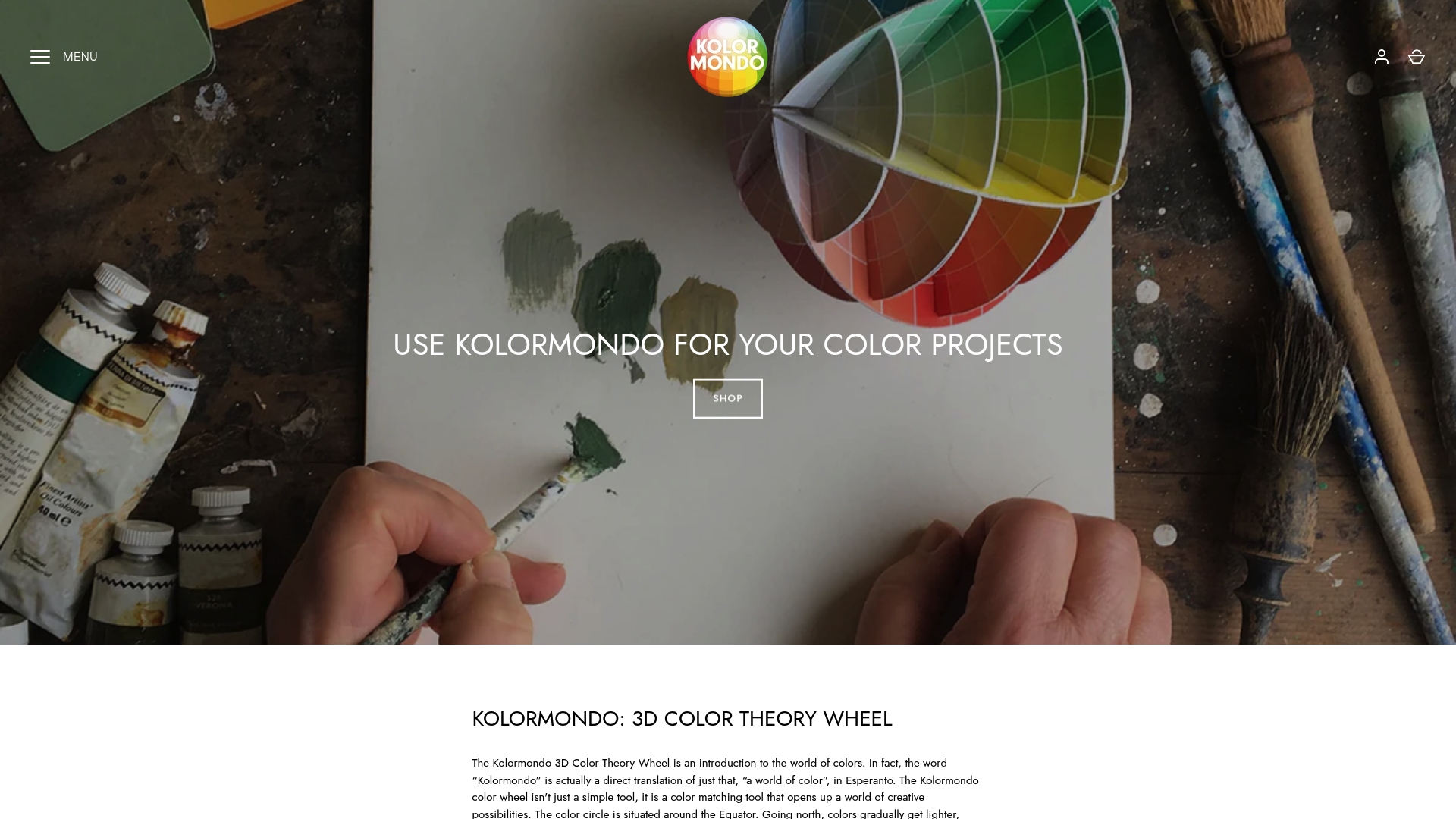
Discover how the Kolormondo globe can transform your teaching or learning by making colour perception intuitive and engaging. Paired with specially designed Educational material and lesson plans - Kolormondo and expert Lectures and Workshops about color - Kolormondo this is your opportunity to move beyond colour misconceptions and elevate artistic education. Visit https://kolormondo.com today to explore the full range and bring colour theory to a new dimension.
Frequently Asked Questions
What are the primary components of colour systems in art education?
Colour systems in art education focus on three main dimensions: hue (the basic colour), saturation (the intensity of the colour), and brightness (the amount of light that reflects from the colour). Understanding these components helps students grasp the complex relationships between colours.
How do three-dimensional colour representations enhance learning?
Three-dimensional colour representations, such as the Kolormondo globe, allow students to visually and physically interact with colours, revealing their relationships in a more dynamic way than traditional flat charts. This spatial understanding promotes deeper comprehension of colour interactions.
What are the key differences between RGB, CMYK, and CIE colour models?
RGB is typically used for digital displays, CMYK is ideal for print media, and CIE serves as a scientific standard for colour. Each model measures hue, saturation, and luminance differently, reflecting their specific applications within various fields.
What challenges do educators face when integrating advanced colour systems into teaching?
Educators may encounter challenges such as insufficient training in new methodologies, limited access to advanced resources, cognitive overload for students from diverse backgrounds, and issues with integrating new concepts into existing curricula.
Recommended
Find similar articles
understanding color systems
