
Most british art educators agree that flat colour wheels often fall short for teaching complex colour theory concepts. This matters because a truly spatial grasp of chromatic relationships helps students build deeper skills and confidence. Studies show that interactive, three-dimensional tools like colour globes can boost student retention by up to 50 percent compared to traditional methods. Discover how exploring colour in a spherical format brings clarity and excitement to learning, making advanced theory far more accessible.
Table of Contents
- Defining Colour Globes And Common Misconceptions
- Types And Variations Of Colour Globes Explained
- How 3D Colour Globes Enhance Learning
- Key Educational And Creative Applications
- Comparing Colour Globes With Flat Wheels And Charts
- Practical Challenges And Best Usage Tips
Key Takeaways
| Point | Details |
|---|---|
| Three-dimensional Understanding | Colour globes offer a spatial approach to colour relationships, surpassing the limitations of traditional two-dimensional models. |
| Educational Versatility | They serve diverse educational and professional needs, facilitating a deeper understanding of colour dynamics in various fields. |
| Enhanced Learning Experience | 3D globes promote a multisensory and interactive learning environment, improving memory retention and conceptual clarity. |
| Implementation Considerations | Educators should integrate colour globes thoughtfully, starting with specific modules to maximise engagement and outcomes. |
Defining colour globes and common misconceptions
Colour globes represent an innovative three-dimensional approach to understanding colour relationships, moving far beyond traditional flat colour wheels. Unlike conventional two-dimensional models, these spherical representations provide a comprehensive spatial understanding of how colours interact, connect, and transform. Colour theory research has long highlighted the limitations of traditional representation methods, revealing why modern educators and designers are increasingly turning to more dynamic visualisation techniques.
Traditional colour theory often suffers from significant misconceptions, particularly regarding how colours genuinely relate to one another. Most people assume colour relationships are simple and linear, but colour globes demonstrate the intricate, multidimensional nature of chromatic interactions. These spherical models reveal subtle transitions, complementary relationships, and complex colour harmonies that flat charts cannot capture. By presenting colours in a three-dimensional space, colour globes allow learners to rotate, examine, and comprehend colour connections from multiple perspectives.
Common misunderstandings about colour globes frequently stem from limited exposure to advanced visual learning tools. Many assume these are merely decorative objects, when in fact they are sophisticated educational instruments. Academic perspectives emphasise that colour theory’s terminology and representation are often ambiguous and context-dependent, making three-dimensional models crucial for precise understanding. Colour globes solve this problem by providing a consistent, scientifically grounded framework that transcends traditional two-dimensional limitations.
Pro Tip for Colour Learning: Approach colour theory as a spatial, interconnected system rather than a series of isolated rules. Experiment with different viewing angles and perspectives when studying colour relationships to unlock deeper, more nuanced understanding.
Types and variations of colour globes explained
Colour globes come in diverse forms, each designed to address specific educational and professional needs. Exploring the fundamental concepts of colour representation, these models range from basic educational tools to advanced professional instruments. Some are crafted for classroom learning, while others serve specialised design and artistic purposes, offering unique approaches to understanding chromatic relationships.
Professional colour globes typically feature more sophisticated design elements. These advanced models often include precise colour coding systems, scientifically calibrated colour gradients, and detailed reference points that allow designers, artists, and researchers to analyse colour interactions with exceptional accuracy. They might incorporate additional features like:
- Removable colour segments
- Digital colour reference points
- Precise angle measurement capabilities
- Material-specific colour representation
Amatuer and educational colour globes present a more accessible approach to colour theory. These versions are usually more compact, lightweight, and designed to introduce fundamental colour principles. Colour learning techniques for beginners often leverage these simpler, more intuitive models to help students grasp basic colour relationships without overwhelming technical complexity. Such globes typically focus on clear, visual representation of primary, secondary, and tertiary colour interactions.
Pro Tip for Colour Globe Selection: Match the complexity of your colour globe to your specific learning or professional requirements. Beginners should start with simpler models that emphasise core colour principles, while professional designers might benefit from more advanced, scientifically precise instruments.
How 3D colour globes enhance learning
Modern educational research demonstrates how three-dimensional visualisation transforms learning experiences, particularly in complex subjects like colour theory. 3D colour globes revolutionise traditional learning by providing a spatial, interactive approach to understanding chromatic relationships that static two-dimensional charts simply cannot achieve. By allowing students and professionals to physically rotate, examine, and interact with colour representations, these innovative tools create a more immersive and intuitive learning environment.
Cognitive Benefits of 3D Learning emerge from the globe’s unique design. Unlike flat colour wheels, these spherical models enable learners to comprehend colour interactions from multiple perspectives, revealing subtle transitions and relationships that remain hidden in traditional representations. Students can observe how colours blend, contrast, and interconnect by manipulating the globe, transforming abstract colour theory concepts into tangible, memorable experiences. This hands-on approach significantly enhances spatial understanding and memory retention, making complex colour principles more accessible and engaging.
Exploring colour visualization techniques reveals that 3D globes offer unprecedented advantages in educational settings. They support diverse learning styles by providing visual, kinesthetic, and interactive learning experiences. Artists, designers, and students can explore colour harmony, complementary relationships, and chromatic depth with unprecedented clarity. These globes bridge theoretical knowledge with practical understanding, allowing learners to see how colours genuinely interact in three-dimensional space rather than relying on simplified, two-dimensional interpretations.
Pro Tip for Colour Learning: Experiment with different viewing angles and physical interactions when using a 3D colour globe. Rotate the sphere, observe colour transitions, and challenge yourself to understand how slight perspective changes reveal new chromatic insights.
Key educational and creative applications
Global research illuminates the remarkable versatility of colour globes across diverse professional and educational contexts, revealing their transformative potential far beyond traditional teaching tools. These innovative spherical models serve multiple functions, bridging theoretical understanding with practical application across art, design, scientific research, and educational disciplines. By offering a tangible, three-dimensional representation of colour interactions, they provide unprecedented insights into chromatic relationships.
Creative Applications represent a particularly exciting domain for colour globes. Visual artists, graphic designers, and interior design professionals utilise these tools to explore complex colour harmonies, understand subtle chromatic transitions, and develop more sophisticated colour palettes. Colour theory tips for educators and artists highlight how these globes enable practitioners to move beyond conventional colour wheel limitations, offering a more nuanced understanding of colour dynamics. Designers can experiment with colour combinations, understand complementary relationships, and develop more intuitive colour strategies by physically manipulating and observing colour interactions.
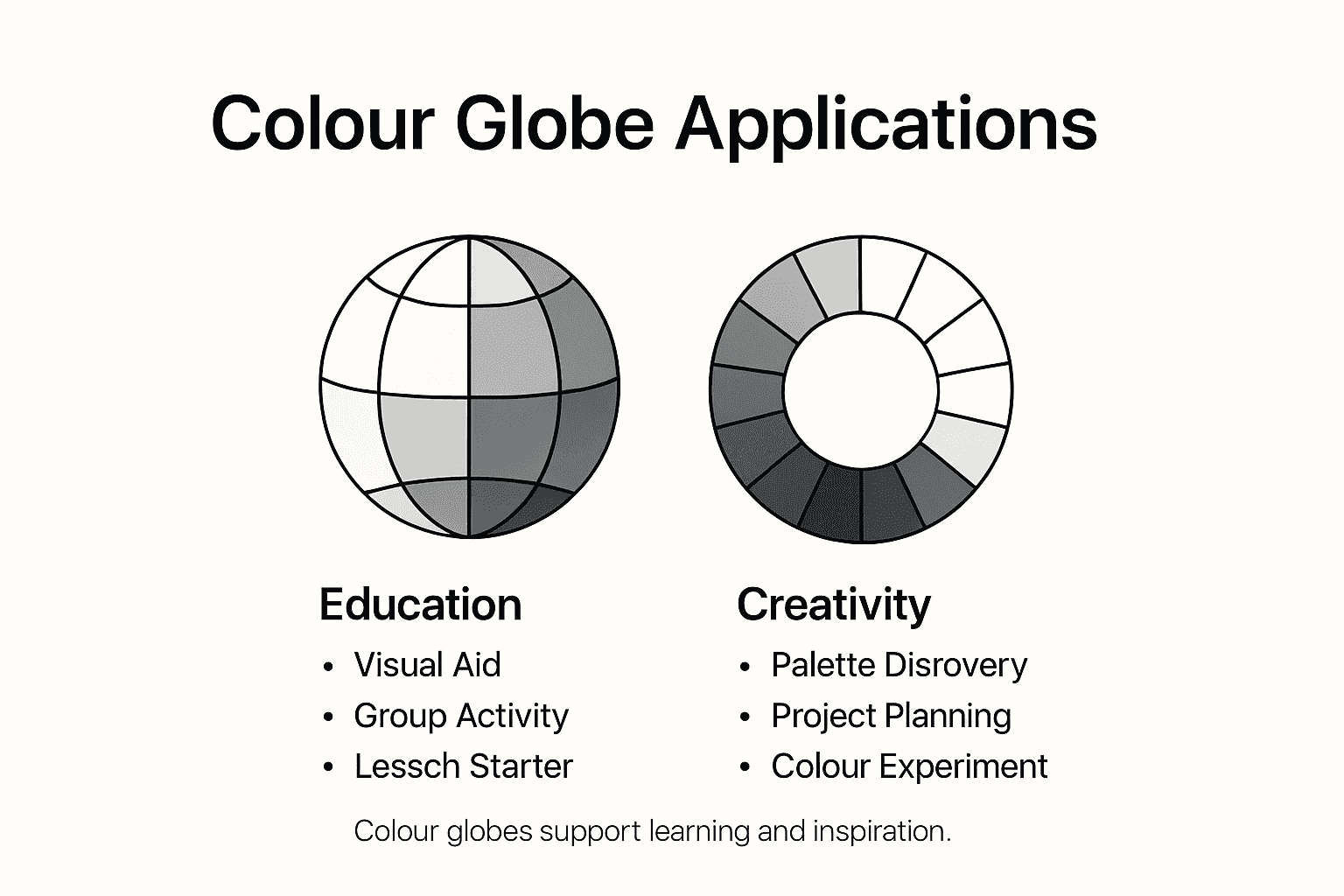
In educational settings, colour globes transcend traditional learning boundaries. They support diverse learning styles by providing tactile, visual, and interactive experiences that engage students more effectively than static two-dimensional resources. Science educators, art instructors, and design professors can leverage these tools to demonstrate complex colour principles, helping students develop a deeper, more intuitive understanding of chromatic relationships. The three-dimensional nature allows learners to comprehend colour as a dynamic, interconnected system rather than a series of isolated, flat concepts.
The following table outlines the primary educational and creative applications for colour globes:
| Application Area | Main Benefit | Target Users |
|---|---|---|
| Art & Design | Deeper palette exploration | Visual artists, designers |
| Science Education | Enhanced colour concept clarity | Science teachers, students |
| Creative Learning | Supports multisensory engagement | Art instructors, creative leads |
| Professional Training | Precise chromatic analysis | Specialist designers, educators |
Pro Tip for Colour Exploration: Approach colour learning as a multisensory experience. Experiment with different viewing angles, lighting conditions, and physical interactions to unlock deeper insights into colour complexity and relationships.
Comparing colour globes with flat wheels and charts
Traditional colour wheels represent a limited, two-dimensional approach to understanding colour relationships that fundamentally constrains visual comprehension. Exploring the evolution of colour representation techniques reveals the critical shortcomings of these flat models. Conventional charts typically present colours as linear arrangements, forcing viewers to imagine complex chromatic interactions through a restrictive, planar perspective that fails to capture the true depth and interconnectedness of colour systems.
Colour globes dramatically transform this understanding by introducing a three-dimensional framework that mirrors the genuine complexity of colour relationships. Unlike flat wheels, which compress colour interactions into a single plane, spherical models allow users to rotate, examine, and explore chromatic connections from multiple angles. This spatial representation enables more nuanced observations about colour temperature, saturation, and complementary relationships that remain invisible in traditional two-dimensional formats. The globe’s design inherently demonstrates how colours transition, blend, and interact in a more organic, intuitive manner.
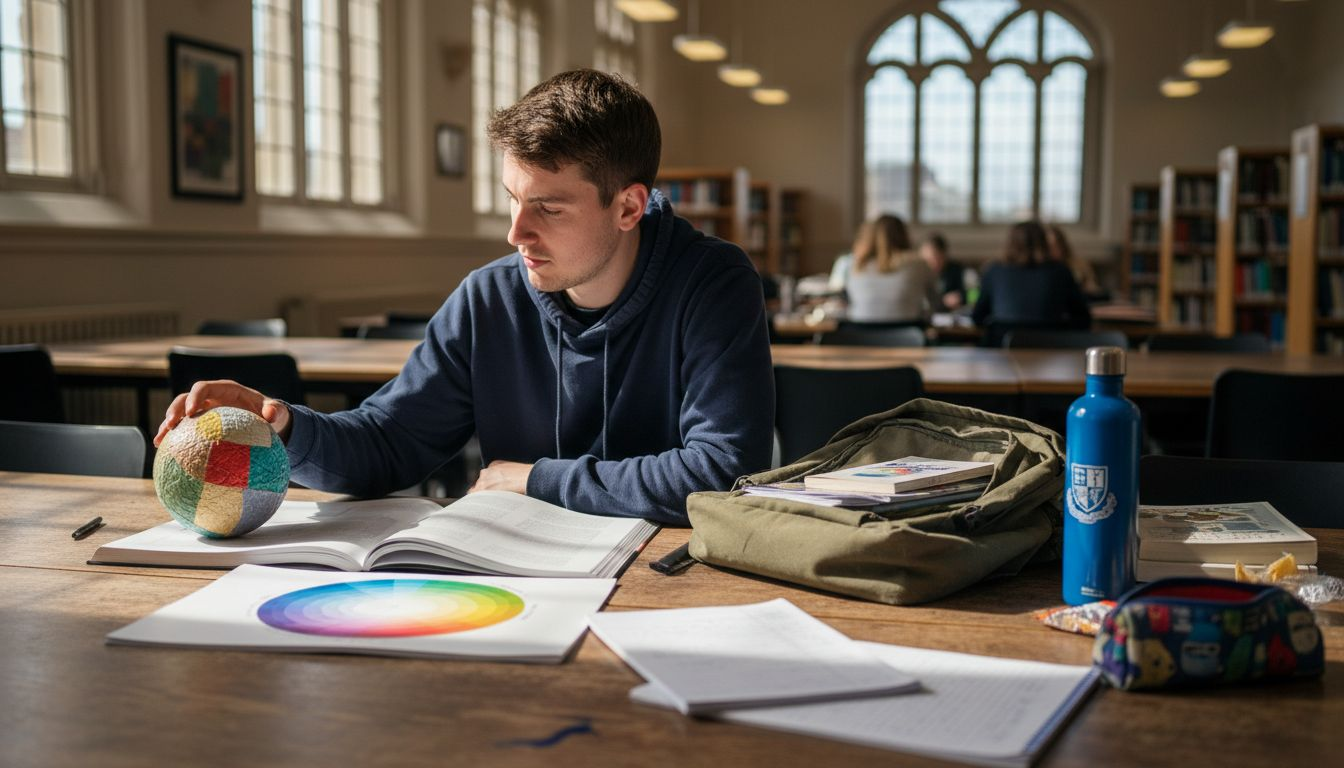
Comparative Limitations become immediately apparent when examining traditional colour charts. Flat wheels typically rely on simplistic segmentation, presenting colours as discrete, disconnected elements. In contrast, colour globes showcase colours as part of an interconnected, dynamic system. The spherical design allows for:
Here is a concise comparison of key differences between colour globes and traditional colour wheels:
| Aspect | Colour Globes | Colour Wheels |
|---|---|---|
| Dimensionality | Three-dimensional spatial model | Flat, two-dimensional model |
| Perception of Harmony | Reveals complex relationships | Shows basic harmony only |
| User Interaction | Can be rotated and manipulated | Fixed, limited interaction |
| Educational Depth | Supports advanced exploration | Suitable for beginners only |
- Comprehensive colour spectrum representation
- Dynamic perspective shifts
- Precise colour relationship visualisation
- Intuitive understanding of chromatic transitions
Pro Tip for Colour Understanding: Challenge your visual perception by examining colour relationships from multiple perspectives. Use three-dimensional models to break free from traditional, linear colour thinking and explore the true complexity of chromatic interactions.
Practical challenges and best usage tips
Contemporary colour education faces significant challenges when integrating advanced learning tools like colour globes, requiring thoughtful implementation strategies. Educators and institutions must navigate complex considerations including budget constraints, curriculum limitations, and teacher training requirements. Understanding these potential barriers is crucial for successfully incorporating three-dimensional colour learning models into existing educational frameworks.
Implementation Challenges can emerge across different learning environments. Technical limitations often include initial cost considerations, potential fragility of globe models, and the need for specialised training to maximise their educational potential. Educational institutions must carefully assess:
- Appropriate age groups for globe usage
- Integration with existing curriculum
- Budget allocation for specialised learning tools
- Professional development requirements for educators
Successful adoption demands a strategic approach that recognises the unique value of three-dimensional colour representation. Best practices for colour theory instruction suggest starting with targeted, modular implementations. This might involve introducing globes in specific modules like design, art, or scientific colour studies, rather than attempting whole-scale curriculum transformation. Gradual integration allows educators to build confidence, develop effective teaching strategies, and demonstrate tangible learning outcomes.
Pro Tip for Effective Implementation: Start small and scale progressively. Begin by introducing colour globes in one specific course or module, document student engagement and learning outcomes, and use these insights to develop a more comprehensive integration strategy.
Discover the Power of 3D Colour Learning with Kolormondo
The article highlights the challenge of mastering complex colour relationships in traditional two-dimensional models. If you want to overcome common misconceptions and develop a deeper, spatial understanding of colour theory, Kolormondo offers a brilliant solution. Our innovative 3D colour globes transform abstract concepts into tangible learning experiences. With the ability to rotate and interact physically, these globes reveal intricate chromatic connections and harmonies that flat charts cannot convey.
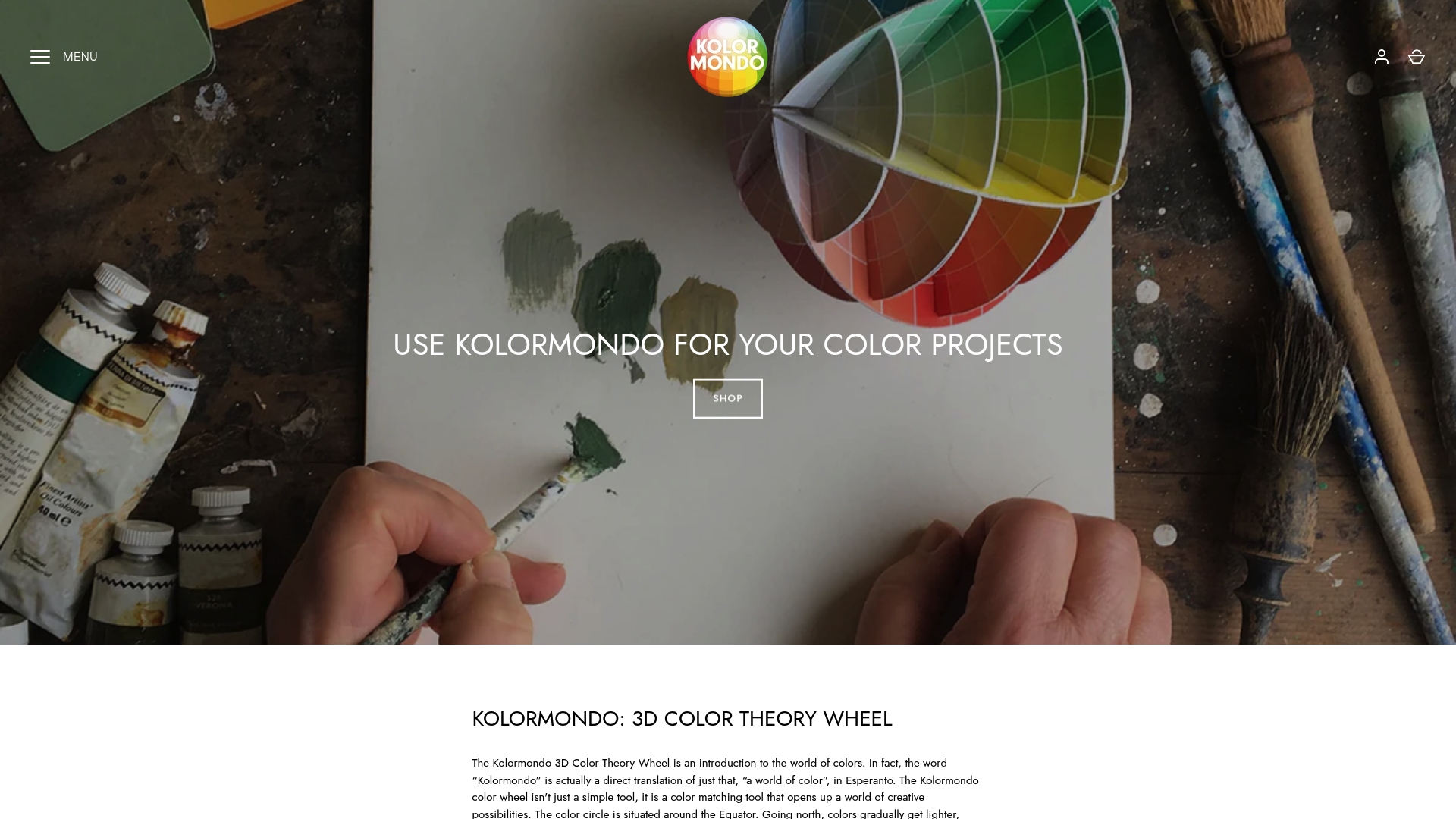
Explore our range of meticulously designed globes in the Colour Globe and colour sphere - Kolormondo collection. Whether you are an educator, designer, or enthusiast aiming to enrich your colour comprehension, our globes provide an immersive learning tool tailored to your needs. Complement your journey with expert insights and ready-to-use resources available in our Educational material and lesson plans - Kolormondo section. Take action now and embrace a more intuitive, hands-on approach to colour at Kolormondo.com to elevate your teaching or creative projects today.
Frequently Asked Questions
What are colour globes and how do they differ from traditional colour wheels?
Colour globes are three-dimensional models that represent colour relationships in a spatial format, allowing users to explore chromatic interactions more intuitively. Unlike traditional flat colour wheels, which provide a limited, two-dimensional perspective, colour globes offer a comprehensive understanding of how colours connect and transform.
How can colour globes enhance learning in education?
Colour globes facilitate a more immersive and interactive learning experience by enabling students to manipulate the globe and observe colour transitions from different angles. This hands-on approach enhances spatial understanding and memory retention, making complex colour principles more accessible and engaging compared to static two-dimensional charts.
What type of colour globe should I choose for educational purposes?
For beginners or educational contexts, simpler and more compact colour globes that emphasise core colour principles are recommended. For professionals or advanced learners, more sophisticated models featuring precise colour coding and additional analytical tools can be more beneficial.
How can colour globes improve the creative process for artists and designers?
Colour globes support artists and designers by providing a tangible representation of colour relationships, allowing for deeper exploration of colour harmonies and transitions. By manipulating the globe, users can experiment with colour combinations and gain insights into how colours interact, leading to more informed and intuitive colour strategies.
Recommended
Find similar articles
why use color globes
