
Most people never realize how a three-dimensional approach to colour can totally reshape our understanding of visual relationships. For British designers, artists, and curious learners, moving beyond flat colour charts reveals a world of complex interactions and subtle shifts that conventional 2D methods simply miss. By exploring colour through spatial models, you can discover richer nuances and deepen your practical skills. Studies show three-dimensional visualization boosts retention and spatial comprehension by over 50 percent compared to traditional learning techniques.
Table of Contents
- Three-Dimensional Colour: Core Concepts and Misconceptions
- Comparing 2D Charts and 3D Colour Models
- How 3D Colour Visualisation Enhances Learning
- Applications in Art, Design, and Education
- Choosing Tactile Versus Digital 3D Colour Tools
Key Takeaways
| Point | Details |
|---|---|
| Three-Dimensional Colour Models | These models provide a more nuanced understanding of colour relationships, overcoming the limitations of traditional two-dimensional representations. |
| Enhanced Learning Potential | Engaging with 3D colour visualisation fosters deeper cognitive processing and greater memory retention compared to flat models. |
| Tactile vs Digital Tools | Both tactile and digital 3D colour tools offer unique advantages, making it beneficial to incorporate both in colour learning strategies. |
| Actionable Exploration | Experimenting with colour through hands-on interaction and multiple perspectives leads to more sophisticated colour comprehension. |
Three-Dimensional Colour: Core Concepts and Misconceptions
Understanding colour requires moving beyond traditional flat representations. Three-dimensional colour models offer a revolutionary approach to comprehending colour relationships, revealing nuances that conventional 2D charts cannot capture. Spatial visualization techniques demonstrate how perceiving colour as a multidimensional construct enhances learning and comprehension.
Traditional colour theories typically present colour as a linear or circular arrangement, which fundamentally limits our understanding. A three-dimensional colour model allows learners to explore colour’s intricate relationships through depth, volume, and spatial positioning. This approach enables individuals to understand how colours interact, blend, and transform across different contexts, providing a more holistic and intuitive learning experience.
Common misconceptions about three-dimensional colour perception include believing that colour can be understood through simple two-dimensional representations. In reality, advanced spatial visualization training reveals the complexity of colour perception. Colours are not static entities but dynamic, interconnected elements that shift and change based on context, light, and surrounding hues. By embracing a three-dimensional perspective, designers, artists, and students can develop a more sophisticated understanding of colour theory.
Pro Colour Insight: Experiment with physical colour models to train your spatial colour perception. Rotate, examine, and interact with three-dimensional colour representations to develop a more nuanced understanding of how colours truly interact and transform.
Comparing 2D Charts and 3D Colour Models
Traditional colour representations have predominantly relied on two-dimensional charts, which inherently limit our understanding of colour complexity. Comparative visual projection techniques reveal significant limitations in these flat representations, demonstrating how dimensionality profoundly impacts information perception. Two-dimensional colour models typically present colours as linear or circular arrangements, reducing the rich, multifaceted nature of colour interactions to a simplified, restrictive format.
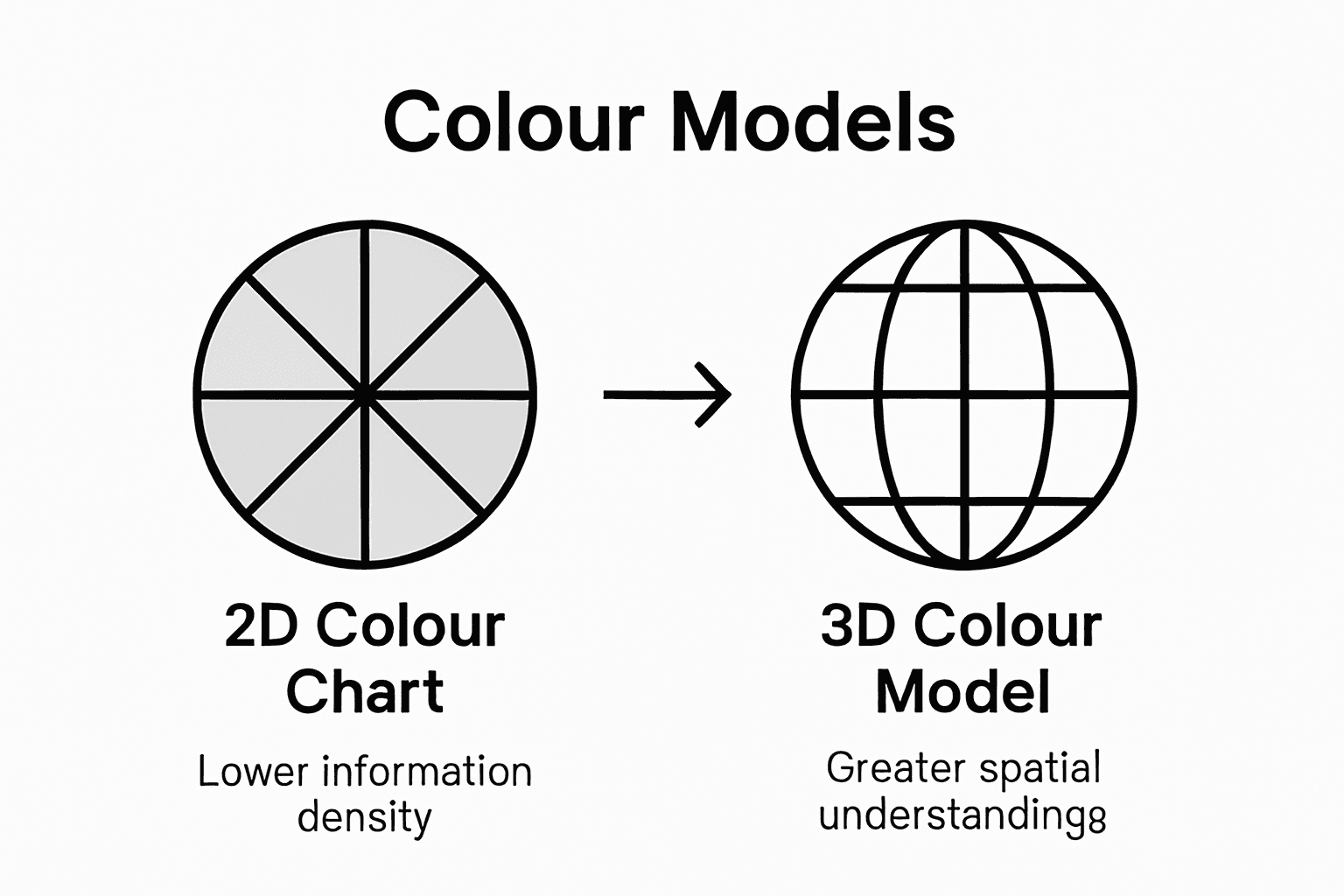
The fundamental difference between 2D and 3D colour models lies in their spatial representation. While 2D charts force colours into predetermined geometric shapes, three-dimensional models allow for a more nuanced exploration of colour relationships. Perceptual visualization studies indicate that three-dimensional representations enable viewers to understand colour depth, saturation, and interconnectedness more intuitively. This approach transforms colour from a static concept to a dynamic, interactive experience.

Key distinctions between 2D and 3D colour models include their information density, spatial comprehension, and learning potential. Two-dimensional charts provide a linear perspective, often struggling to represent complex colour transitions and relationships. In contrast, three-dimensional colour models offer a holistic view, allowing learners to rotate, examine, and interact with colour spaces. This interactive approach enables deeper understanding of how colours blend, contrast, and influence each other across different contexts and lighting conditions.
Pro Colour Learning Tip: Practice rotating physical or digital 3D colour models to develop a more sophisticated understanding of colour relationships. Observe how colours interact from multiple perspectives, revealing nuances impossible to perceive in traditional 2D representations.
Here is a comparison of key characteristics and learning impacts of two-dimensional and three-dimensional colour models:
| Characteristic | 2D Colour Charts | 3D Colour Models |
|---|---|---|
| Visual Structure | Flat, linear or circular | Spatial, volumetric forms |
| Complexity Revealed | Limited interactions shown | Nuanced relationships visible |
| User Interaction | Minimal, static viewing | Hands-on rotation and exploration |
| Learning Impact | Basic colour recognition | Enhanced spatial understanding |
| Practical Use | Quick reference | In-depth colour theory study |
How 3D Colour Visualisation Enhances Learning
Three-dimensional colour visualization represents a transformative approach to learning that transcends traditional educational methods. Experimental studies on 3D modeling demonstrate significant improvements in creative thinking and spatial understanding, particularly among young learners. By allowing students to interact with colour as a multidimensional construct, 3D visualization techniques break down the barriers of conventional two-dimensional representation, enabling a more holistic and intuitive learning experience.
The cognitive benefits of 3D colour visualization extend far beyond simple visual perception. Multisensory educational technologies reveal that interactive three-dimensional colour models engage multiple learning pathways simultaneously. Students can rotate, examine, and manipulate colour representations, which encourages deeper cognitive processing and enhanced memory retention. This approach transforms colour from an abstract concept into a tangible, explorable experience that stimulates spatial reasoning and creative thinking.
Practical applications of 3D colour visualization span multiple disciplines, from art and design to scientific research and educational training. By providing a comprehensive view of colour relationships, these models help learners understand complex interactions that are impossible to perceive in traditional flat representations. The spatial nature of 3D visualization allows for a more nuanced exploration of colour theory, enabling students to comprehend subtle variations in hue, saturation, and brightness that conventional methods often obscure.
Pro Colour Learning Tip: Engage with interactive 3D colour models regularly to develop a more sophisticated understanding of colour relationships. Experiment with rotating and viewing colours from multiple perspectives to unlock deeper insights into their complex interactions.
Applications in Art, Design, and Education
Three-dimensional colour visualization offers transformative potential across multiple disciplines, revolutionising how professionals and students engage with colour theory. Multi-colour 3D printing techniques demonstrate remarkable applications that extend far beyond traditional artistic approaches, providing innovative tools for understanding and representing colour relationships in unprecedented ways. From graphic design studios to educational institutions, 3D colour models are reshaping our fundamental comprehension of visual perception.
In artistic contexts, three-dimensional colour visualization enables creators to explore complex colour interactions with remarkable depth and nuance. Painters, digital artists, and designers can utilise 3D models to understand colour harmony, complementary relationships, and subtle chromatic transitions that are impossible to perceive through conventional two-dimensional representations. This approach allows for more sophisticated colour selection, helping artists develop more refined palettes and more intentional visual compositions.
Educational settings benefit profoundly from three-dimensional colour learning approaches. Students in art, design, architecture, and visual communication can develop superior spatial reasoning skills by interacting with dynamic colour models. These interactive tools transform colour theory from an abstract concept into a tangible, explorable experience, enabling learners to comprehend intricate colour dynamics through direct manipulation and observation. By providing a holistic, immersive approach to colour understanding, 3D visualisation techniques make complex theoretical concepts more accessible and engaging.
Pro Colour Learning Tip: Create personal colour exploration projects using 3D colour models. Experiment with different colour combinations, observe interactions from multiple perspectives, and document your discoveries to develop a more intuitive understanding of colour relationships.
Choosing Tactile Versus Digital 3D Colour Tools
Three-dimensional colour visualization presents learners and professionals with two primary engagement methods: tactile physical models and digital interactive platforms. Scalable 3D visualization technologies reveal compelling insights into the strengths and limitations of both approaches, demonstrating that each medium offers unique advantages for colour learning and comprehension. Understanding these differences becomes crucial for selecting the most appropriate tool for specific learning objectives and personal preferences.
Tactile 3D colour tools provide an immediate, physical sensory experience that digital platforms cannot fully replicate. Perceptual studies on 3D printed representations highlight the cognitive benefits of tangible models, particularly in developing spatial reasoning and deep colour relationship understanding. Physical models allow users to rotate, manipulate, and directly interact with colour spaces, creating a more immersive learning experience that engages multiple sensory pathways. These tools are especially valuable for individuals who learn best through kinesthetic and hands-on approaches.
Digital 3D colour tools, conversely, offer unprecedented flexibility and accessibility. These platforms provide interactive features such as instant colour combination exploration, precise colour code references, and the ability to save and share colour palettes across different devices. They eliminate the physical storage challenges of tactile models and enable users to access complex colour visualizations from anywhere with an internet connection. Digital tools are particularly beneficial for professionals who require quick, precise colour analysis and those working in digital design fields.
Pro Colour Learning Tip: Combine both tactile and digital 3D colour tools in your learning strategy. Use physical models for deep understanding and sensory exploration, while leveraging digital platforms for quick references, precise colour matching, and collaborative design work.
Below is a summary of tactile versus digital 3D colour tools and their unique learning benefits:
| Tool Type | Sensory Engagement | Practical Advantage | Ideal Use Case |
|---|---|---|---|
| Tactile Physical Models | Direct, hands-on manipulation | Stimulates kinaesthetic learning | Spatial skill development |
| Digital Interactive Tools | Visual and interactive features | Easy sharing and colour precision | Rapid design iteration |
Discover Colour in Its True Dimension with Kolormondo
The challenge of grasping complex colour relationships through flat, two-dimensional charts is clear. This article highlights how three-dimensional colour visualisation transforms learning by revealing nuanced interactions and spatial depth that traditional models cannot show. If you want to overcome limitations in colour comprehension and develop an intuitive understanding of hue, saturation, and brightness, exploring tactile, hands-on tools is essential.
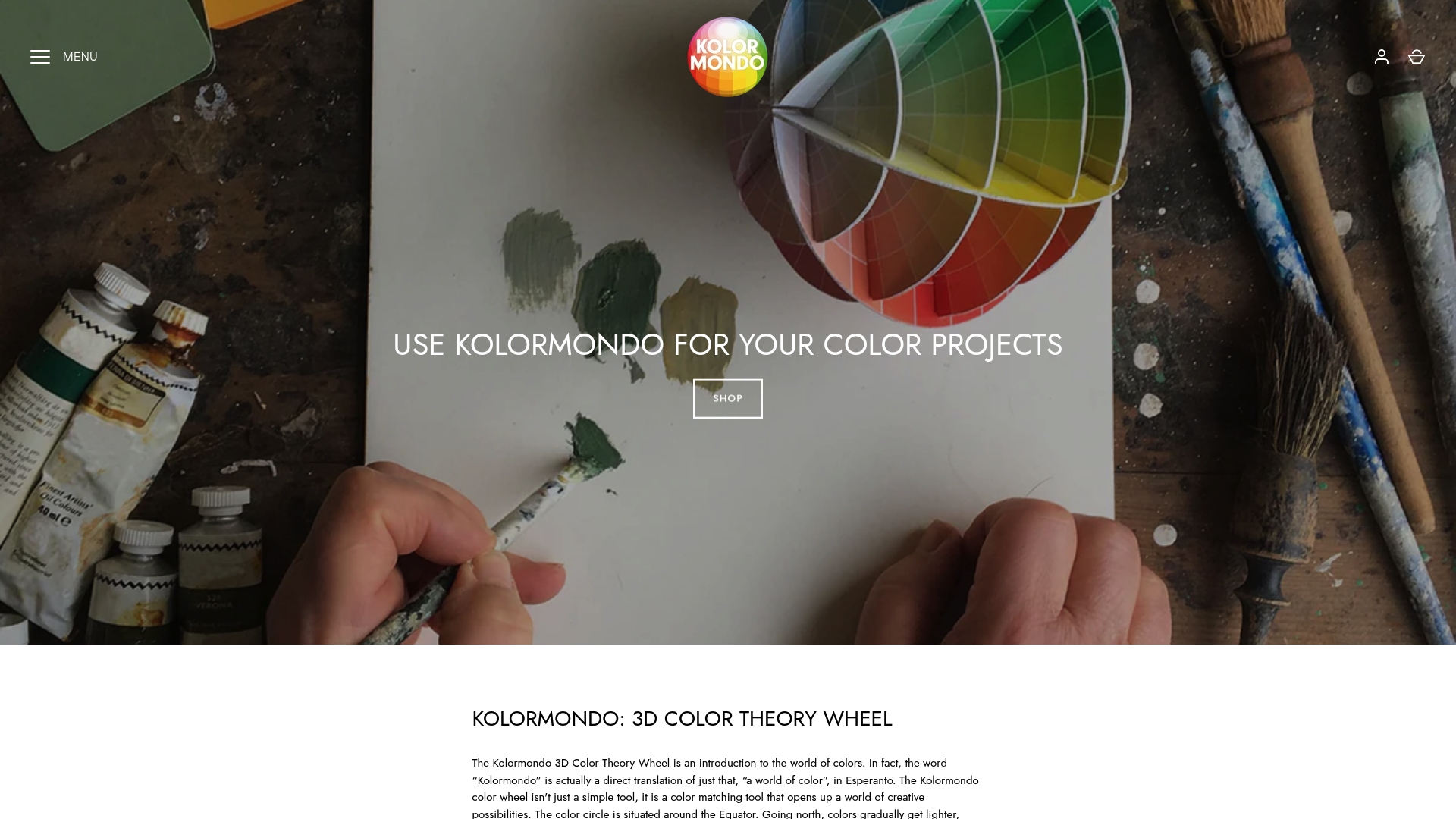
Experience the power of the Kolormondo colour globe, a revolutionary 3D colour model designed to bring colour theory to life. Perfect for educators, designers, artists, and students, it offers an engaging way to manipulate and discover colour connections in real time. Complement your learning with our Educational material and lesson plans - Kolormondo to deepen your understanding and application. Ready to raise your colour skills beyond flat charts Visit Color Globe and color sphere - Kolormondo to find the perfect tactile globe variant for your needs and explore special offers at Special offers for colour. Start your transformative colour journey today at Kolormondo.
Frequently Asked Questions
What is the main advantage of visualising colour in 3D?
Visualising colour in 3D allows for a deeper understanding of colour relationships, blending, and interactions, which flat, two-dimensional models fail to capture. This approach enhances learning by providing a holistic view of colour dynamics.
How does three-dimensional colour visualisation improve learning outcomes?
Three-dimensional colour visualisation engages multiple learning pathways through interactive experiences, facilitating cognitive processing and memory retention. It transforms abstract colour concepts into tangible experiences, making complex theoretical ideas more accessible.
What are the differences between tactile and digital 3D colour tools?
Tactile 3D colour tools offer hands-on manipulation, enhancing kinaesthetic learning and spatial reasoning, while digital tools provide flexibility, precise colour analysis, and ease of sharing. Each type serves different learning preferences and objectives.
How can I apply 3D colour visualisation techniques in my own projects?
You can create personal colour exploration projects using 3D colour models by experimenting with various colour combinations, observing their interactions from multiple angles, and documenting your findings to enhance your understanding of colour relationships.
Recommended
Find similar articles
why visualize color in 3d
