
Most colour theories taught in british classrooms still rely on flat diagrams, yet over 80 percent of visual learners find three-dimensional models easier to grasp. Understanding colour relationships is essential for anyone in art or design, as colour language shapes emotional responses and meaning. Exploring colour globes reveals how these innovative tools offer hands-on and intuitive ways to master chromatic principles, making complex concepts clear for both students and professionals.
Table of Contents
- Defining Colour Globes And Their Purpose
- Comparing 3D Colour Globes To Flat Charts
- Key Features Of The Kolormondo Globe
- Educational Uses In Art And Design Fields
- Practical Benefits For Designers And Artists
Key Takeaways
| Point | Details |
|---|---|
| Understanding Colour Relationships | Colour globes provide a three-dimensional perspective on chromatic interactions, enhancing comprehension beyond traditional two-dimensional charts. |
| Interactive Learning Tool | The tactile nature of colour globes encourages hands-on exploration, fostering a deeper understanding of colour blending and spatial relationships. |
| Versatile Applications | Colour globes are valuable across various design disciplines, aiding in the development of sophisticated colour palettes and visual composition skills. |
| Enhanced Professional Insights | Designers and artists benefit significantly from the detailed visualisation and practical experimentation that colour globes facilitate in their creative processes. |
Defining Colour Globes and Their Purpose
Colour globes represent a transformative visual learning tool designed to help individuals understand colour relationships through three-dimensional representation. These spherical models transcend traditional two-dimensional colour charts by offering a comprehensive, spatial approach to colour theory. Colour functions as a critical medium for conveying meaning and emotional moods, making these tactile learning instruments invaluable for visual comprehension.
Colour globes provide several distinctive advantages over conventional colour reference materials. They enable learners to explore colour interactions from multiple perspectives, revealing nuanced relationships that flat diagrams cannot capture. These spherical models typically showcase colours arranged systematically, allowing students and professionals to understand:
- Precise colour gradations
- Spatial colour relationships
- Chromatic transitions and harmonies
- Relative colour temperatures and intensities
For artists, designers, and educators, colour globes serve as more than simple reference tools. They function as interactive learning instruments that encourage hands-on exploration of chromatic principles. By rotating and examining colours from different angles, users gain a profound understanding of how colours interact, blend, and communicate visual information.
Professionals across various disciplines recognise the versatility of three-dimensional colour visualisation, from fashion design to interior architecture. These globes transform abstract colour theory into tangible, manipulable knowledge, bridging theoretical understanding with practical application.
Comparing 3D Colour Globes to Flat Charts
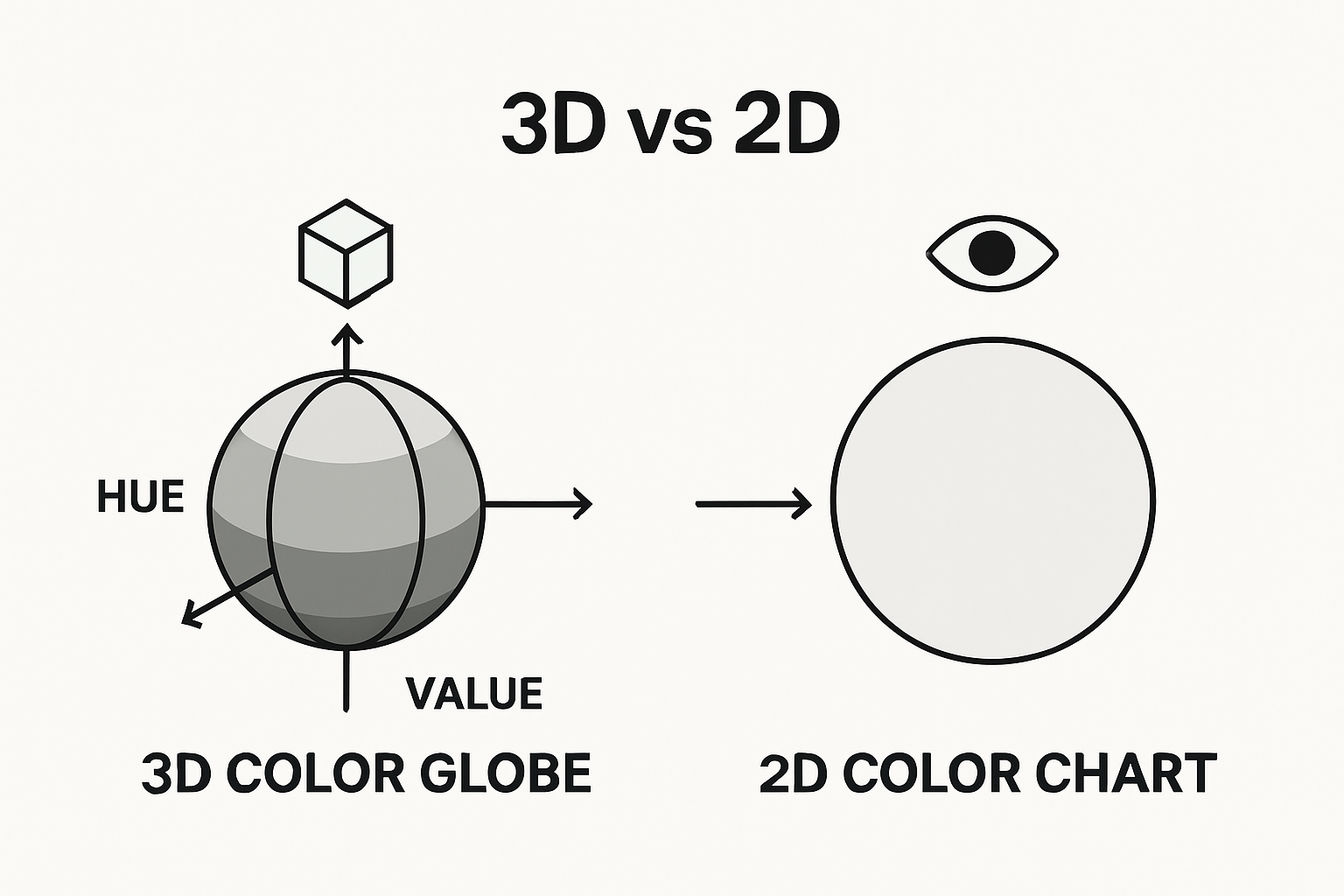
Traditional two-dimensional colour charts have long been the standard reference for artists, designers, and educators. However, these flat representations offer limited insights into the complex world of colour interactions. Visualising colour in three-dimensional formats reveals a more nuanced understanding of chromatic relationships that static charts cannot capture.
The fundamental difference between 3D colour globes and flat charts lies in their spatial representation. Dimensional representation allows users to explore colour relationships from multiple angles, providing a more holistic view of colour theory. Flat charts typically present colours in rigid, linear arrangements, whereas 3D globes showcase:
- Dynamic colour transitions
- Spatial depth and volume
- Interconnected colour relationships
- More intuitive colour mapping
Professional designers and artists recognise that colour perception is inherently three-dimensional. A flat chart can only show limited colour interactions, whereas a globe enables a complete understanding of how colours blend, contrast, and relate to one another. This comprehensive approach is particularly valuable in fields like graphic design, interior architecture, and fashion, where precise colour understanding is crucial.
Moreover, comprehensive colour reference tools demonstrate that three-dimensional models offer superior visual learning experiences. By allowing physical rotation and exploration, these globes transform abstract colour theory into a tangible, interactive experience that engages multiple sensory learning pathways and provides a more intuitive grasp of complex colour principles.
Key Features of the Kolormondo Globe
The Kolormondo Globe represents a breakthrough in colour visualisation technology, offering professionals and enthusiasts an unprecedented approach to understanding chromatic relationships. Exploring colour globe variations reveals two distinct models designed to meet diverse learning and professional requirements.
Structural Design sets the Kolormondo Globe apart from traditional colour reference tools. Its unique three-dimensional spherical model provides a comprehensive representation of colour interactions, featuring:
- Precise colour gradation mapping
- Systematic colour arrangement
- Interactive rotational learning
- Mathematically calculated colour relationships
Professional designers appreciate the globe’s meticulous construction, which allows for intricate colour exploration. Each sphere is engineered to demonstrate how colours blend, contrast, and interconnect across different spatial dimensions. This approach transcends conventional flat colour charts by offering a tactile, immersive learning experience that engages multiple sensory pathways.
Colour globe collections showcase the versatility of these instruments, with options ranging from compact educational models to professional-grade reference spheres. The thoughtful design ensures that whether you are a student, artist, or design professional, there is a Kolormondo Globe tailored to your specific colour exploration needs, providing an intuitive and visually stunning approach to understanding colour theory.
Educational Uses in Art and Design Fields
Colour globes serve as transformative educational tools across diverse artistic disciplines, providing students and professionals with an immersive approach to understanding chromatic relationships. Artists exploring colour theory techniques recognise these three-dimensional models as essential instruments for comprehensive visual learning.
Practical Applications span multiple design disciplines, demonstrating the globe’s versatility in educational settings. Design students and professionals utilise these spherical models for:
- Precise colour mixing demonstrations
- Understanding complex chromatic interactions
- Developing sophisticated colour palettes
- Exploring spatial colour relationships
- Enhancing visual composition skills
In painting and graphic design programmes, colour globes enable students to move beyond theoretical concepts, providing tangible insights into how colours interact, blend, and create visual harmony. The tactile, rotational nature of these globes allows learners to experiment with colour relationships dynamically, transcending the limitations of traditional two-dimensional colour wheels.

Comprehensive colour theory aids highlight the importance of interactive learning tools in creative education. By offering a hands-on approach to colour understanding, these globes bridge the gap between abstract theory and practical application, empowering artists and designers to develop a more nuanced and intuitive relationship with colour across fashion, interior design, digital media, and fine arts disciplines.
Practical Benefits for Designers and Artists
Designers and artists require sophisticated tools that transform theoretical knowledge into practical creative skills. Exploring advanced colour wheel blending techniques reveals how three-dimensional colour globes provide unprecedented insights into chromatic interactions that traditional reference materials cannot replicate.
Professional Applications demonstrate the globe’s critical value across creative disciplines. Design professionals leverage these instruments to:
- Develop precise colour harmonies
- Understand subtle chromatic nuances
- Create mathematically balanced palettes
- Predict colour interaction outcomes
- Communicate design concepts visually
In architectural and interior design contexts, colour globes enable professionals to experiment with spatial colour relationships dynamically. By rotating and examining colours from multiple perspectives, designers can anticipate how different hues will interact within three-dimensional environments, bridging conceptual thinking with practical implementation.
Innovative colour application strategies underscore the importance of understanding colour beyond traditional two-dimensional representations. These spherical models provide artists and designers with a tactile, comprehensive approach to colour theory, transforming abstract principles into tangible creative tools that enhance professional workflow and artistic expression.
Discover the Power of Colour Globes in Visual Education
Understanding complex colour relationships can be a challenge when relying solely on traditional flat charts. If you want to move beyond limited two-dimensional models and explore colour theory with a tactile, immersive approach the Kolormondo Globe offers a unique solution. Designed to demonstrate precise colour gradations and spatial interactions the Kolormondo Globe transforms abstract concepts into hands-on learning experiences that engage your creative intuition.
Explore our Color Globe and color sphere - Kolormondo collection to find the perfect 3D colour globe for your educational or professional needs.
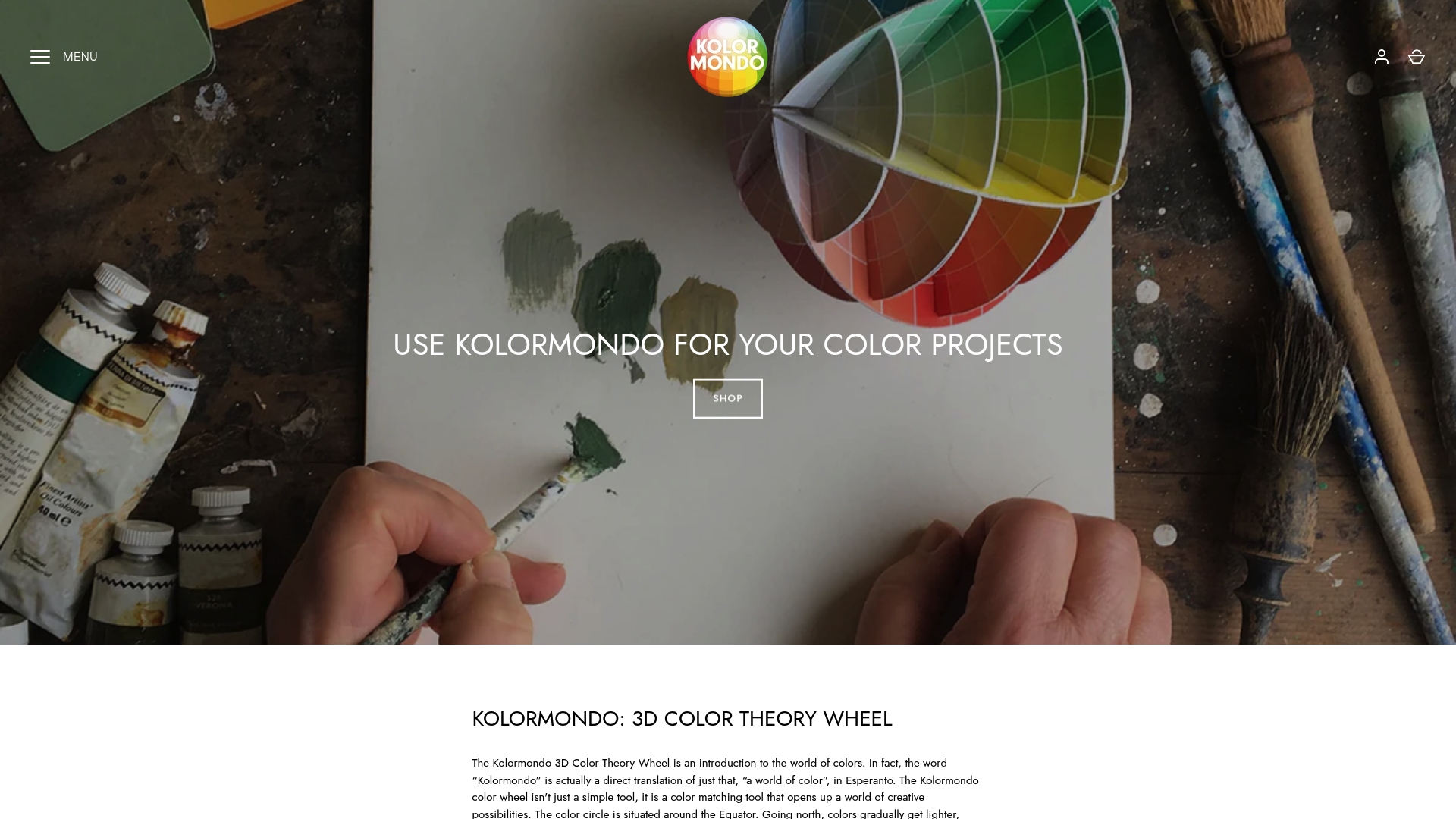
Elevate your understanding of colour today by visiting https://kolormondo.com and discovering how the innovative 3D colour globe can enhance your artistic practice or teaching methods. Take advantage of our Special offers for colour and start your hands-on exploration of visual education now.
Frequently Asked Questions
What are colour globes and how do they differ from traditional colour charts?
Colour globes are three-dimensional visual learning tools that represent colour relationships in a spatial manner, allowing for a more comprehensive understanding of colour interactions compared to traditional two-dimensional colour charts.
How do colour globes enhance learning in artistic disciplines?
Colour globes offer an interactive, tactile learning experience, enabling students and professionals to explore colour mixing, complex chromatic interactions, and spatial colour relationships dynamically, thus bridging theoretical knowledge with practical application.
What are the advantages of using a 3D colour globe for designers?
3D colour globes provide a deeper understanding of chromatic nuances, allow for precise development of colour harmonies, and facilitate the prediction of colour interactions in three-dimensional environments, making them invaluable for designers in fields such as graphic design and interior architecture.
Can colour globes be beneficial for both students and professionals?
Yes, colour globes are versatile educational tools that cater to both students and professionals, allowing them to grasp colour theory more intuitively and apply it effectively in various creative fields, including fashion design, painting, and digital media.
Recommended
Find similar articles
why color globes matter
