

Most british and European art educators encounter challenges when teaching complex colour principles in the classroom. With over 60 percent of students reporting confusion about hue, saturation, and brightness, finding innovative tools for hands-on exploration becomes crucial. Understanding colour theory’s scientific and artistic roots empowers learners to move beyond textbook definitions and discover the dynamic language of visual communication. This article highlights practical strategies to help educators bring colour concepts to life and inspire deeper student engagement.
Table of Contents
- Defining Colour And Its Core Principles
- Essential Aspects Of Colour Theory
- Applications In Art, Design And Education
- Hands-On Tools For Exploring Colour
- Common Misconceptions And Teaching Mistakes
Key Takeaways
| Point | Details |
|---|---|
| Understanding Colour | Colour is a complex interaction between physical wavelengths and human perception, requiring a multidimensional approach that encompasses physiological, psychological, and cultural factors. |
| Core Principles of Colour Theory | Colour theory consists of primary, secondary, and tertiary colours, along with colour relationships, highlighting its significance beyond simple aesthetics. |
| Applications in Education | Colour theory plays a crucial role in art and design education by helping students explore emotional responses, develop mixing techniques, and understand cultural symbolism. |
| Common Misconceptions | Misconceptions about colour mixing and harmony can hinder understanding; educators should promote a holistic, interdisciplinary view of colour to foster deeper comprehension. |
Defining Colour And Its Core Principles
Colour is far more than a simple visual phenomenon - it represents a complex interaction between physical wavelengths and human perception. Scientific research reveals that colour perception emerges from intricate physiological mechanisms within our eyes and brain, transforming light into the vibrant experiences we understand as colour.
At its core, colour theory encompasses multiple interconnected perspectives: scientific, philosophical, and artistic. These approaches collectively help us understand how humans interpret and experience visual information. Interestingly, academic scholars note significant challenges in developing a comprehensive consensus about colour theory’s fundamental principles, reflecting the nuanced complexity of this domain.
Colour perception involves three primary elements: hue (the basic colour), saturation (colour intensity), and brightness (light reflection). Each element contributes uniquely to our visual understanding, demonstrating how colour transcends simple visual representation and becomes a sophisticated sensory experience. Artists, designers, and scientists continue exploring these intricate relationships, recognising colour as a dynamic language of visual communication.

To clarify the unique roles of hue, saturation, and brightness in colour perception, see the summary below:
| Element | Role in Perception | Example Effect |
|---|---|---|
| Hue | Distinguishes basic colour type | Differentiates red from blue |
| Saturation | Indicates vividness or purity | Makes colours appear vibrant |
| Brightness | Relates to lightness or darkness | Makes colours seem lighter |
Expert Insight: When studying colour, approach it as a multidimensional experience rather than a static visual property, considering physiological, psychological, and cultural influences.
Essential Aspects Of Colour Theory
Colour theory represents a complex framework that bridges scientific understanding, artistic expression, and philosophical interpretation. Modern scholarly research highlights the multidisciplinary nature of colour theory, tracing its evolution across scientific, artistic, and philosophical domains, demonstrating its profound significance beyond simple visual representation.
Traditionally, colour theory encompasses several foundational elements that help us comprehend visual perception and communication. These core aspects include:
- Primary Colours: Red, blue, and yellow
- Secondary Colours: Green, orange, and purple (created by mixing primary colours)
- Tertiary Colours: Combinations of primary and secondary colours
- Colour Relationships: Complementary, analogous, and triadic colour schemes
Beyond technical classifications, colour theory deeply explores the psychological and cultural dimensions of colour perception. Interdisciplinary research emphasises that colour theory is not just about visual mechanics, but also about understanding how colours interact, communicate, and evoke emotional responses. Artists, designers, and researchers continue to investigate these intricate relationships, recognising colour as a sophisticated language of visual communication.
Pro Insight: When studying colour theory, approach it as a dynamic, interdisciplinary field that goes beyond simple colour mixing, considering physiological, psychological, and cultural contexts.
Applications In Art, Design And Education
Comprehensive colour theory education reveals profound implications for artistic expression and learning, demonstrating how understanding colour principles transforms creative practice across multiple disciplines. Artists, designers, and educators increasingly recognise colour as a sophisticated language of visual communication that extends far beyond simple aesthetic choices.
In art education, colour theory serves multiple critical functions. Students learn to:
- Understand emotional and psychological colour responses
- Develop sophisticated colour mixing techniques
- Explore cultural and historical colour symbolism
- Create visually compelling compositions
- Communicate complex ideas through strategic colour selection
Design education is evolving to incorporate more holistic, socially aware approaches to colour understanding, moving beyond technical skills to explore ethical and cultural dimensions of colour usage. This transformation encourages designers to consider broader contextual implications of colour choices, recognising that colour communication transcends visual aesthetics and touches fundamental human experiences.
Professional practitioners across art, design, and education now view colour as a dynamic, multifaceted tool for communication, emotional expression, and cultural dialogue. By understanding colour’s complex psychological and technical dimensions, creative professionals can craft more nuanced, meaningful visual experiences.
Here’s a comparison of traditional and modern approaches to teaching colour theory:
| Approach | Key Focus | Pedagogical Impact |
|---|---|---|
| Traditional | Technical colour mixing rules | May oversimplify concepts |
| Modern/Interdisciplinary | Emphasises psychological, cultural, and ethical dimensions | Promotes deeper understanding |
Pro Insight: Develop a practice of consciously observing and analysing colour interactions in everyday environments to deepen your intuitive understanding of colour theory.
Hands-On Tools For Exploring Colour
Hands-on colour exploration tools provide transformative approaches to understanding visual perception and colour interactions, offering educators and students dynamic methods to engage with colour beyond traditional theoretical frameworks. These practical resources bridge the gap between abstract colour theory and tangible learning experiences.
Effective colour exploration tools typically include:
- Physical colour wheels
- Interactive digital colour mixing platforms
- Colour blindness simulation software
- Tactile colour matching exercises
- Experimental colour perception workshops
Digital innovations now enable sophisticated colour palette testing and accessibility exploration, allowing designers and artists to understand colour interactions across diverse visual experiences. Modern tools not only teach colour theory but also emphasise inclusive design principles, helping practitioners create visually engaging and perceptually accessible work.
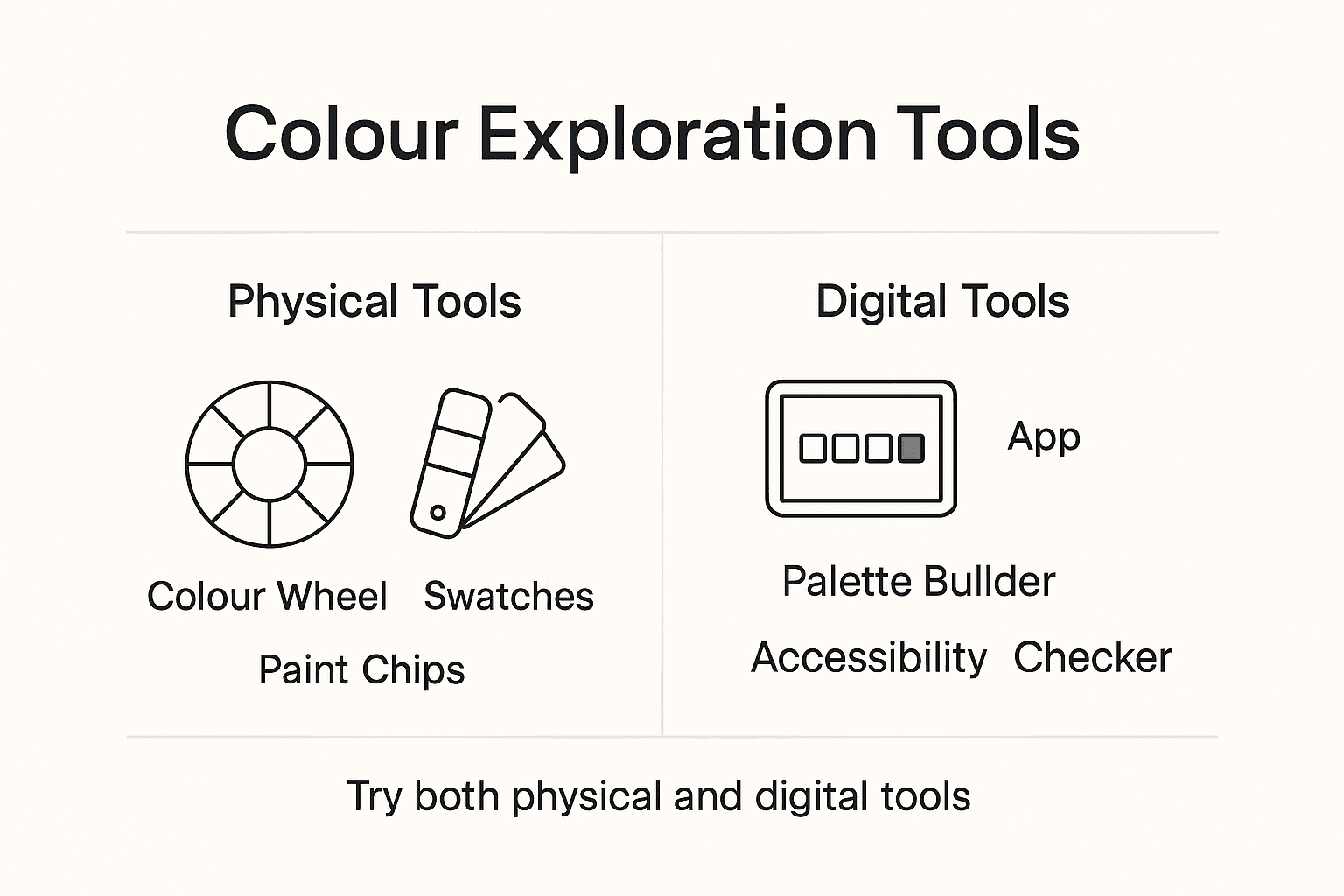
These hands-on approaches transform colour learning from passive observation to active investigation. By encouraging direct manipulation, experimentation, and critical analysis, educators can help learners develop nuanced, intuitive understandings of colour’s complex communicative potential.
Pro Insight: Create a personal colour exploration journal documenting your experimental colour interactions, noting unexpected perceptual discoveries and emotional responses.
Common Misconceptions And Teaching Mistakes
Colour education frequently suffers from persistent misconceptions that significantly impede students’ understanding of complex colour principles, creating barriers to genuine colour literacy and nuanced visual comprehension. These deeply entrenched myths often originate from oversimplified teaching approaches that reduce colour to a mechanical, rule-based system.
Key misconceptions in colour theory include:
- Believing all colours can be perfectly mixed from three primary colours
- Assuming a single colour wheel works universally
- Thinking colour harmony follows strict, unchanging rules
- Conflating different colour systems without understanding their unique contexts
Scientific research reveals significant complexity in understanding colour across different disciplinary perspectives, highlighting how naive assumptions about colour can severely limit educational outcomes. Educators often inadvertently perpetuate these misconceptions by presenting colour as a static concept rather than a dynamic, multifaceted phenomenon that varies across physical, physiological, and cultural domains.
Transforming colour education requires dismantling these simplistic narratives and embracing a more holistic, interdisciplinary approach. By acknowledging colour’s inherent complexity and encouraging critical exploration, educators can help students develop more sophisticated, nuanced understandings of visual communication.
Pro Insight: Challenge colour theory assumptions by experimenting with unexpected colour combinations and documenting your perceptual experiences.
Unlock the Full Potential of Colour Education with Kolormondo
The article highlights the challenge of mastering colour as a complex, multidimensional experience that combines scientific understanding, artistic expression, and cultural context. Many learners struggle with oversimplified colour theories or static teaching methods that do not capture the dynamic nature of hue, saturation, and brightness. If you want to move beyond basic colour mixing and truly transform your visual education, exploring practical, engaging tools is essential.
Discover how Kolormondo’s unique 3D colour globe redefines colour learning by offering hands-on exploration that aligns perfectly with the article’s emphasis on experiential understanding. With this innovative tool, you can see, touch, and manipulate colour relationships like never before. Combine your globe with expertly designed Educational Material and Lesson Plans and deepen your knowledge through Lectures and Workshops about Colour.
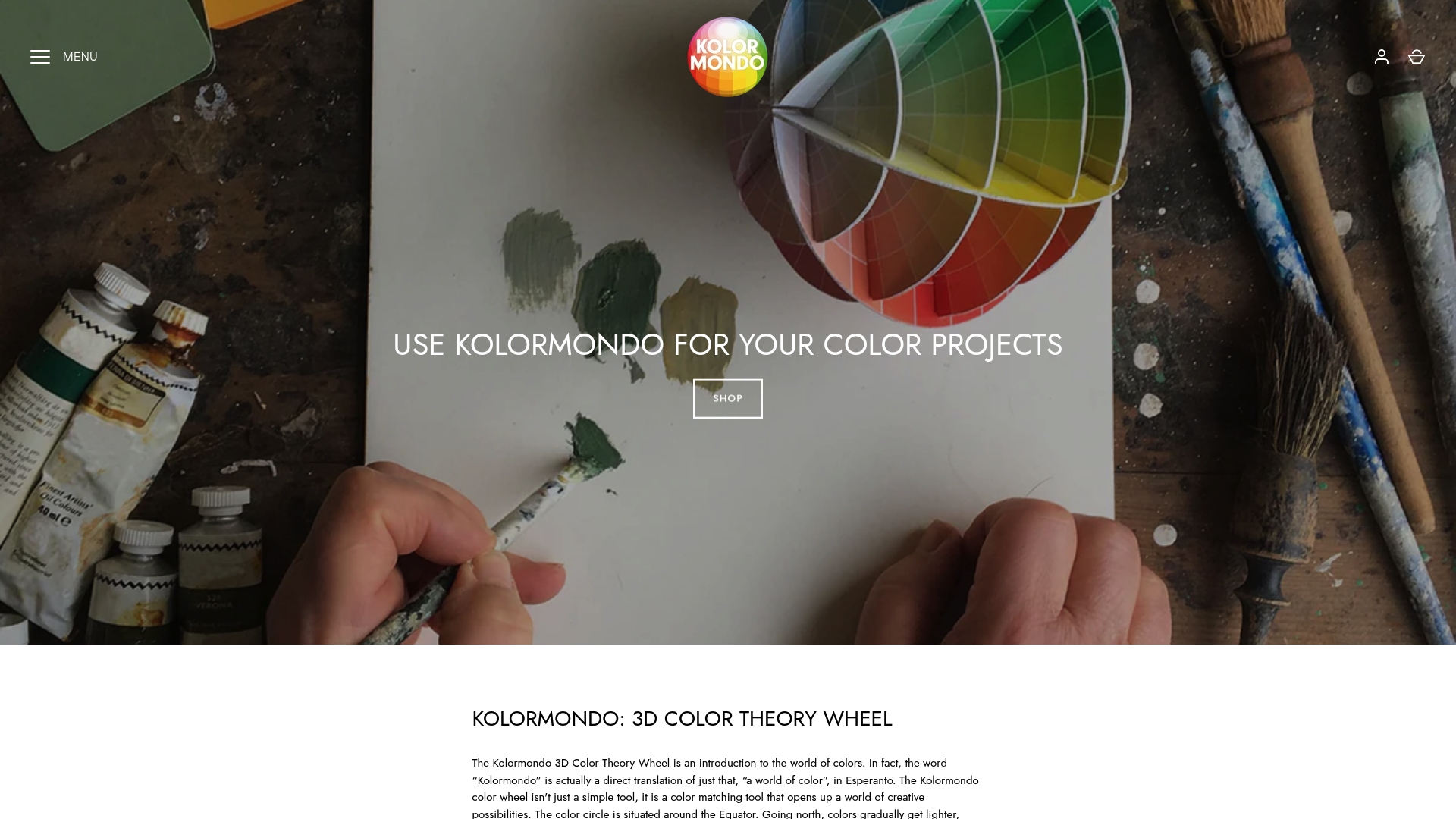
Empower your journey to advanced colour literacy today by exploring the Kolormondo range at Kolormondo.com. Embrace the challenge of mastering colour’s complexity with tools and resources designed for educators, artists, designers, and enthusiasts who want more than just theory. Start your hands-on colour experience now and transform how you see and use colour.
Frequently Asked Questions
What are the core principles of colour theory?
Colour theory consists of essential elements such as primary, secondary, and tertiary colours, as well as colour relationships like complementary and analogous schemes. These principles help in understanding how colours interact and communicate visually.
How does colour perception influence artistic expression?
Colour perception significantly affects emotional responses and can enhance or alter the viewer’s experience of art. By understanding colour theory, artists can create visually compelling compositions that convey complex ideas and emotions.
What practical tools can be used to explore colour in education?
Hands-on tools for colour exploration include physical colour wheels, interactive digital platforms, and colour matching exercises. Such tools encourage active engagement with colour concepts beyond theoretical learning.
What common misconceptions about colour should educators address?
Common misconceptions include the belief that all colours can be mixed from three primary colours and that colour harmony follows strict rules. Addressing these myths allows for a richer understanding of colour’s complexity and its varied applications.
Recommended
Find similar articles
why learn about color
