
Nearly 80 percent of british art educators say hands-on learning drives better student engagement in colour theory classes. When students see, touch, and manipulate three-dimensional colour models, abstract concepts become clear and memorable. This new approach bridges traditional teaching and modern creativity, offering instructors practical strategies to spark curiosity and improve understanding of colour dynamics. Discover how these innovative tools can invigorate lessons for diverse learning styles and classroom environments.
Table of Contents
- Defining Colour Theory Educational Tools
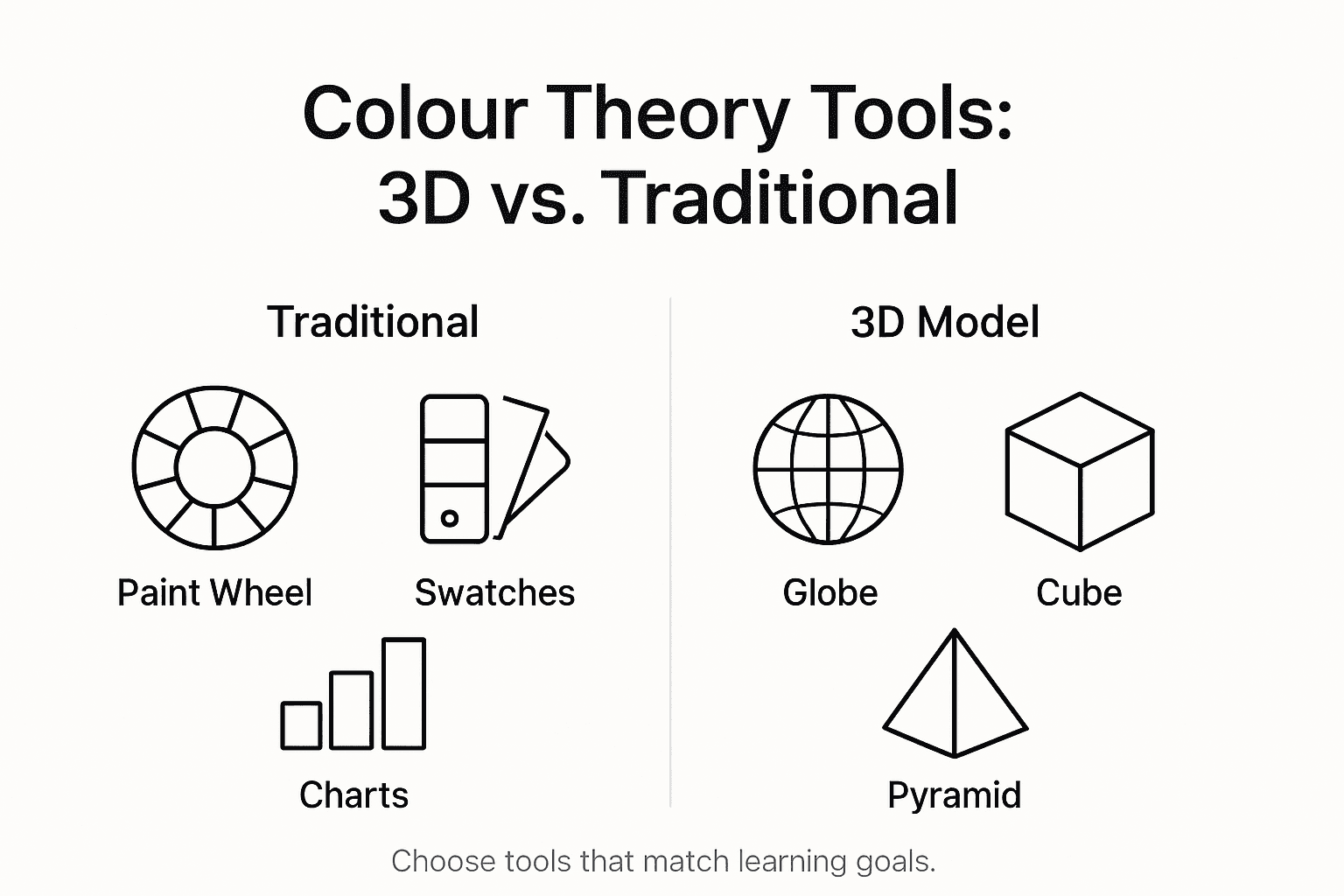
- Comparing Traditional and Modern Tools
- Exploring Three-Dimensional Colour Models
- Practical Classroom Applications and Usage
- Selecting Effective Tools and Avoiding Pitfalls
Key Takeaways
| Point | Details |
|---|---|
| Diverse Colour Theory Tools | Utilise a combination of physical, digital, and interactive colour theory tools to cater to various learning styles and contexts. |
| Integration of Modern Science | Embrace modern colour theory tools that incorporate advanced scientific principles for a deeper understanding of colour dynamics. |
| Three-Dimensional Models | Implement three-dimensional colour models in the classroom to enhance spatial reasoning and provide an immersive learning experience. |
| Careful Tool Selection | Select colour theory tools mindfully, ensuring they align with educational objectives and engage students effectively. |
Defining Colour Theory Educational Tools
Colour theory educational tools are specialised resources designed to help learners understand the complex relationships between colours, their interactions, and visual perception. These tools range from traditional colour wheels to advanced three-dimensional models that provide comprehensive insights into colour dynamics. Understanding colour systems involves exploring how different colours interact, mix, and create visual effects across multiple disciplines.
Educational colour theory tools typically serve multiple purposes: they help students comprehend colour relationships, demonstrate scientific principles of light and perception, and provide practical applications for artists, designers, and scientists. Modern tools have evolved far beyond simple two-dimensional charts, incorporating interactive elements, digital platforms, and three-dimensional representations that allow learners to explore colour properties from multiple perspectives. These advanced tools enable users to understand complex concepts like colour harmony, complementary relationships, and perceptual colour interactions with greater depth and nuance.
The primary categories of colour theory educational tools include physical models (such as colour wheels and globes), digital applications, interactive software, and specialised learning resources. Each type offers unique advantages: physical models provide tactile learning experiences, digital tools offer precise colour manipulation, and interactive resources enable dynamic exploration of colour principles. Colour learning resources have become increasingly sophisticated, integrating scientific research with practical visual demonstrations that cater to diverse learning styles and educational contexts.
Here’s a concise overview of colour theory educational tool types and their unique benefits:
| Tool Type | Primary Benefit | Ideal Context |
|---|---|---|
| Physical Models | Hands-on visual learning | Early education, group work |
| Digital Applications | Precise colour manipulation | Advanced art and design |
| Interactive Software | Dynamic exploration | Individual or remote learning |
| Specialised Resources | Scientific accuracy | Multidisciplinary subjects |
Pro tip: Select colour theory educational tools that match your specific learning objectives, considering factors like interactivity, scientific accuracy, and visual presentation to enhance your understanding of colour dynamics.
Comparing Traditional and Modern Tools
Traditional and modern colour theory tools represent a profound evolution in understanding colour relationships, with significant differences in approach and scientific foundation. Historical colour models traditionally relied on the red-yellow-blue primary colour wheel, which provided artists with a basic framework for colour mixing and interaction. These traditional tools were primarily artistic in nature, focusing on aesthetic principles rather than scientific precision.
Modern colour theory tools, by contrast, incorporate advanced scientific understanding and technological innovations. Contemporary frameworks challenge older models by introducing more sophisticated colour systems like Munsell and Ostwald, which provide more nuanced representations of colour properties. These modern approaches integrate perceptual science, digital technology, and precise measurement techniques that offer educators and designers more comprehensive colour understanding beyond simple artistic interpretation.
The key differences between traditional and modern colour theory tools can be categorised across several dimensions. Traditional tools typically emphasised visual approximation and artistic intuition, while modern tools prioritise scientific accuracy, spectral analysis, and digital precision. Digital platforms now allow for interactive colour exploration, enabling learners to manipulate colour properties in ways impossible with older, static colour wheels. Moreover, contemporary tools frequently incorporate interdisciplinary insights from fields like psychology, neuroscience, and digital design, creating more holistic educational resources.
Pro tip: When selecting colour theory tools, prioritise resources that blend artistic tradition with scientific rigour to gain a comprehensive understanding of colour dynamics.
Exploring Three-Dimensional Colour Models
Three-dimensional colour models represent a revolutionary approach to understanding chromatic relationships, offering unprecedented spatial insights into colour theory. Why use three-dimensional colour representations reveals how these advanced models transcend traditional two-dimensional colour wheels by providing a comprehensive, immersive learning experience. Unlike flat representations, 3D models allow learners to explore colour interactions from multiple perspectives, revealing complex relationships that are impossible to comprehend through conventional approaches.
The structural design of three-dimensional colour models typically incorporates multiple axes representing different colour properties such as hue, saturation, and brightness. These sophisticated models enable users to visualise colour relationships with remarkable precision, demonstrating how colours interact, blend, and transform in three-dimensional space. By presenting colour as a dynamic, interconnected system rather than a static set of pigments, these models provide educators and students with a more nuanced understanding of chromatic principles.
Several key variations of three-dimensional colour models exist, each offering unique advantages for different educational and professional contexts. Some models emphasise geometric symmetry, while others prioritise perceptual accuracy, reflecting the complex psychological and physiological aspects of human colour perception. Digital and physical 3D colour representations have emerged as powerful tools across disciplines, from art and design to scientific research, enabling more intuitive and comprehensive colour comprehension. These models help learners understand colour not as isolated elements, but as an intricate, interconnected system that responds dynamically to spatial and contextual variations.
This table highlights three-dimensional colour models and their educational impacts:
| 3D Model Variant | Strength | Classroom Impact |
|---|---|---|
| Geometric Symmetry | Clear structure | Improves spatial reasoning |
| Perceptual Accuracy | Reflects human vision | Deepens colour perception |
| Digital 3D Models | Interactivity and analysis | Enables self-paced learning |
| Physical 3D Tools | Multi-sensory experience | Boosts engagement and recall |
Pro tip: Experiment with multiple three-dimensional colour models to develop a more comprehensive understanding of colour interactions and expand your perceptual capabilities.
Practical Classroom Applications and Usage
Colour theory education transforms dramatically when instructors integrate three-dimensional learning models into their curriculum. Tactile learning approaches using full-colour 3D-printed materials demonstrate significant improvements in student comprehension and engagement, offering educators innovative strategies to enhance traditional colour theory instruction. These models provide a multi-sensory learning experience that goes beyond conventional two-dimensional colour wheel presentations.
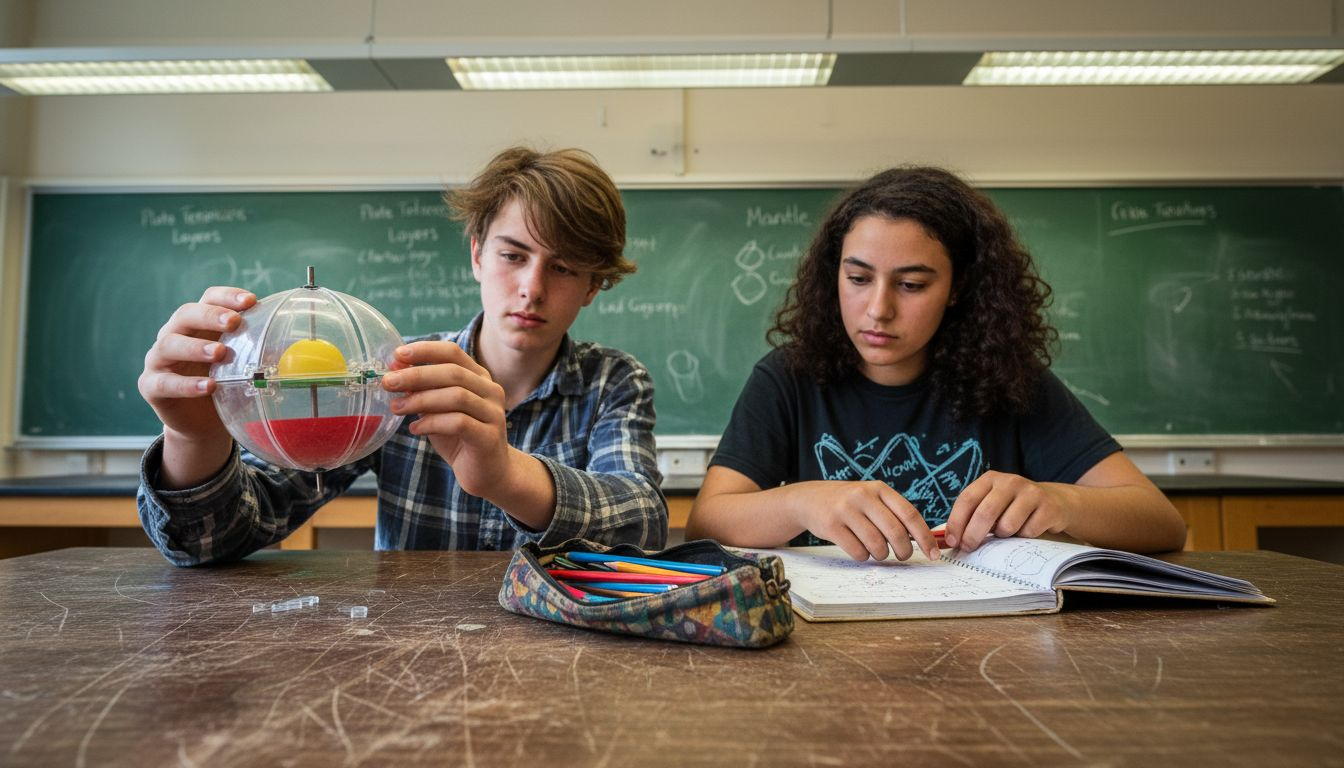
Classroom implementation of three-dimensional colour models can be structured across multiple educational scenarios. In art and design programmes, students can use these models to understand complex colour relationships, exploring how hues interact, blend, and transform in physical space. Science classrooms can leverage these tools to explain optical principles, demonstrating how light, pigmentation, and perception interconnect. Instructors might design interactive exercises where students manipulate 3D colour models, creating collaborative learning experiences that encourage hands-on exploration and critical thinking about chromatic relationships.
Practical applications extend beyond immediate classroom interactions. Educators can develop assessment strategies that incorporate three-dimensional colour model exploration, challenging students to demonstrate their understanding through spatial reasoning tasks. Group projects might involve creating colour palettes, analysing colour interactions, or developing design concepts using these advanced visual tools. By integrating these models, instructors can bridge theoretical knowledge with practical application, helping students develop a more nuanced and comprehensive understanding of colour dynamics across various disciplines.
Pro tip: Create structured learning activities that encourage students to interact with three-dimensional colour models from multiple perspectives, promoting deeper conceptual understanding.
Selecting Effective Tools and Avoiding Pitfalls
Choosing appropriate colour theory educational tools requires a strategic approach that balances pedagogical objectives with learning accessibility. Colour theory tips for educators highlight the critical importance of selecting tools that engage students while addressing diverse learning needs. Effective selection involves considering factors such as age appropriateness, cultural relevance, and the specific learning outcomes desired in each educational context.
Educators must navigate several potential pitfalls when integrating colour theory tools into their curriculum. Common mistakes include selecting overly complex models that overwhelm students, choosing tools that lack tactile engagement, or implementing resources that do not align with curriculum objectives. Successful tool selection demands a nuanced understanding of how different learners interact with colour models, considering visual, kinesthetic, and cognitive learning preferences. This requires evaluating tools not just for their technical accuracy, but for their ability to spark curiosity and facilitate meaningful learning experiences.
A comprehensive evaluation of colour theory tools should encompass multiple dimensions. Technical accuracy matters, but equally important are factors like model durability, adaptability across different educational settings, and the potential for interactive learning. Digital and physical models each offer unique advantages: digital tools provide precision and easy modification, while physical models offer tangible, multi-sensory experiences. The most effective approach often involves a blended strategy that combines different types of colour theory resources, allowing students to explore chromatic relationships through varied perspectives and learning modalities.
Pro tip: Conduct periodic assessments of your colour theory tools, soliciting student feedback and observing their engagement to continuously refine your educational approach.
Experience the Transformative Power of 3D Colour Learning
Understanding colour theory can be challenging when confined to flat, traditional charts that fail to capture the full depth of colour interactions. This article highlights the significant benefits of three-dimensional colour models in enhancing spatial reasoning and deepening colour perception. If you aim to overcome difficulties in grasping complex colour relationships or want to engage learners through tactile, multi-sensory experiences, embracing innovative educational tools is crucial.
Discover how the Kolormondo 3D colour globe brings colour theory to life with its unique spherical design. As a hands-on learning aid, artistic reference, and design object, the Kolormondo globe embodies the very principles discussed here by allowing users to interact dynamically with hue, saturation, and brightness across a three-dimensional space. To enrich your lessons or personal exploration, explore our Educational material and lesson plans - Kolormondo and participate in live Lectures and Workshops about color - Kolormondo.
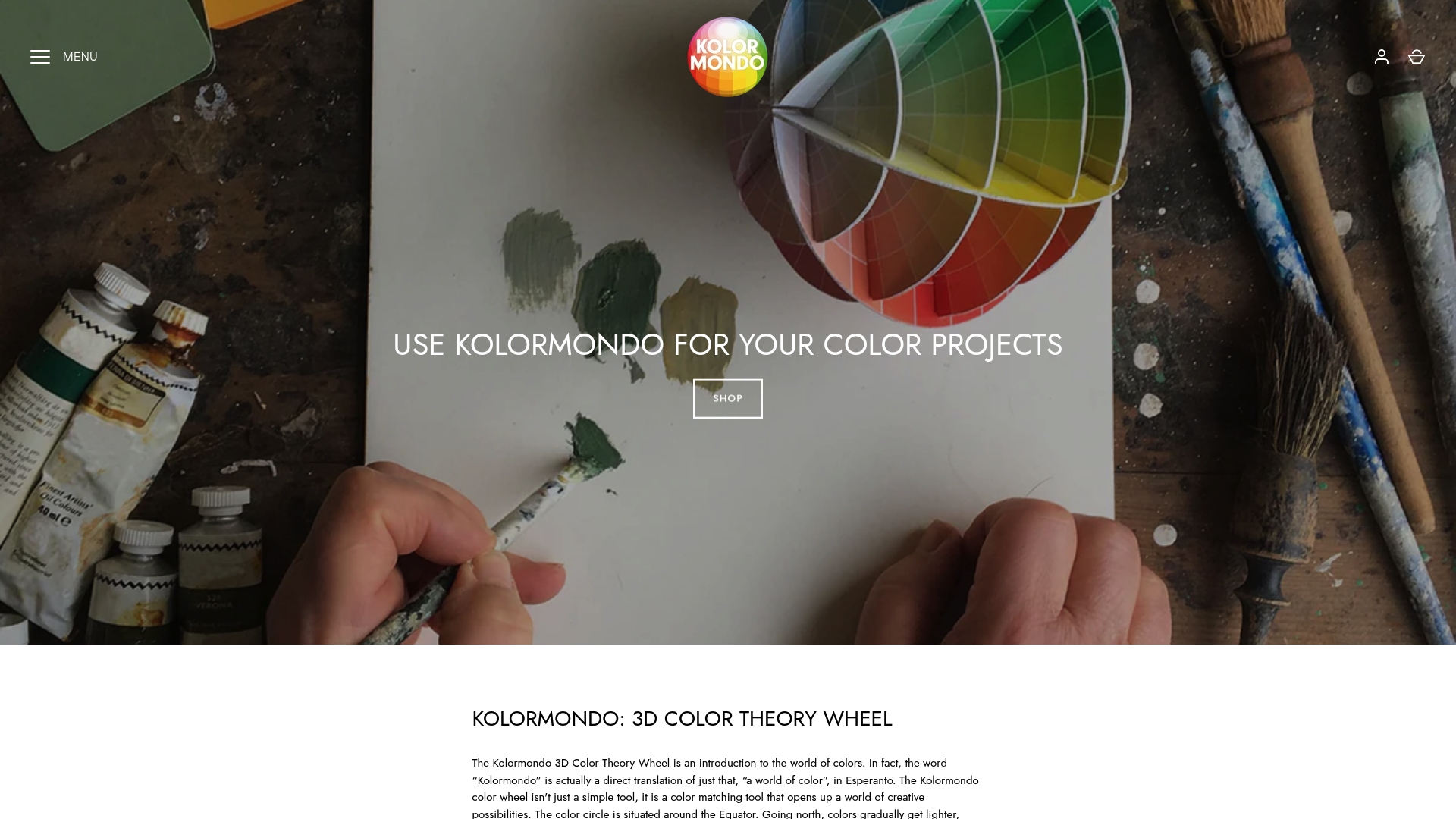
Transform your colour education with Kolormondo today. Visit https://kolormondo.com to select from professional or mini globes designed to elevate understanding through hands-on discovery. Start your journey to mastering colour dynamics with tools and resources crafted to inspire, educate, and empower. Act now to experience the next evolution in colour learning.
Frequently Asked Questions
What are three-dimensional colour models?
Three-dimensional colour models are advanced educational tools that provide spatial insights into colour relationships, allowing learners to explore how colours interact from multiple perspectives.
How do three-dimensional colour models improve learning in colour theory?
These models enhance learning by offering a multi-sensory experience that surpasses traditional two-dimensional colour wheels, helping learners visualise and understand complex chromatic relationships more intuitively.
What types of three-dimensional colour models are available for educational purposes?
There are several types of three-dimensional colour models, including geometric symmetry models, perceptual accuracy models, digital 3D models, and physical 3D tools, each offering unique strengths for various educational contexts.
How can educators effectively integrate three-dimensional colour models into their curriculum?
Educators can integrate these models by designing interactive activities that encourage hands-on exploration, facilitating group projects, and developing assessment strategies that challenge students to demonstrate their understanding of colour dynamics.
Recommended
Find similar articles
educational tools for color theory
