
Most british art educators and design students are discovering that classic colour wheels no longer meet the demands of contemporary learning. With over 60 percent of universities now including digital colour tools in their curricula, understanding modern colour theory means embracing tactile, interactive approaches. This growing shift emphasizes multidimensional colour experiences, helping students explore perception, culture, and technology through hands-on discovery rather than static charts or outdated rules.
Table of Contents
- Defining Modern Colour Theory Concepts
- Key Trends: 3D Models and Digital Tools
- Adoption in Art, Design, and Education
- Kolormondo’s Impact on Colour Exploration
- Common Misconceptions and Teaching Pitfalls
Key Takeaways
| Point | Details |
|---|---|
| Evolution of Colour Theory | Modern colour theory shifts from traditional models to multidisciplinary perspectives that recognise colour’s complexity in perception and culture. |
| Impact of Technology | Emerging technologies and digital tools, such as 3D visualisation and virtual reality, are enhancing colour education and understanding. |
| Need for Holistic Education | There is a movement towards integrating psychological and cultural dimensions of colour into educational programmes, promoting deeper insights and personal connections. |
| Addressing Misconceptions | Effective colour education must challenge oversimplified narratives and embrace interdisciplinary approaches to reflect the dynamic nature of colour. |
Defining Modern Colour Theory Concepts
Modern colour theory has transformed dramatically, expanding from traditional colour wheel models to sophisticated multidimensional approaches that recognise colour as a complex perceptual and cultural phenomenon. Contemporary colour research now integrates biological, psychological, and technological perspectives, revealing colour’s profound significance beyond simple visual representation.
Traditional colour theories predominantly focused on mechanical colour relationships, whereas current frameworks explore nuanced interactions between perception, emotion, and technological representation. Scientific developments have enabled researchers to understand colour through multiple lenses: neurological processing, cultural symbolism, and digital manipulation. These advanced perspectives recognise that colour is not merely a visual experience but a multisensory communication method embedded in human cognition and technological innovation.
Digital technologies and emerging research domains are fundamentally reshaping colour theory. Frontier colour research demonstrates how artificial intelligence, virtual reality, and advanced imaging technologies are creating unprecedented opportunities for colour understanding. Researchers now examine colour through interdisciplinary approaches, connecting fields like neuroscience, psychology, design, and digital technologies to develop more comprehensive colour models.
Expert Tip: When studying colour theory, always consider colour as a dynamic, contextual experience rather than a static visual element.
Here’s a comparison of traditional and modern colour theory perspectives:
| Aspect | Traditional Colour Theory | Modern Colour Theory |
|---|---|---|
| Key Focus | Colour wheel, visual harmony | Perceptual, cultural, technological |
| Approach | Mechanical, rule-based | Multidimensional, interdisciplinary |
| Influencing Factors | Mixing rules, static models | Neuroscience, psychology, technology |
| Educational Methods | Prescriptive teaching, flat charts | Contextual, interactive, digital tools |
Key Trends: 3D Models and Digital Tools
The landscape of colour theory education is undergoing a significant transformation, driven by innovative three-dimensional visualisation technologies that challenge traditional two-dimensional learning approaches. Educational tools for colour theory are revolutionising how students and professionals understand colour relationships, moving beyond static representations to dynamic, interactive learning experiences.
Digital technologies have introduced unprecedented ways of exploring colour interactions. Modern 3D models enable learners to manipulate and investigate colour spaces from multiple perspectives, providing insights that conventional colour wheels cannot achieve. These advanced tools integrate computational algorithms, spatial mapping, and interactive interfaces, allowing users to explore colour transitions, complementary relationships, and perceptual nuances with remarkable precision and depth.
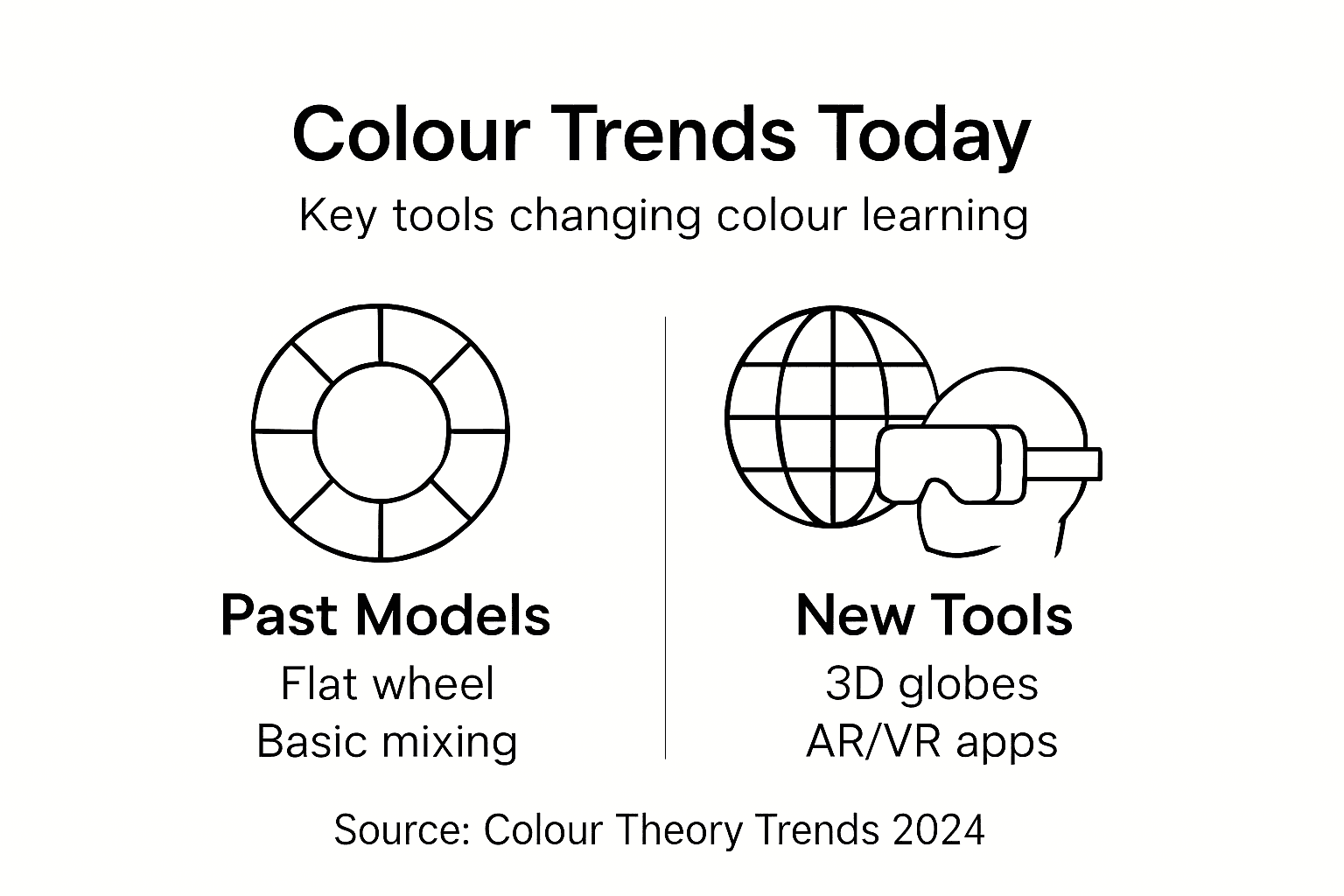
The integration of virtual reality, augmented reality, and sophisticated computational modelling is expanding the boundaries of colour theory education. Researchers and educators are now developing immersive learning environments that transform abstract colour concepts into tangible, explorable experiences. These technological innovations support a more holistic understanding of colour, emphasising its complex psychological, cultural, and sensory dimensions beyond mere visual representation.
Pro Tip: Experiment with multiple 3D colour visualisation tools to develop a more comprehensive understanding of colour relationships and interactions.
Summary of leading 3D colour exploration technologies and their unique benefits:
| Technology | Application Area | Unique Advantage |
|---|---|---|
| Virtual Reality (VR) | Education, Design | Immersive colour learning |
| Kolormondo Globe | Schools, Research | Tactile, spatial understanding |
| Computational Modelling | Digital Art, Science | Precise, algorithmic analysis |
Adoption in Art, Design, and Education
The integration of contemporary colour theory into art, design, and educational curricula represents a profound paradigm shift towards more holistic, interdisciplinary learning approaches. Colour theory in contemporary education now extends far beyond traditional aesthetic training, emphasising the psychological, cultural, and technological dimensions of colour understanding.
Modern educational programmes are reimagining colour theory through innovative pedagogical strategies that prioritise experiential and contextual learning. Institutions are moving away from prescriptive, technical approaches towards more nuanced explorations that connect colour theory with broader societal and creative contexts. This transformation involves integrating digital technologies, interactive learning methods, and multicultural perspectives that encourage students to develop personal, critical relationships with colour as a complex communicative medium.
Across art and design disciplines, there is a growing recognition of colour theory’s role in addressing global challenges and promoting cross-cultural understanding. Emerging research highlights the need for colour education that goes beyond technical skills, focusing instead on developing colour literacy that considers ethical, social, and psychological implications. Educators are increasingly designing curricula that explore colour’s capacity to communicate emotions, challenge perceptions, and bridge cultural differences, thus preparing students to use colour as a powerful tool for creative expression and social dialogue.
Pro Tip: Develop a personal colour research portfolio that documents your exploration of colour’s psychological and cultural dimensions.
Kolormondo’s Impact on Colour Exploration
The emergence of innovative colour exploration tools represents a transformative approach to understanding colour theory, challenging traditional two-dimensional learning methods. Kolormondo’s three-dimensional colour globe provides an unprecedented spatial representation that enables learners to comprehend colour relationships with remarkable depth and intuition.
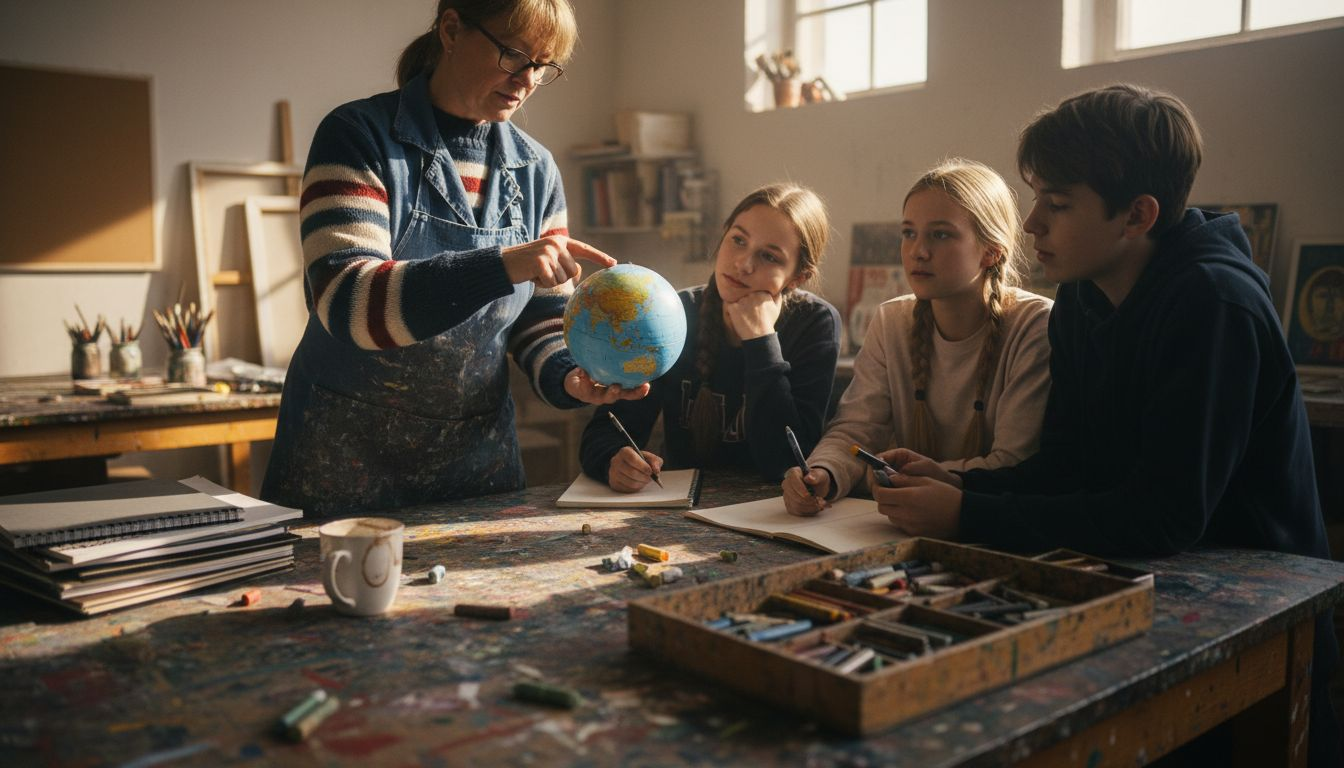
By introducing a tactile, interactive approach to colour theory, Kolormondo bridges the gap between abstract conceptual understanding and practical application. The globe’s design allows users to explore the intricate relationships between hue, value, and saturation through a hands-on, immersive experience. This approach is particularly powerful in educational settings, where complex colour theory concepts can be challenging to communicate through conventional flat charts or digital interfaces.
The impact of such innovative tools extends beyond traditional art and design education, reaching into interdisciplinary domains such as psychology, digital media, and cultural studies. By providing a tangible, three-dimensional representation of colour, Kolormondo enables researchers, educators, and students to develop a more nuanced understanding of colour as a complex, multifaceted phenomenon. The globe serves not just as a learning tool, but as a catalyst for deeper exploration of colour’s role in human perception, communication, and creative expression.
Pro Tip: Experiment with different viewing angles and lighting conditions when exploring colour relationships to unlock deeper perceptual insights.
Common Misconceptions and Teaching Pitfalls
Colour literacy misconceptions persist as significant barriers to comprehensive colour theory education, undermining students’ ability to develop nuanced understanding. Traditional teaching approaches often propagate simplified narratives that reduce colour to mechanical rules and prescriptive guidelines, neglecting the rich complexity of chromatic interactions.
The most prevalent misconceptions centre around oversimplified colour relationships and rigid interpretative frameworks. Many educators continue to teach colour theory through outdated models that suggest universal colour meanings, predictable mixing rules, and fixed harmony principles. These approaches fundamentally misrepresent colour as a static, deterministic system rather than a dynamic, contextually dependent phenomenon that varies across cultural, psychological, and perceptual domains.
Addressing these misconceptions requires a radical reimagining of colour education that embraces complexity and interdisciplinary perspectives. Educators must move beyond traditional colour wheels and simplistic primary colour narratives, instead introducing students to the nuanced, multidimensional nature of colour perception. This approach demands integrating insights from neuroscience, psychology, cultural studies, and design to present colour as a rich, contextually embedded form of communication and creative expression.
Pro Tip: Challenge colour theory assumptions by exploring diverse cultural perspectives and experimenting with unconventional colour combinations.
Discover the Future of Colour Learning with Kolormondo
The article highlights the growing challenge of moving away from traditional, flat colour wheels to multidimensional, interactive tools that deepen our understanding of modern colour theory. If you are seeking to overcome these limitations and explore colour as a dynamic and contextual experience in education or design, Kolormondo offers the perfect 3D tactile solution. Our innovative colour globe transforms abstract colour concepts into a hands-on, spatial journey, addressing the complexity of colour perception, cultural significance, and technological application.
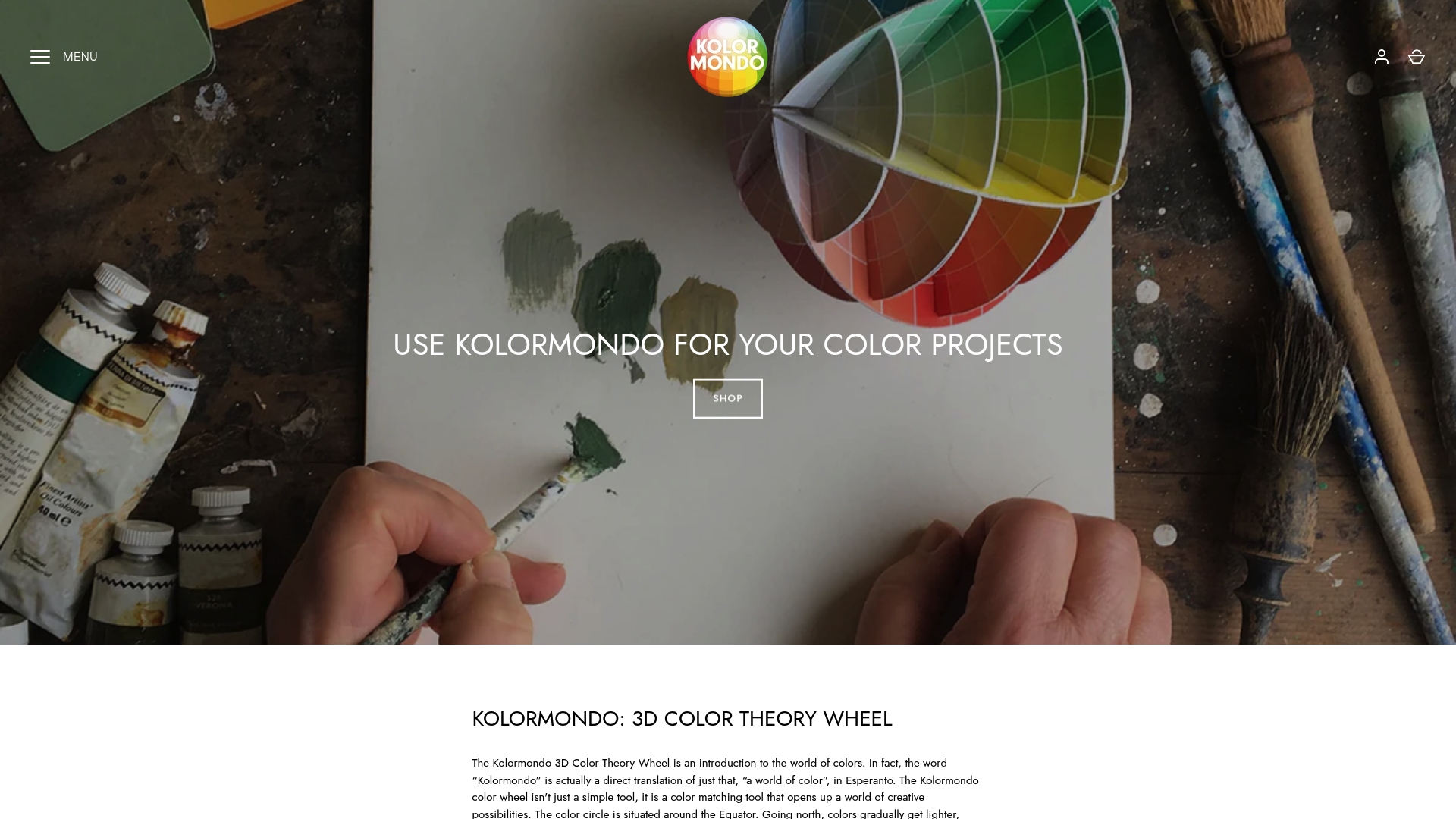
Experience the power of true colour exploration with Kolormondo’s range of 3D Colour Globes, perfectly suited for educators, artists, and designers hungry for a deeper understanding. Complement your journey with expert insights through our Educational Material and Lesson Plans or engage directly via Lectures and Workshops about Colour. Do not let outdated colour models limit your creativity or comprehension. Visit Kolormondo.com today and embark on a transformative colour learning experience that will elevate your skills and inspire new perspectives.
Frequently Asked Questions
What is modern colour theory?
Modern colour theory expands beyond traditional colour wheel models, integrating biological, psychological, and technological perspectives to understand colour as a complex perceptual and cultural phenomenon.
How do digital tools enhance colour theory education?
Digital tools, particularly three-dimensional visualisation technologies, create interactive learning experiences that allow users to explore colour interactions dynamically, offering insights that flat representations cannot achieve.
What role does Kolormondo’s colour globe play in education?
Kolormondo’s colour globe provides a tactile, three-dimensional representation of colour, bridging the gap between abstract concepts and practical application, making complex colour relationships easier to understand.
What common misconceptions exist in colour theory education?
Common misconceptions include oversimplified colour relationships, rigid interpretative frameworks, and the notion that colour has universal meanings. These misunderstandings can hinder students’ ability to develop a nuanced understanding of colour as a dynamic, context-dependent phenomenon.
Recommended
Find similar articles
current trends in color theory
