

Over 80 percent of British artists and designers agree that mastering colour harmony can elevate creative work from ordinary to extraordinary. In a world where every shade and contrast matters, finding practical ways to understand colour relationships is crucial for anyone in the creative field. By exploring the world of 3D colour wheels, you can unlock smarter strategies for choosing the perfect hues, whether you are designing interiors, fashion, or digital art.
Table of Contents
- Mastering Colour Harmony with 3D Colour Wheels
- Teaching Colour Relationships in the Classroom
- Enhancing Interior Design Mood Boards
- Choosing Fashion Palettes with Confidence
- Supporting Graphic Design Projects Visually
- Improving Artistic Mixing and Blending Skills
- Hands-On Exploration for Hobbyists and Learners
Quick Summary
| Key Message | Explanation |
|---|---|
| 1. Explore colour combinations with a 3D wheel | Use a 3D colour wheel to uncover unexpected colour relationships that enhance design projects. |
| 2. Engage students with hands-on colour theory | Implement 3D colour wheels in classrooms for interactive learning, improving student engagement and visual literacy. |
| 3. Transform mood boards using 3D colour insights | Utilize a 3D colour wheel for sophisticated colour selection, making mood boards visually compelling and emotionally resonant. |
| 4. Enhance fashion palettes strategically | A 3D colour wheel helps fashion designers create harmonious palettes through precise understanding of colour interactions. |
| 5. Document learning experiences with a colour journal | Encourage hobbyists to maintain a colour journal, tracking experiments and feelings about colour combinations for deeper understanding. |
1. Mastering Colour Harmony with 3D Colour Wheels
Colour harmony is the art of combining colours that create visually pleasing compositions, and 3D colour wheels offer an innovative approach to understanding these complex relationships. By exploring colour relationships through a multidimensional perspective, designers and artists can unlock more sophisticated and nuanced colour strategies.
Traditional flat colour wheels limit understanding by presenting colours on a single plane, whereas 3D colour wheels reveal intricate interactions between hue, saturation, and brightness. This spatial representation allows you to comprehend how colours interconnect and influence each other more comprehensively.
When working with a 3D colour wheel, you can experiment with colour harmony principles like complementary, analogous, and triadic colour schemes with greater precision. The three dimensional model helps visualise how colours relate in space, making it easier to predict and design visually balanced compositions across various mediums including digital art, graphic design, interior styling, and fashion.
Research suggests that colour harmony is largely universal, influenced by fundamental relationships between hues, their intensity, and saturational qualities. By understanding these principles through a 3D model, you can make more intentional colour choices that resonate emotionally and aesthetically with your audience.
Practical Tip: Rotate your 3D colour wheel systematically to explore unexpected colour combinations and break away from conventional colour matching techniques.
2. Teaching Colour Relationships in the Classroom
Colour theory can transform classroom learning from mundane to magical, offering educators a powerful tool to engage students and enhance cognitive development. Innovative colour learning approaches demonstrate how strategic colour use can support educational objectives across multiple disciplines.
Understanding colour relationships helps students develop visual literacy skills essential for art, design, and broader creative thinking. A 3D colour wheel enables learners to explore how colours interact spatially, moving beyond traditional two dimensional representations. This approach allows students to comprehend complex colour interactions through a more intuitive, hands on learning experience.
Teachers can leverage colour wheel demonstrations to teach fundamental concepts in visual arts, graphic design, and even mathematics. By showing how primary colours blend to create secondary and tertiary colours, educators transform abstract colour theory into a tangible, interactive learning experience. Students can physically rotate the 3D colour wheel to observe how hues transform and interact, making learning both engaging and memorable.
Research indicates that colour significantly influences student attitudes, attention spans, and cognitive processing. By integrating colour wheels into classroom activities, educators can create dynamic learning environments that stimulate curiosity and enhance information retention.
Practical Tip: Encourage students to create personal colour palettes using the 3D colour wheel, helping them understand colour harmony and develop their unique artistic voice.
3. Enhancing Interior Design Mood Boards
Mood boards are essential visual tools for interior designers to communicate design concepts, and a 3D colour wheel can revolutionise how these palettes are constructed and understood. Innovative colour composition frameworks provide designers with sophisticated methods for creating harmonious and aesthetically pleasing colour schemes.
A 3D colour wheel offers designers a more nuanced approach to colour selection by revealing complex spatial relationships between hues, saturation, and brightness. Unlike traditional flat colour wheels, this multidimensional tool allows you to explore colour interactions from multiple perspectives, helping you craft mood boards that are both visually compelling and emotionally resonant.
When developing mood boards, designers can use the 3D colour wheel to identify complementary, analogous, and triadic colour relationships with unprecedented precision. By rotating the wheel, you can discover unexpected colour combinations that add depth and sophistication to your interior design projects. This approach transforms mood board creation from a subjective process into a more strategic and informed design methodology.
Research suggests that human colour preferences are rooted in natural hue distributions, meaning some colour combinations are inherently more appealing than others. By leveraging a 3D colour wheel, designers can tap into these intuitive aesthetic principles, creating spaces that feel harmonious and emotionally engaging.
Practical Tip: Experiment with different viewing angles of your 3D colour wheel to uncover unique colour relationships that can add unexpected vibrancy to your interior design mood boards.
4. Choosing Fashion Palettes with Confidence
Fashion designers and style enthusiasts know that colour selection can make or break an entire collection, and a 3D colour wheel provides an innovative approach to creating harmonious palettes. Advanced colour harmony research reveals that successful colour combinations are rooted in understanding intricate relationships between hues, saturation, and brightness.
Unlike traditional flat colour wheels, a 3D colour wheel allows you to explore colour interactions from multiple perspectives, transforming palette creation from guesswork into a strategic design process. By rotating the wheel, you can discover nuanced colour relationships that add depth and sophistication to your fashion designs.
When developing fashion palettes, consider how different colours interact spatially. The 3D colour wheel helps you identify complementary, analogous, and triadic colour schemes with unprecedented precision. This approach enables designers to create visually compelling outfits that feel intentional and harmonious, moving beyond arbitrary colour matching.
Research indicates that human colour preferences are deeply connected to natural hue distributions, suggesting that some colour combinations are inherently more appealing. By leveraging a 3D colour wheel, fashion designers can tap into these intuitive aesthetic principles, creating colour palettes that resonate on both emotional and visual levels.
Practical Tip: Experiment with unexpected colour combinations by rotating your 3D colour wheel and observing how different hues interact, helping you develop a more adventurous and confident approach to fashion colour selection.
5. Supporting Graphic Design Projects Visually
Graphic designers require precision and creativity when selecting colour palettes, and a 3D colour wheel offers an innovative approach to visual composition. Advanced colour composition frameworks provide designers with sophisticated tools for creating harmonious and visually compelling designs.
Unlike traditional flat colour wheels, a 3D colour wheel allows graphic designers to explore colour relationships from multiple perspectives, transforming palette selection from intuitive guesswork into a strategic design process. By rotating the wheel, you can discover nuanced colour interactions that add depth, sophistication, and visual interest to your graphic design projects.
When developing visual designs, consider how colours interact spatially and emotionally. The 3D colour wheel helps you identify complementary, analogous, and triadic colour schemes with unprecedented accuracy. This approach enables designers to create visually balanced compositions that communicate effectively and resonate with target audiences.
Research suggests that colour harmony is largely universal, influenced by fundamental relationships between hue, saturation, and intensity. By leveraging a 3D colour wheel, graphic designers can tap into these intuitive aesthetic principles, creating visual designs that feel both intentional and emotionally engaging.
Practical Tip: Experiment with unexpected colour combinations by systematically rotating your 3D colour wheel and observing how different hues interact, helping you develop more innovative and visually striking graphic design solutions.
6. Improving Artistic Mixing and Blending Skills
Mastering colour mixing is a fundamental skill for artists, and a 3D colour wheel provides an innovative approach to understanding complex colour interactions. Advanced colour mixing research reveals the nuanced differences between additive and subtractive colour blending techniques.
Traditional flat colour wheels limit artists’ understanding of colour relationships, whereas a 3D colour wheel allows you to explore how hues interact across multiple dimensions. By rotating the wheel, you can visualise how colours blend, shift, and transform, moving beyond basic colour mixing into more sophisticated artistic techniques.
Understanding the spatial relationships between colours helps artists create more harmonious and dynamic compositions. The 3D colour wheel demonstrates how subtle changes in hue, saturation, and brightness can dramatically affect the visual impact of your artwork. This approach transforms colour mixing from a mechanical process into an intuitive, creative exploration.
Research indicates that colour harmony is deeply rooted in fundamental relationships between hues, with specific patterns emerging across different artistic domains. By studying these interactions through a three dimensional perspective, artists can develop more nuanced and intentional colour blending strategies.
Practical Tip: Practice colour mixing by selecting adjacent and complementary colours on your 3D colour wheel, gradually blending them to understand how different hues interact and transform when combined.
7. Hands-On Exploration for Hobbyists and Learners
The journey of understanding colour is a deeply personal and engaging experience, especially for hobbyists and self directed learners seeking to expand their creative skills. Colour based learning strategies offer powerful techniques for developing visual understanding and creative confidence.
A 3D colour wheel transforms learning from a passive to an interactive experience, allowing you to physically manipulate and explore colour relationships. Unlike traditional learning methods, this tactile approach enables you to rotate, observe, and experiment with colour interactions in real time, making the learning process more intuitive and memorable.
Hobbyists can use the 3D colour wheel as a personal learning laboratory, conducting colour experiments that reveal how different hues interact, blend, and transform. By engaging directly with the colour wheel, you develop a more nuanced understanding of colour theory that goes beyond textbook knowledge. This hands on approach helps you build muscle memory and visual intuition that cannot be achieved through reading alone.
Research demonstrates that interactive learning environments significantly enhance cognitive engagement, with colour playing a crucial role in maintaining attention and motivation. The 3D colour wheel becomes more than just a tool it is a gateway to understanding the complex language of colour.
Practical Tip: Create a colour journal documenting your experiments with the 3D colour wheel, noting how different colour combinations make you feel and tracking your growing understanding of colour relationships.
Below is a comprehensive table summarising the main concepts and applications of 3D colour wheels discussed throughout the article.
| Topic | Description | Benefits/Outcomes |
|---|---|---|
| 3D Colour Wheels | Innovative tools for exploring colour harmony with multidimensional understanding of hue, saturation, and brightness. | Enables more sophisticated colour strategies and improved visual compositions. |
| Classroom Learning | Uses 3D colour wheels to teach colour theory interactively, moving beyond two dimensional representations. | Enhances student engagement, cognitive development, and visual literacy. |
| Interior Design | Utilises 3D colour wheels for creating harmonious mood boards with dynamic spatial colour interactions. | Allows for strategic and aesthetically pleasing design palettes. |
| Fashion Design | Assists in palette development by revealing complex colour relationships for harmonious fashion collections. | Transforms colour selection process, enhancing the appeal of fashion designs. |
| Graphic Design | Encourages use of a 3D colour wheel for precise colour palette creation in visual compositions. | Improves communication effectiveness and emotional resonance in designs. |
| Artistic Skills | Facilitates understanding of additive and subtractive colour blending through spatial exploration. | Advances colour mixing techniques and enhances artistic creativity. |
| Hobbyist Learning | Provides an interactive experience for self-directed colour understanding and exploration. | Fosters deeper visual understanding and creative confidence. |
Unlock the Full Potential of Colour Wheels with Kolormondo
Struggling to move beyond flat, two dimensional colour charts and truly master the dynamic relationships between hue, saturation, and brightness? This article highlights how innovative 3D colour wheels transform traditional colour theory into an engaging, hands on exploration. If you seek to enhance your artistic expression, deepen your teaching methods, or revolutionise your design process, Kolormondo offers the perfect solution. Our award winning 3D colour globes provide a tactile, immersive experience that brings complex colour harmony concepts to life like never before.
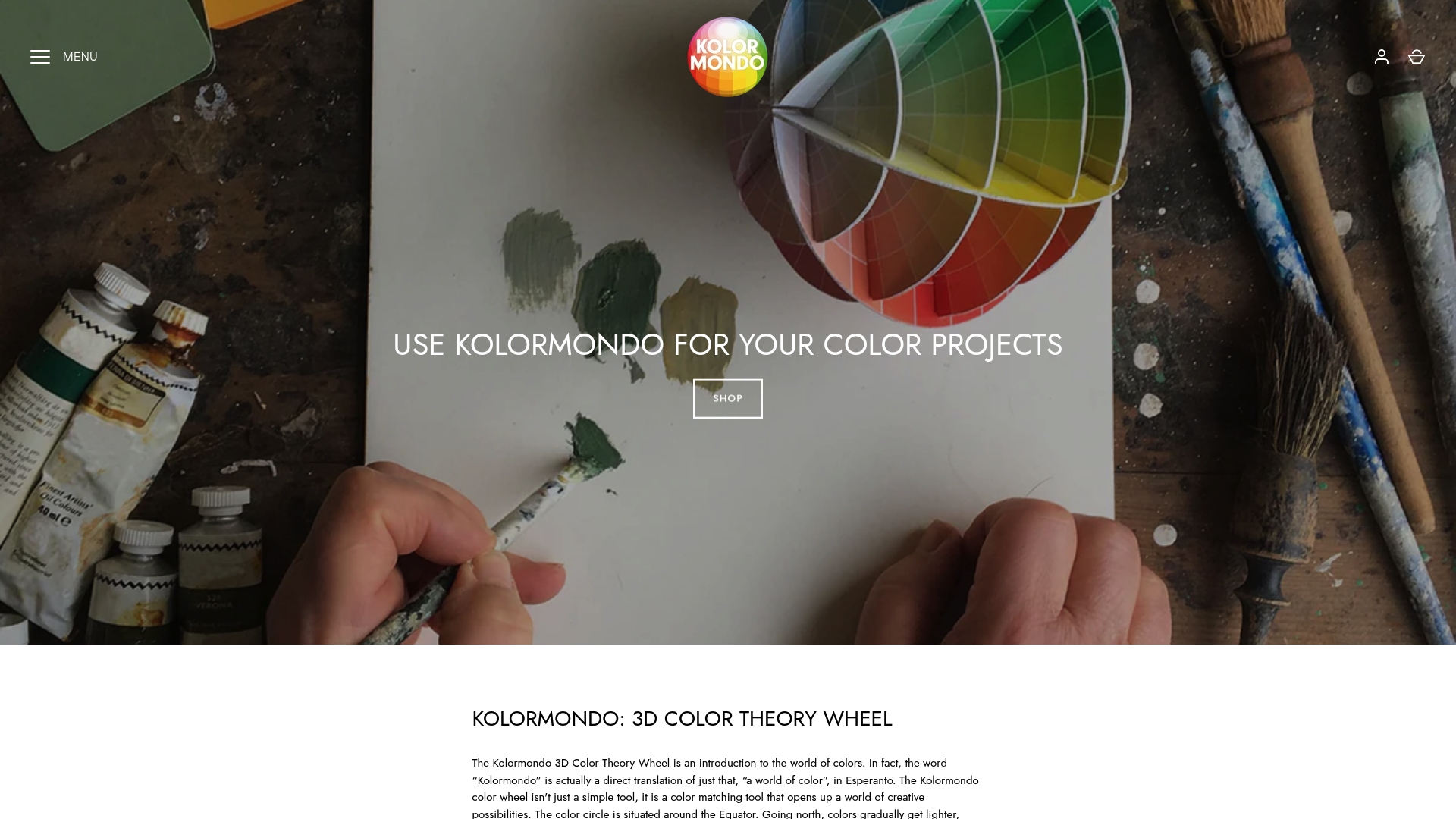
Discover how you can engage more intuitively with colour through our Colour Globe and colour sphere collection. Perfect for educators, artists, designers, and hobbyists eager to experiment confidently with complementary, analogous, and triadic schemes. For educators, our Educational material and lesson plans complement the globes by turning complex theory into memorable classroom experiences. Ready to transform your understanding of colour and inspire creativity today? Visit kolormondo.com and start your journey towards colour mastery now.
Frequently Asked Questions
How can I use a 3D colour wheel in my art projects?
Using a 3D colour wheel can help you experiment with various colour palettes and create harmonious compositions. Start by rotating the wheel to discover complementary, analogous, or triadic colours and apply these combinations in your next artwork.
What are the benefits of teaching colour relationships with a colour wheel in the classroom?
Teaching colour relationships using a colour wheel enhances visual literacy and engagement among students. Implement hands-on activities where students rotate the colour wheel to explore how colors blend and interact, making the abstract concepts of colour theory tangible and memorable.
How does a colour wheel improve the process of creating mood boards in interior design?
A colour wheel aids in selecting colour schemes that evoke the desired mood and aesthetic in interior design. Use a 3D colour wheel to mix various hues and identify combinations that resonate emotionally, providing a strong foundation for your mood boards.
What is the impact of colour harmony on fashion design collections?
Colour harmony is essential in fashion design as it influences the overall appeal and cohesiveness of a collection. To create visually striking outfits, experiment with a 3D colour wheel to identify unique colour combinations that enhance the emotional undertone of your designs.
How can graphic designers use a colour wheel to enhance their designs?
Graphic designers can use a colour wheel to ensure balanced and harmonious compositions. Rotate the wheel to explore colour relationships and make deliberate choices that resonate with your target audience, aiming for impactful visual communication.
What practical steps can hobbyists take to master colour mixing using a colour wheel?
Hobbyists can practice colour mixing by using a 3D colour wheel to explore the relationships between different hues. Begin by selecting adjacent or complementary colours, blending them to see how they interact, and note the results in a colour journal to track your progress.
Recommended
Find similar articles
creative uses for color wheels
