

Most British designers and artists are discovering that flat colour wheels only tell part of the story. With over 65 percent of professionals now seeking three-dimensional tools, it’s clear the old models fall short for precise colour analysis. The shift to three-dimensional colour representation redefines how colour is understood, offering a richer, more accurate way to visualize and select hues. This article will clarify why these innovative models are capturing so much attention and what makes them superior for anyone serious about colour.
Table of Contents
- Three-Dimensional Colour Defined and Debunked
- Key Components: Hue, Value, and Chroma
- Kolormondo Globe: A Tactile Colour Model
- Educational and Creative Uses in Practice
- Comparing 3D Colour Models to Traditional Charts
Key Takeaways
| Point | Details |
|---|---|
| Three-Dimensional Colour Models | These models offer a comprehensive spatial mapping of colour, enhancing understanding beyond traditional colour wheels. |
| Key Dimensions | The critical components of hue, value, and chroma are essential for accurate colour representation and communication. |
| Practical Applications | Three-dimensional colour models are valuable across various fields such as design, art, manufacturing, and scientific research. |
| Kolormondo Globe | This tactile model transforms colour theory into a hands-on learning experience, making complex interactions easily understandable. |
Three-Dimensional Colour Defined and Debunked
Three-dimensional colour representation transforms how we comprehend chromatic relationships, moving beyond traditional flat colour wheels. Unlike two-dimensional models, three-dimensional colour systems create a comprehensive spatial mapping that captures colour’s inherent complexity. Colour order systems have evolved dramatically from simple linear arrangements to sophisticated volumetric models that capture nuanced chromatic interactions.
A colour solid provides a tangible framework for understanding colour’s multidimensional nature. These intricate geometric representations map colours across three primary axes: hue, lightness, and colourfulness. Colour space models enable designers, artists, and researchers to visualise colour relationships with unprecedented precision, allowing for more sophisticated colour selection and analysis.
The key dimensions of three-dimensional colour representation include fundamental characteristics that traditional colour charts cannot adequately capture. These dimensions typically encompass:
- Hue: The fundamental wavelength of colour
- Value/Lightness: The brightness or darkness of a colour
- Chroma/Saturation: The intensity or purity of a colour
By understanding these interconnected attributes, professionals can develop more nuanced approaches to colour theory, design, and visual communication. Three-dimensional colour models provide a holistic perspective that transcends simplistic colour wheel interpretations, offering a more scientifically grounded and visually comprehensive understanding of chromatic interactions.
Key Components: Hue, Value, and Chroma
Albert Munsell’s groundbreaking colour system revolutionised our understanding of colour perception by introducing three fundamental dimensions that comprehensively describe colour experience. These critical components - hue, value, and chroma - provide a sophisticated framework for understanding colour’s complex interactions, moving beyond simplistic colour wheel interpretations.
The first component, hue, represents the fundamental wavelength or pure colour type that defines red, blue, green, or any intermediate shade. Value describes the lightness or darkness of a colour, ranging from pure white to absolute black, determining how bright or muted a particular hue appears. Chroma measures the colour’s intensity or saturation, indicating how pure or diluted a colour is compared to its grey equivalent.
Understanding these interconnected dimensions allows professionals to communicate colour with unprecedented precision. The CIELAB colour space exemplifies this approach by representing colour through three axes: lightness (L*), and two colour-opponent dimensions that align with human visual perception.
Practical applications of this three-dimensional model span numerous disciplines:
- Design: Precise colour matching and selection
- Art: Creating nuanced colour palettes
- Manufacturing: Standardising colour production
- Scientific Research: Documenting and analysing colour interactions
By recognising hue, value, and chroma as interdependent attributes, professionals can develop more sophisticated and accurate approaches to colour theory and application, transcending traditional two-dimensional representations.
Kolormondo Globe: A Tactile Colour Model
The Kolormondo colour globe represents a revolutionary approach to understanding colour relationships through a tangible, three-dimensional representation. Colour reference tools have evolved dramatically from traditional two-dimensional charts, offering designers, artists, and educators an immersive way to explore chromatic interactions.
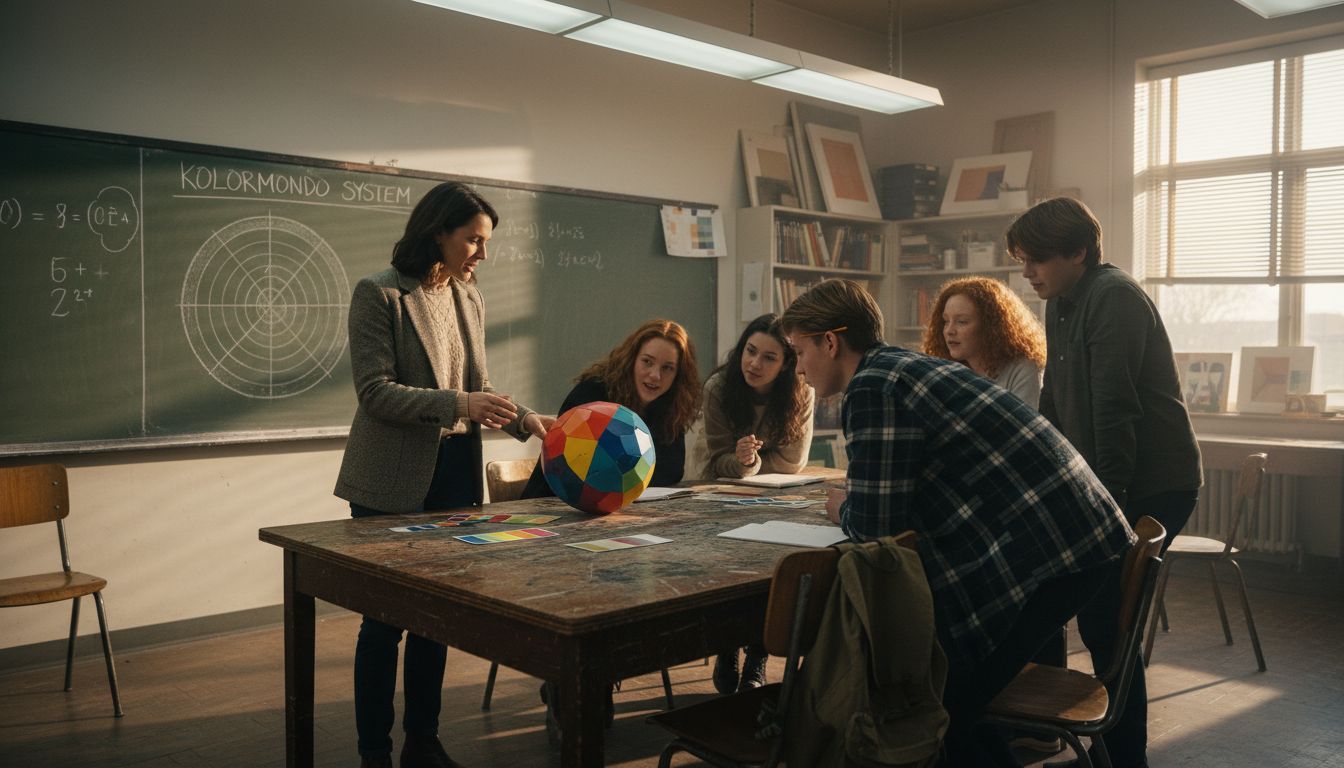
Unlike flat colour wheels, this tactile colour model allows users to physically interact with colour, rotating and examining how different hues, values, and chromas interconnect. The globe’s unique design enables a comprehensive understanding of colour that transcends visual learning, providing a kinesthetic experience that engages multiple sensory pathways. Choosing between professional and mini variants allows users to select a model that best suits their specific learning or professional requirements.
Key features of the Kolormondo globe include:
- Spatial Colour Mapping: Precise three-dimensional representation of colour relationships
- Tactile Learning: Physical interaction with colour dimensions
- Educational Tool: Comprehensive visual and kinesthetic learning experience
- Professional Reference: Accurate colour matching and selection
The globe’s innovative design transforms abstract colour theory into a concrete, manipulable object, bridging the gap between theoretical understanding and practical application. By providing a tangible method of exploring colour relationships, the Kolormondo globe offers an unprecedented approach to colour comprehension across multiple disciplines.
Educational and Creative Uses in Practice
Colour theory aids have transformed dramatically in recent years, offering unprecedented opportunities for creative and educational exploration. Three-dimensional colour models provide a sophisticated approach to understanding chromatic relationships across multiple disciplines, enabling learners and professionals to engage with colour in more nuanced and comprehensive ways.
In educational settings, these tactile colour models revolutionise traditional learning experiences. Art schools, design academies, and professional training programmes can utilise three-dimensional colour globes to demonstrate complex colour interactions that traditional two-dimensional charts cannot capture. Students gain a deeper understanding by physically manipulating and observing colour relationships, bridging theoretical knowledge with practical application.
Creative applications span numerous professional domains:
- Graphic Design: Developing sophisticated colour palettes
- Fashion Design: Understanding fabric colour interactions
- Interior Design: Creating harmonious colour schemes
- Fine Art: Exploring colour theory and composition
- Digital Media: Precise colour matching and selection
The immersive nature of three-dimensional colour models transforms abstract concepts into tangible learning experiences. By providing a holistic approach to colour understanding, these innovative tools empower professionals and students to develop more sophisticated, intuitive approaches to colour theory and application across creative and technical disciplines.
Comparing 3D Colour Models to Traditional Charts
Colour representation techniques have undergone significant transformation from traditional flat charts to sophisticated three-dimensional models. While conventional colour wheels offer a basic understanding of chromatic relationships, three-dimensional colour models provide a comprehensive, spatially dynamic approach to understanding colour interactions that transcends linear representations.
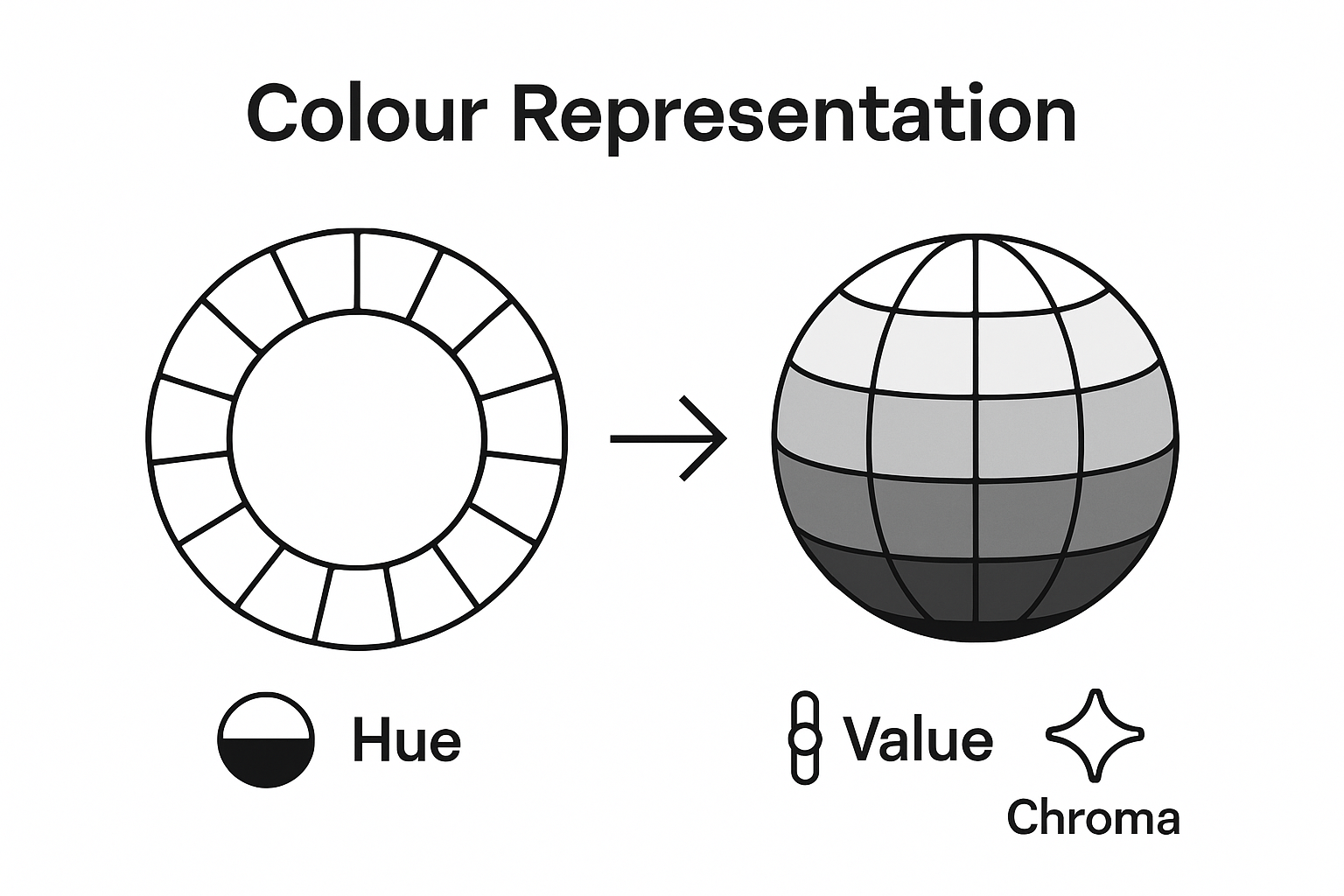
Traditional two-dimensional charts inherently limit colour comprehension by reducing complex chromatic relationships to a single plane. Three-dimensional colour models, in contrast, enable users to explore colour as a volumetric experience, revealing nuanced interactions between hue, value, and chroma that are impossible to perceive on flat surfaces. These innovative models allow professionals and students to rotate, examine, and interact with colour in ways that simulate how human vision genuinely perceives chromatic complexity.
Key differences between 3D and traditional colour models include:
- Spatial Representation: Volumetric versus planar colour mapping
- Interaction: Physical manipulation versus static observation
- Colour Relationship Understanding: Comprehensive versus limited perspective
- Learning Experience: Tactile and immersive versus purely visual
By embracing three-dimensional colour representation, designers, artists, and researchers can develop a more sophisticated, intuitive understanding of colour theory. These advanced models transform colour from a conceptual abstraction into a tangible, explorable phenomenon, bridging theoretical knowledge with practical, sensory experience across multiple creative and scientific disciplines.
Experience Colour Theory in Three Dimensions with Kolormondo
The article highlights the challenge of fully grasping colour relationships using traditional flat charts. Many learners and professionals struggle with the limited perspective of two-dimensional colour wheels that cannot capture the dynamic interplay of hue, value, and chroma. Understanding colour as a spatial, three-dimensional phenomenon is key to overcoming these limitations and gaining a richer, more accurate comprehension of colour theory.
Discover how the innovative Kolormondo colour globe transforms colour learning and application through tactile, volumetric exploration. This unique 3D model offers an immersive experience that engages both sight and touch helping users move beyond abstract concepts to practical, hands-on understanding. For educators and students seeking comprehensive teaching aids, Kolormondo also provides educational material and lesson plans designed to maximise the globe’s potential in classrooms and workshops. Explore these tools to elevate your creative, design, or scientific work.
Unlock a new dimension in colour theory mastery right now. Visit Kolormondo.com to find your perfect colour globe model and start discovering colour as never before. The time to transform your understanding of hue, value, and chroma is here.
Frequently Asked Questions
What is three-dimensional colour representation?
Three-dimensional colour representation is a complex spatial mapping system that captures colour relationships through a tangible framework, moving beyond traditional flat colour wheels. It maps colours across three primary axes: hue, lightness, and colourfulness.
How do hue, value, and chroma affect colour perception?
Hue refers to the fundamental wavelength of colour, value describes the lightness or darkness of a colour, and chroma measures the intensity or purity of a colour. Together, these dimensions provide a comprehensive understanding of colour’s complex interactions.
What are the practical applications of three-dimensional colour models?
Three-dimensional colour models are used in various fields such as design for precise colour matching, art for creating nuanced palettes, manufacturing for standardising colour production, and scientific research for analysing colour interactions.
How does the Kolormondo globe enhance colour learning?
The Kolormondo globe offers a tactile, three-dimensional approach to understanding colour. It allows users to physically interact with colour dimensions, providing an immersive learning experience that engages multiple sensory pathways and enhances comprehension of chromatic interactions.
Recommended
- Visualising Colour In 3D: A New Approach To Understanding
- Role of Colour Theory in Painting Explained
- 7 Key Colour Wheel Comparison List Tips for Art and Design
- How to Visualise Colour in 3D for Art and Design Projects
- The Role of Color Psychology in Web Design: Captivating Users through Emotional Connections – Lind Creative
- Farbe in der Kunst: Die Rolle der Farben und ihre Bedeutung entdecken – Curiocanvas
- Understanding the Role of Color Theory in Crochet – CRAFTISS
Find similar articles
what is three-dimensional color
